I Hug Trees

Tree Conservation: The Science of Tree Survival and Longevity

Understanding the biology, ecology, and science behind tree survival, resilience, and longevity.

📅 2026-01-25 ⏱️ 15 min read 🌳 Weekly

Week of 2026-01-25

Tree Conservation: The Science of Tree Survival and Longevity

Understanding the biology, ecology, and science behind tree survival, resilience, and longevity.

This Week in Tree Conservation Science

Discover the intricate biological mechanisms that enable trees to withstand environmental challenges and thrive over centuries. This week's digest delves into groundbreaking research revealing the science behind tree survival and longevity. From the impacts of conservation practices on soil health to the physiology of drought intolerance, recent studies offer profound insights into the factors that influence tree resilience. We explore how ancient trees endure constrained growth and cambial mortality, the role of tree-ring analysis in understanding stress tolerance, and the critical interplay between soil microbiomes and ecosystem recovery post-wildfire.

Major themes this week include the long-term effects of conservation efforts on soil carbon content, as evidenced by a 25-year study from Michigan State University, and the dendrochronological analysis of ancient Thuja occidentalis by researchers at the University of Chicago. Additionally, Oregon State University's findings on the decline spiral of Douglas-fir in the Klamath Mountains highlight the cumulative impacts of stress factors. These studies not only enhance our understanding of tree biology but also underscore the importance of targeted conservation strategies to support forest ecosystems in the face of changing environmental conditions.

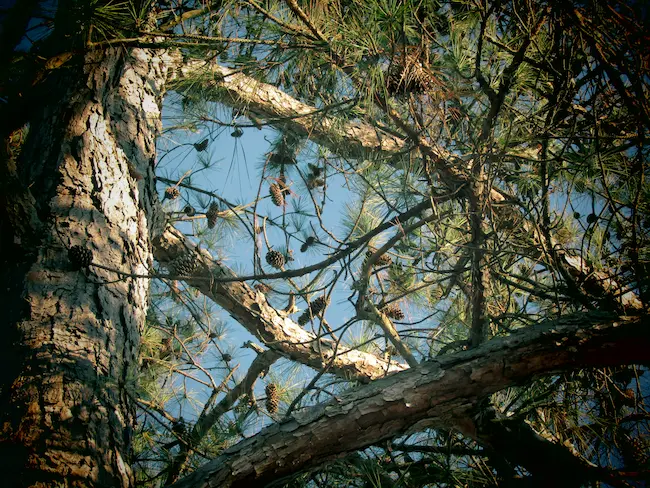
An old pine tree showing extreme longevity

An ancient bristlecone pine in California's White Mountains, one of Earth's oldest living organisms at over 4,800 years. Understanding what allows trees like this to survive for millennia is central to modern conservation science.

Why Tree Survival and Longevity Matter

Tree survival is not about sentiment. It is about understanding biological time. A tree that lives 500 years operates on fundamentally different principles than one that lives 50. Longevity is an evolutionary strategy built on slow growth, efficient resource use, and extraordinary stress tolerance. These mechanisms—hydraulic architecture, mycorrhizal networks, carbon allocation patterns—determine whether a tree survives drought, disease, or disturbance. Conservation fails when it ignores this biology. Protecting a 300-year-old oak requires understanding what kept it alive through centuries of variable climate, not just preventing someone from cutting it down.

A tree's survival depends on decades of accumulated resilience—built through root architecture, symbiotic relationships, and structural balance. Damage today may not kill the tree for 10 or 20 years.

The science of tree survival reveals why conservation is complex. Trees don't die from single events—they die from cumulative stress. Soil compaction, repeated pruning, construction damage, irregular watering: these accumulate silently. By the time decline becomes visible, the damage was done years earlier. This is why monitoring root health, mycorrhizal associations, and hydraulic function matters more than counting leaves. It's why protecting soil matters as much as protecting the trunk. And it's why understanding species-specific tolerances—how a coast redwood differs from a desert ironwood—is essential for making conservation decisions that work over biological time, not political cycles.

The Biological Foundation of Conservation

Every tree conservation decision should start with a question: what does this species need to survive for the next 100 years? Not what makes it look healthy today. Trees can appear fine while slowly dying from root damage, fungal disruption, or water stress. The science of longevity teaches us to think in terms of stress budgets, recovery capacity, and invisible thresholds. It shows why isolated trees struggle (no mycorrhizal network), why drought memory persists (xylem damage compounds), and why mature trees are irreplaceable (centuries of established symbioses).

Conservation that ignores tree biology fails slowly. Understanding survival mechanisms is what separates informed protection from well-meaning guesswork.

This weekly digest tracks the research that explains these mechanisms: peer-reviewed studies on stress tolerance, hydraulic failure, mycorrhizal signaling, and resilience. The goal is not to inspire action but to build understanding. Because conservation grounded in science lasts longer than conservation driven by urgency. Trees operate on their own timescale. Our job is to understand it.

How Long Trees Are Meant to Live

Age as a biological strategy, not a number

How Long Trees Are Meant to Live

Photo by photosforyou on Pixabay

The natural lifespan of trees varies significantly between species, reflecting distinct biological strategies rather than a fixed number[1]. Long-lived species, such as the bristlecone pine, exhibit slow growth rates and allocate resources towards defensive mechanisms rather than rapid reproduction[1]. This strategy involves the development of extensive xylem tissues and robust mycorrhizal networks, which enhance water and nutrient uptake over centuries[3]. Unlike annual plants, these trees undergo minimal cambial mortality, allowing for continuous secondary growth and adaptation to environmental stressors[1]. The process of senescence in trees is gradual, with older individuals often maintaining structural integrity and physiological function, debunking the notion that age equates to weakness[5].

Trees adapted for longevity exhibit unique physiological traits that facilitate survival over extended time scales[4]. Their growth patterns are characterized by incremental cambial activity, leading to the formation of annual rings that record environmental conditions and stress events[2]. The accumulation of these rings provides a historical archive of the tree's life, illustrating its resilience and adaptability[3]. Furthermore, the genetic background of long-lived trees plays a crucial role in determining their longevity, with specific alleles associated with enhanced stress resistance and longevity effects[4]. This genetic predisposition, combined with ecological interactions, ensures that these trees can persist for centuries, contributing to the stability and diversity of forest ecosystems[5].

Species-Specific Tolerance to Stress

Why some trees endure while others fail

Species-Specific Tolerance to Stress

Photo by JosepMonter on Pixabay

Species-specific tolerance to stress is a complex interplay of physiological mechanisms that allow certain trees to endure harsh conditions while others fail. Drought tolerance, for instance, is often linked to the efficiency of water transport through the xylem and the presence of mycorrhizal associations that enhance water uptake[1]. Salinity tolerance involves osmotic adjustment and ion compartmentalization within cells to maintain cellular integrity[2]. Heat and cold thresholds are determined by the thermal stability of proteins and the production of protective compounds such as heat shock proteins[3]. The balance between adaptability and specialization plays a crucial role; generalist species may exhibit broader stress tolerance due to their diverse genetic toolkit, whereas specialists may thrive under specific conditions but falter when those conditions change[4].

The physiological limits of trees under stress are further defined by their stress response mechanisms, which can include adjustments in photosynthesis rates, stomatal conductance, and the activation of senescence pathways to reallocate resources[5]. Over time scales of decades and centuries, these mechanisms contribute to the survival and distribution of tree species across varying climates and environmental conditions. Understanding these processes at a molecular and cellular level provides insight into why some trees are more resilient to stress than others, highlighting the intricate biological strategies that underpin forest resilience and species distribution.

The Hidden Role of Soil in Tree Survival

Roots, structure, and long-term stability

The Hidden Role of Soil in Tree Survival

Photo by 41330 on Pixabay

The survival of trees is intricately linked to the condition and composition of the soil in which they are rooted. Soil compaction, a common issue in disturbed environments, restricts root growth and reduces the availability of essential nutrients, leading to compromised tree health over time[1]. Nutrient cycling, facilitated by the soil microbiome, plays a critical role in tree nutrition and growth. The rhizosphere, a zone of intense microbial activity surrounding tree roots, is where nutrient exchange and uptake occur[2]. Mycorrhizal fungi, forming symbiotic relationships with tree roots, enhance nutrient and water absorption, crucial for tree vigor and longevity[4]. The depth and spread of tree roots are influenced by soil structure and composition, affecting the tree's ability to anchor itself and access resources, which is vital for long-term stability and resistance to environmental stresses[3].

Disturbed soils, more than transient events like storms, significantly shorten tree lifespan due to the long-term impacts on soil health and root systems[1]. The soil microbiome, comprising diverse microorganisms, contributes to ecosystem resilience by aiding in nutrient cycling and disease suppression[2]. The rhizosphere ecology, a dynamic interface between roots and soil, is essential for tree survival, influencing processes like nutrient acquisition, water uptake, and defense against pathogens[4]. Over decades and centuries, the interactions within this complex system determine tree health, growth rates, and ultimately, their survival and contribution to forest ecosystems[3].

Water Availability and the Slow Economics of Trees

Timing, access, and balance

Water Availability and the Slow Economics of Trees

Photo by Lancier on Pixabay

Water availability significantly influences tree physiology, particularly through the mechanisms of hydraulic failure and xylem function[1]. Trees rely on a continuous hydraulic continuum from roots to leaves, facilitated by the xylem, which transports water and nutrients[2]. During periods of water scarcity, trees may experience hydraulic failure, where the transport system breaks down due to embolisms in the xylem[3]. This failure can lead to reduced water flow and, ultimately, tree senescence. The ability of trees to withstand drought is influenced by their "drought memory," a physiological adaptation where past drought experiences enhance future resilience[4]. Irregular watering can exacerbate hydraulic failure more than consistent scarcity, as it disrupts the balance of water uptake and transport, leading to greater stress on the xylem system[5].

The balance between groundwater and surface water utilization by trees is crucial for their long-term survival[1]. Groundwater provides a stable water source during dry periods, whereas surface water is more variable and subject to seasonal changes[2]. Trees with deep root systems can access groundwater, which helps maintain hydraulic conductivity even during droughts[3]. However, reliance on surface water during irregular rainfall can lead to hydraulic failure if the water supply is inconsistent[4]. The mycorrhizal associations in tree roots play a vital role in enhancing water uptake efficiency, further complicating the dynamics of water availability and tree health[5]. Understanding these complex interactions is essential for predicting tree responses to changing water availability over decades and centuries.

Fungal Networks and Underground Cooperation

Trees do not survive alone

Fungal Networks and Underground Cooperation

Photo by photosforyou on Pixabay

Fungal networks, primarily composed of mycorrhizal fungi, play a critical role in the survival and growth of trees through nutrient exchange and stress signaling[1]. These fungi form symbiotic relationships with tree roots, facilitating the transfer of essential nutrients such as phosphorus and nitrogen from the soil to the tree[3]. In return, the tree provides the fungi with carbohydrates derived from photosynthesis. This mutualistic interaction enhances the tree's nutrient uptake efficiency and overall health. Furthermore, mycorrhizal networks enable trees to communicate and share resources, particularly during periods of stress or damage, promoting recovery and resilience[4].

The "wood wide web," a term describing the extensive underground mycorrhizal network, allows trees to support each other through resource sharing and stress signaling[5]. When a tree experiences senescence or damage, it can signal neighboring trees through the fungal network, prompting them to increase their defensive mechanisms[1]. This interconnected system ensures that trees are not isolated in their struggle for survival. Consequently, isolated trees, lacking this network support, face greater challenges in conservation efforts, highlighting the importance of preserving these intricate underground ecosystems[2][4].

Stress Accumulation and Delayed Decline

Why trees fail years after the damage

Stress Accumulation and Delayed Decline

Photo by photosforyou on Pixabay

Stress accumulation in trees often results from repeated pruning damage, soil disturbance, and construction impacts, leading to a gradual decline that may not manifest visibly for years[1]. The physiological mechanisms underlying this delayed decline involve the disruption of xylem function and the degradation of mycorrhizal networks, which are critical for water and nutrient uptake[2]. Additionally, these stressors can induce a state of chronic senescence, where the tree's metabolic processes slow down, reducing its ability to recover from further stress[3]. This invisible stress buildup creates a legacy effect, where the cumulative damage from past disturbances continues to affect the tree's health long after the initial impact[4].

The delayed decline observed in trees is a consequence of these long-term, accumulative stresses that disrupt the delicate balance of the tree's physiological systems[5]. For instance, fire-damaged Pinus pinaster forests exhibit prolonged sap flow reductions and altered wood anatomy, indicating a slow but persistent decline in tree vitality[3]. Similarly, postfire delayed tree mortality in temperate conifer forests is driven by the gradual failure of xylem functionality and increased susceptibility to pathogens[4]. These processes underscore the importance of understanding the time scales involved in tree decline, as the visible symptoms often appear sudden but are the result of years, if not decades, of accumulated stress[1].

Resilience Is Built Slowly, Lost Quickly

What actually makes trees durable

Resilience Is Built Slowly, Lost Quickly

Photo by photosforyou on Pixabay

Resilience in trees is a gradual process that hinges on intricate biological mechanisms and long-term ecological dynamics[1]. Key to this resilience are growth patterns and crown balance, which ensure that the tree's xylem and phloem tissues remain functional over decades[2]. The root-to-canopy ratio plays a critical role in nutrient and water uptake, directly influencing the tree's ability to recover from disturbances such as wildfires or pest infestations[3]. Mycorrhizal associations enhance nutrient absorption, further bolstering the tree's defensive capabilities[4]. These factors contribute to structural resilience, allowing trees to withstand and adapt to various stressors over centuries[5].

The long-term durability of trees is also shaped by their recovery mechanisms post-disturbance. For instance, conifers exhibit remarkable resilience through serotinous cones that release seeds only after a fire, ensuring regeneration[3]. Additionally, the process of senescence, where older trees allocate resources to younger generations, underscores the intergenerational transfer of resilience[2]. This ecological strategy ensures that even as individual trees age, the forest as a whole maintains its structural integrity and adaptive capacity over time[5]. These mechanisms highlight the complex interplay between physiology and ecology in fostering tree durability.

What Survival Science Teaches Conservation Practice

From biology to long-term protection

Survival science offers critical insights into conservation practice, particularly through understanding the biological mechanisms that underpin species persistence and ecosystem function. For instance, the study of xylem structure and function in mature trees reveals how these organisms manage water transport and withstand environmental stresses over centuries[1]. Similarly, the role of mycorrhizae in nutrient exchange and soil health underscores the importance of preserving symbiotic relationships within ecosystems[2]. These mechanisms are not merely academic; they inform evidence-based conservation strategies that aim to maintain ecological integrity over long time scales. By focusing on the physiological and ecological processes that enable species to survive and adapt, conservation biologists can develop more effective practices that go beyond immediate threats and address the fundamental requirements for long-term resilience[3].

The application of conservation biology is further enriched by understanding phenomena such as hybrid introgression, where genetic exchange between species can enhance adaptive potential and resilience to changing environmental conditions[4]. This process illustrates how evolutionary mechanisms can be harnessed to support conservation goals, particularly in the context of climate change. Additionally, the concept of senescence in long-lived species, such as bristlecone pines, highlights the allocation of resources towards defense and maintenance rather than reproduction, a strategy that ensures survival over millennia[1]. These biological insights not only guide conservation decisions but also emphasize the need for monitoring and assessment over extended periods to evaluate the efficacy of conservation interventions[5]. Through this lens, conservation practice becomes a science-driven endeavor that prioritizes the preservation of complex ecological interactions and evolutionary processes.

Thank you for reading this week's Tree Conservation digest. We'll return next week with more research on tree survival and longevity science.

📚 Referenced Sources

How Long Trees Are Meant to Live

  1. Constrained Growth, Cambial Mortality, and Dendrochronology of Ancient Thuja occidentalis on Cliffs of the Niagara Escarpment: A - The University of Chicago Press: Journals (2026-01-25)
  2. Tree-ring analysis explains physiology behind drought intolerance brought on by fire suppression - Oregon State University (2026-01-25)
  3. Exploring the correlation between tree structure characteristics and carbon storage in historic gardens using TLS technology: a case study of Jian Xin Pavilions at Jingyi Park, Fragrant Hills Park - Nature (2026-01-25)
  4. Impact of genetic background and experimental reproducibility on identifying chemical compounds with robust longevity effects - Nature (2026-01-25)
  5. THE CONSERVATION OF JUNIPER: LONGEVITY AND OLD AGE. - Northern Arizona University (2026-01-25)

Species-Specific Tolerance to Stress

  1. Tree-ring analysis explains physiology behind drought intolerance brought on by fire suppression - Oregon State University (2026-01-25)
  2. Capturing stress legacy: From tree physiology to forest resilience - Harvard University (2026-01-25)
  3. Genome-wide association study provides new insight into the underlying mechanism of drought tolerance during seed germination stage in soybean - Nature (2026-01-25)
  4. PNAS – Explore High-Impact Scientific Research Across Disciplines from One of the World’s Most-Cited Journals - PNAS (2026-01-25)
  5. Tree drought physiology: critical research questions and strategies for mitigating climate change effects on forests - Wiley (2026-01-25)

The Hidden Role of Soil in Tree Survival

  1. Collaborative Research: Role of soil microbiome resilience in ecosystem recovery following severe wildfire - Harvard University (2026-01-25)
  2. University researchers study how ‘chemical warfare’ beneath the soil shapes forests - West Virginia University (2026-01-25)
  3. MSU researchers publish 25-year study exploring impacts of conservation practices on soil health, carbon content - Michigan State University (2026-01-25)
  4. New research determines soil-dwelling fungi affect global tree species - Purdue University - College of Agriculture (2026-01-25)
  5. Survival of immediate implants replacing traumatised teeth in the anterior maxilla | British Dental Journal - Nature (2026-01-25)

Water Availability and the Slow Economics of Trees

  1. An allometry-based model of the survival strategies of hydraulic failure and carbon starvation - columbia.edu (2026-01-25)
  2. The plant hydraulic continuum from root to leaf: avoidance of catastrophic xylem failure under dynamic conditions - Harvard University (2026-01-25)
  3. PNAS – Explore High-Impact Scientific Research Across Disciplines from One of the World’s Most-Cited Journals - PNAS (2026-01-25)
  4. Tree drought physiology: critical research questions and strategies for mitigating climate change effects on forests - Wiley (2026-01-25)
  5. Advances in Ecophysiology: A Look at Recent Papers on Hydraulic Failure - Yale Environment Review (2026-01-25)

Fungal Networks and Underground Cooperation

  1. Study on signal transmission mechanism of arbuscular mycorrhizal hyphal network against root rot of Salvia miltiorrhiza - Nature (2026-01-25)
  2. New research determines soil-dwelling fungi affect global tree species - Purdue University - College of Agriculture (2026-01-25)
  3. Mechanisms underlying beneficial plant–fungus interactions in mycorrhizal symbiosis - Nature (2026-01-25)
  4. Mycorrhizal networks and mother trees – what is theoretically possible? - Harvard University (2026-01-25)
  5. 6.2 Other Decomposers Reading: Mycorrhizal Fungi - Michigan State University (2026-01-25)

Stress Accumulation and Delayed Decline

  1. Douglas-fir in Klamath Mountains are in ‘decline spiral,’ Oregon State research shows - Oregon State University (2026-01-25)
  2. OSU study identifies causes of Douglas-fir decline in southwest Oregon - OSU Extension Service (2026-01-25)
  3. Resilience or decline? Insights from long-term sap flow and wood anatomy monitoring in fire-damaged Pinus pinaster Aiton forest - Frontiers (2026-01-25)
  4. Patterns, drivers, and implications of postfire delayed tree mortality in temperate conifer forests of the western United States - ESA Journals (2026-01-25)
  5. Site Disturbance and Tree Decline - Oklahoma State University Extension (2026-01-25)

Resilience Is Built Slowly, Lost Quickly

  1. Wildfire disturbance reveals evidence of ecosystem resilience and precariousness in a forest–grassland mosaic - ESA Journals (2026-01-25)
  2. Editorial: Adaptation of Trees to Climate Change: Mechanisms Behind Physiological and Ecological Resilience and Vulnerability - Digital Commons @ Michigan Tech (2026-01-25)
  3. Conifer seedling demography reveals mechanisms of initial forest resilience to wildfires in the northern Rocky Mountains - umt.edu (2026-01-25)
  4. PNAS – Explore High-Impact Scientific Research Across Disciplines from One of the World’s Most-Cited Journals - PNAS (2026-01-25)
  5. Forest resilience and regeneration dynamics following wildfire disturbance - Bushey - 2023 - Ecosphere - ESA Journals (2026-01-25)

What Survival Science Teaches Conservation Practice

  1. MSU researchers publish 25-year study exploring impacts of conservation practices on soil health, carbon content - Michigan State University (2026-01-25)
  2. Restoring Forest Habitat Using Assisted Migration as a Climate Change Adaption - Western Washington University (2026-01-25)
  3. Addressing potential local adaptation in species distribution models: implications for conservation under climate change - d.umn.edu (2026-01-25)
  4. Hybrid introgression as a mechanism of rapid evolution and resilience to climate change in a riparian tree species - Nature (2026-01-25)
  5. Why "Managed relocation" and not "Assisted migration" or "colonization" // News - Notre Dame Global Adaptation Initiative (2026-01-25)