
I Hug Trees

Tree Conservation: The Science of Tree Survival and Longevity

Understanding the biology, ecology, and science behind tree survival, resilience, and longevity.

📅 2026-05-07 ⏱️ 14 min read 🌳 Weekly

Week of 2026-05-07

Tree Conservation: The Science of Tree Survival and Longevity

Understanding the biology, ecology, and science behind tree survival, resilience, and longevity.

This Week in Tree Conservation Science

This week's digest delves into the intricate science behind tree survival and longevity, uncovering the biological mechanisms that enable trees to endure and thrive under various environmental stresses. Recent studies highlight critical insights into how conservation practices influence soil health and carbon content, as demonstrated by Michigan State University's 25-year study. Additionally, Columbia University's allometry-based model offers a detailed examination of the survival strategies trees employ to combat hydraulic failure and carbon starvation. These findings are pivotal for understanding the complex interactions between trees and their environment.

Further exploration into the lifespan biology of ancient Thuja occidentalis by The University of Chicago Press reveals the constrained growth and cambial mortality that contribute to the longevity of these cliff-dwelling trees. West Virginia University's research on the 'chemical warfare' beneath the soil underscores the role of soil-root systems in shaping forest dynamics. Meanwhile, Oregon State University's study on the decline of Douglas-fir in the Klamath Mountains illustrates the cumulative effects of stress on tree health. These studies not only enhance our understanding of tree physiology and resilience but also provide valuable data for developing effective conservation strategies.

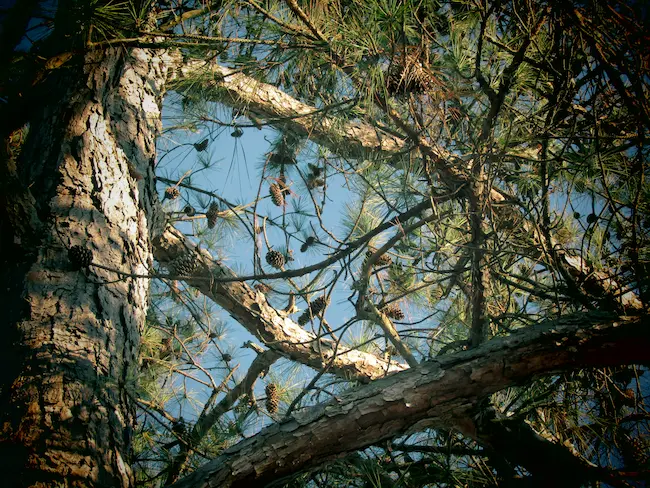
An old pine tree showing extreme longevity

An ancient bristlecone pine in California's White Mountains, one of Earth's oldest living organisms at over 4,800 years. Understanding what allows trees like this to survive for millennia is central to modern conservation science.

Why Tree Survival and Longevity Matter

Tree survival is not about sentiment. It is about understanding biological time. A tree that lives 500 years operates on fundamentally different principles than one that lives 50. Longevity is an evolutionary strategy built on slow growth, efficient resource use, and extraordinary stress tolerance. These mechanisms—hydraulic architecture, mycorrhizal networks, carbon allocation patterns—determine whether a tree survives drought, disease, or disturbance. Conservation fails when it ignores this biology. Protecting a 300-year-old oak requires understanding what kept it alive through centuries of variable climate, not just preventing someone from cutting it down.

A tree's survival depends on decades of accumulated resilience—built through root architecture, symbiotic relationships, and structural balance. Damage today may not kill the tree for 10 or 20 years.

The science of tree survival reveals why conservation is complex. Trees don't die from single events—they die from cumulative stress. Soil compaction, repeated pruning, construction damage, irregular watering: these accumulate silently. By the time decline becomes visible, the damage was done years earlier. This is why monitoring root health, mycorrhizal associations, and hydraulic function matters more than counting leaves. It's why protecting soil matters as much as protecting the trunk. And it's why understanding species-specific tolerances—how a coast redwood differs from a desert ironwood—is essential for making conservation decisions that work over biological time, not political cycles.

The Biological Foundation of Conservation

Every tree conservation decision should start with a question: what does this species need to survive for the next 100 years? Not what makes it look healthy today. Trees can appear fine while slowly dying from root damage, fungal disruption, or water stress. The science of longevity teaches us to think in terms of stress budgets, recovery capacity, and invisible thresholds. It shows why isolated trees struggle (no mycorrhizal network), why drought memory persists (xylem damage compounds), and why mature trees are irreplaceable (centuries of established symbioses).

Conservation that ignores tree biology fails slowly. Understanding survival mechanisms is what separates informed protection from well-meaning guesswork.

This weekly digest tracks the research that explains these mechanisms: peer-reviewed studies on stress tolerance, hydraulic failure, mycorrhizal signaling, and resilience. The goal is not to inspire action but to build understanding. Because conservation grounded in science lasts longer than conservation driven by urgency. Trees operate on their own timescale. Our job is to understand it.

How Long Trees Are Meant to Live

Age as a biological strategy, not a number

How Long Trees Are Meant to Live

Placeholder image (Pixabay integration pending)

The natural lifespan of trees varies significantly between species, a phenomenon rooted in distinct biological strategies rather than a fixed numerical age[1]. For instance, Thuja occidentalis, commonly known as Eastern White Cedar, exhibits constrained growth and cambial mortality, allowing it to persist for centuries by allocating resources efficiently[1]. This species, along with others like the Bristlecone pine, demonstrates that longevity is not synonymous with frailty. Instead, these trees are adapted for slow survival, investing in defensive compounds and structural integrity rather than rapid growth[2]. Their xylem and mycorrhizal associations are optimized for longevity, facilitating nutrient uptake and water transport over extended periods[5].

The biological time scales of long-lived trees are a testament to their evolutionary adaptations. Unlike fast-growing species, these trees undergo senescence at a much slower rate, allowing them to withstand environmental stressors over decades and even centuries[3]. This slow growth is not a disadvantage but a strategic allocation of resources towards survival and reproduction over the long term[4]. The mycorrhizal fungal composition and function play a crucial role in this strategy, enhancing the tree's ability to store carbon and maintain structural integrity[5]. Thus, the age of a tree is not merely a number but a reflection of its intricate biological mechanisms designed for prolonged existence.

Species-Specific Tolerance to Stress

Why some trees endure while others fail

Species-Specific Tolerance to Stress

Placeholder image (Pixabay integration pending)

Species-specific tolerance to stress in trees is primarily determined by their physiological and genetic adaptations to environmental stressors such as drought, salinity, and temperature extremes[1]. These adaptations manifest through various mechanisms including osmotic adjustment, stomatal regulation, and the synthesis of stress proteins[2]. For instance, drought-tolerant species often exhibit deeper root systems and more efficient xylem structures that facilitate water transport under water-limited conditions[3]. Additionally, symbiotic relationships with mycorrhizae enhance nutrient uptake and stress resilience[4]. These physiological traits are the result of evolutionary pressures that have shaped species over centuries, leading to specialized adaptations that enable some trees to endure while others succumb to stress[5].

The differential stress tolerance among tree species can also be attributed to their genetic diversity and the presence of specific alleles that confer resistance to environmental stressors[2]. For example, certain tree species possess genes that encode for heat shock proteins, which protect cellular structures during periods of high temperatures[1]. Furthermore, the capacity for phenotypic plasticity allows some trees to alter their growth and physiological processes in response to changing environmental conditions, thereby enhancing their survival prospects[4]. This adaptability is crucial for long-term forest resilience, as it enables species to cope with the gradual changes in climate and soil conditions over decades and centuries[5].

The Hidden Role of Soil in Tree Survival

Roots, structure, and long-term stability

The Hidden Role of Soil in Tree Survival

Placeholder image (Pixabay integration pending)

The intricate relationship between soil and tree survival hinges on several pivotal mechanisms. Soil compaction profoundly impacts root development, restricting xylem function and nutrient uptake[1]. Nutrient cycling, driven by the soil microbiome, facilitates essential element availability, promoting robust growth and resilience[2]. The depth and spread of fine roots are crucial for water acquisition and symbiotic associations with mycorrhizae, which enhance nutrient absorption[3]. Disturbed soils disrupt these delicate interactions, leading to compromised tree health and shortened lifespans, a phenomenon more detrimental than transient storm events[4]. The rhizosphere, a dynamic zone of root-microbe interactions, plays a critical role in tree longevity by influencing senescence processes and overall vitality[5].

Over decades and centuries, the stability of tree populations is intricately linked to soil health. The soil microbiome, comprising diverse microbial communities, mediates key ecological processes such as decomposition and nutrient transformation[2]. Mycorrhizal fungi form extensive networks that not only aid in nutrient and water uptake but also contribute to soil structure and stability[3]. These fungi engage in complex chemical signaling with tree roots, enhancing stress tolerance and disease resistance[5]. The long-term stability of trees is thus contingent on maintaining a balanced and diverse soil ecosystem, which supports root health, nutrient cycling, and overall tree physiology[1].

Water Availability and the Slow Economics of Trees

Timing, access, and balance

Water Availability and the Slow Economics of Trees

Placeholder image (Pixabay integration pending)

Water availability and the slow economics of trees is a complex interplay of physiological mechanisms and ecological dynamics that unfold over decades and centuries[1]. Central to this process is the hydraulic system of trees, specifically the xylem, which transports water from roots to leaves[5]. Seasonal water needs vary, with trees adapting to fluctuations between groundwater and surface water sources. The concept of "drought memory" in trees refers to their ability to undergo physiological changes in response to past droughts, influencing their resilience to future water scarcity[2]. Irregular watering can exacerbate stress on trees more than consistent scarcity, leading to hydraulic failure where the xylem's capacity to transport water is compromised[4]. This failure is a critical factor in tree mortality during prolonged droughts.

The balance between water availability and tree health is further complicated by the interaction between trees and mycorrhizal fungi, which enhance water and nutrient uptake[3]. As trees age, processes such as senescence affect their water use efficiency. The timing of water access is crucial; during periods of high evaporative demand, trees must efficiently utilize available water to avoid hydraulic failure[5]. Understanding these slow, intricate dynamics is essential for comprehending the long-term sustainability of forest ecosystems in the face of changing water availability.

Fungal Networks and Underground Cooperation

Trees do not survive alone

Fungal Networks and Underground Cooperation

Placeholder image (Pixabay integration pending)

Mycorrhizal fungi form intricate networks within the soil, facilitating nutrient exchange between trees and enhancing their resilience over extended time scales[4]. These fungi colonize tree roots, creating a symbiotic relationship that allows trees to access essential nutrients such as phosphorus and nitrogen[5]. In return, trees supply the fungi with carbohydrates derived from photosynthesis. This mutualistic interaction not only supports tree growth but also aids in stress signaling and recovery from damage[1]. The mycorrhizal network, often referred to as the "wood wide web," enables trees to communicate and share resources, thereby enhancing their collective survival capabilities[3].

The physiological mechanisms underlying this underground cooperation are complex and multifaceted. Mycorrhizal fungi extend their hyphae into the soil, increasing the absorptive surface area for nutrient uptake[4]. This extension allows trees to access nutrients that would otherwise be unavailable, particularly in nutrient-poor soils. Additionally, the fungi can transmit stress signals between trees, enabling a form of communal defense against pathogens and environmental stressors[1]. Over decades and centuries, these interactions contribute to the stability and diversity of forest ecosystems, highlighting the critical role of mycorrhizal networks in sustaining tree populations[2].

Stress Accumulation and Delayed Decline

Why trees fail years after the damage

Stress Accumulation and Delayed Decline

Placeholder image (Pixabay integration pending)

Trees experience stress accumulation through mechanisms such as repeated pruning damage, soil disturbance, and construction impacts, which contribute to a delayed decline over extended time scales[1]. The xylem, responsible for water and nutrient transport, can be compromised by these stressors, reducing the tree's ability to maintain hydraulic function[2]. Additionally, mycorrhizal networks, which facilitate nutrient uptake, can be disrupted, further exacerbating stress[3]. This invisible stress buildup often goes unnoticed until the tree reaches a critical threshold, at which point senescence accelerates rapidly[4].

The legacy effects of these stressors manifest over decades or even centuries, as trees that appear healthy may already be in a state of irreversible decline[5]. This delayed response is due to the complex interplay between physiological processes and environmental conditions. For instance, a tree may endure years of suboptimal growth following soil compaction from construction, only to succumb suddenly during a drought event[2]. Understanding these long-term mechanisms is crucial for predicting and mitigating tree loss, even though the decline may appear sudden to casual observers[1].

Resilience Is Built Slowly, Lost Quickly

What actually makes trees durable

Resilience Is Built Slowly, Lost Quickly

Placeholder image (Pixabay integration pending)

Resilience in trees is a complex trait developed over extended time scales, influenced by growth patterns, crown balance, and root-to-canopy ratios[1]. The physiological mechanisms behind this resilience include the allocation of resources to xylem formation and the development of mycorrhizal associations, which enhance nutrient uptake and water retention[2]. These processes are gradual, often taking decades to centuries to fully manifest, as trees undergo senescence and recovery after disturbances[3]. The structural resilience is further augmented by the tree's ability to adjust its crown balance and root systems in response to environmental stressors, ensuring long-term durability[4].

The long-term durability of trees is also a function of their recovery capabilities post-disturbance, such as wildfire or extreme weather events[5]. This recovery is facilitated by the tree's genetic predisposition to regenerate and the ecological interactions within the forest ecosystem. For instance, the presence of diverse species can enhance the overall resilience of a forest, as different trees contribute varied adaptive strategies[2]. Additionally, the root systems of trees play a crucial role in anchoring the plant and facilitating nutrient and water absorption, which are critical for maintaining structural integrity over centuries[1]. The interplay between above-ground growth and below-ground processes is essential for the tree's resilience, highlighting the intricate balance required for long-term survival.

What Survival Science Teaches Conservation Practice

From biology to long-term protection

What Survival Science Teaches Conservation Practice

Placeholder image (Pixabay integration pending)

Survival science elucidates the intricate biological mechanisms that underpin conservation practices, particularly emphasizing the role of mature trees in ecosystem stability. Mature trees exhibit advanced xylem structures and extensive mycorrhizal networks, facilitating superior water and nutrient uptake[1]. These trees contribute significantly to soil health and carbon sequestration over decades[2]. The process of senescence in trees, while often perceived negatively, plays a crucial role in nutrient cycling and habitat creation for various species[3]. Understanding these physiological processes allows conservationists to make informed decisions that enhance long-term ecological resilience.

The application of conservation biology principles, such as assisted migration, relies on a deep understanding of species-specific adaptations and ecological interactions[4]. For instance, the translocation of plant species must consider the complex relationships between plants and their mycorrhizal partners to ensure successful establishment in new environments[5]. Monitoring and assessment techniques, grounded in evidence-based conservation, enable practitioners to evaluate the effectiveness of interventions over time scales of centuries, rather than focusing solely on immediate outcomes. This long-term perspective is essential for the sustainable management of ecosystems.

Thank you for reading this week's Tree Conservation digest. We'll return next week with more research on tree survival and longevity science.

📚 Referenced Sources

How Long Trees Are Meant to Live

  1. Constrained Growth, Cambial Mortality, and Dendrochronology of Ancient Thuja occidentalis on Cliffs of the Niagara Escarpment: A - The University of Chicago Press: Journals (2026-05-07)
  2. Agricultural and Forestry Experiment Station - University of Alaska Fairbanks (2026-05-07)
  3. AEGIS tool helps scientists study evolution of aging and lifespan - News-Medical (2026-05-07)
  4. Exploring the correlation between tree structure characteristics and carbon storage in historic gardens using TLS technology: a case study of Jian Xin Pavilions at Jingyi Park, Fragrant Hills Park - Nature (2026-05-07)
  5. Forest tree growth is linked to mycorrhizal fungal composition and function across Europe | The ISME Journal - Nature (2026-05-07)

Species-Specific Tolerance to Stress

  1. Capturing stress legacy: From tree physiology to forest resilience - Harvard University (2026-05-07)
  2. Genome-wide association study provides new insight into the underlying mechanism of drought tolerance during seed germination stage in soybean - Nature (2026-05-07)
  3. IMPACTS OF NEEDLE AGE, TREE ARCHITECTURE, AND DROUGHT STRESS ON PHOTOSYNTHETIC PHYSIOLOGY OF FRASER FIR (Abies fraseri) CHRISTMA - The University of North Carolina at Greensboro (2026-05-07)
  4. Tree Physiology and Growth - University of New Hampshire (2026-05-07)
  5. Tree drought physiology: critical research questions and strategies for mitigating climate change effects on forests - Wiley (2026-05-07)

The Hidden Role of Soil in Tree Survival

  1. E-News | University researchers study how ‘chemical warfare’ beneath the soil shapes forests - West Virginia University (2026-05-07)
  2. MSU researchers publish 25-year study exploring impacts of conservation practices on soil health, carbon content - Michigan State University (2026-05-07)
  3. Functional Strategies of Tree Fine-Roots in Relation to the Soil Environment and Microbiome: Variaiton in Root Morphology, Tissue Chemistry and Physiology - Florida International University (2026-05-07)
  4. Why Scientists Are Solving an Underground Mystery about Where Certain Soil Microbes Live - Boston University (2026-05-07)
  5. New research determines soil-dwelling fungi affect global tree species - Purdue University - College of Agriculture (2026-05-07)

Water Availability and the Slow Economics of Trees

  1. An allometry-based model of the survival strategies of hydraulic failure and carbon starvation - Columbia University (2026-05-07)
  2. Global network taps tree rings to study impact of tropical drought - University of Arizona News (2026-05-07)
  3. University researchers predict improved water yields after forest thinning - University of Nevada, Reno (2026-05-07)
  4. Tree mortality predicted from drought-induced vascular damage - The University of Utah (2026-05-07)
  5. Advances in Ecophysiology: A Look at Recent Papers on Hydraulic Failure - Yale Environment Review (2026-05-07)

Fungal Networks and Underground Cooperation

  1. Study on signal transmission mechanism of arbuscular mycorrhizal hyphal network against root rot of Salvia miltiorrhiza - Nature (2026-05-07)
  2. New research determines soil-dwelling fungi affect global tree species - Purdue University - College of Agriculture (2026-05-07)
  3. Are Trees Talking Underground? For Scientists, It’s in Dispute. (Published 2022) - The New York Times (2026-05-07)
  4. Mechanisms underlying beneficial plant–fungus interactions in mycorrhizal symbiosis - Nature (2026-05-07)
  5. What Are Mycorrhizal Fungi and What Role Do… | Autumn 2025 | Articles | Forest Insights - University of Vermont (2026-05-07)

Stress Accumulation and Delayed Decline

  1. Douglas-fir in Klamath Mountains are in ‘decline spiral,’ Oregon State research shows - Oregon State University (2026-05-07)
  2. OSU study identifies causes of Douglas-fir decline in southwest Oregon - OSU Extension Service (2026-05-07)
  3. Resilience or decline? Insights from long-term sap flow and wood anatomy monitoring in fire-damaged Pinus pinaster Aiton forest - Frontiers (2026-05-07)
  4. A global overview of drought and heat-induced tree mortality reveals emerging climate change risks for forests - University of Montana (2026-05-07)
  5. Trends in background mortality in unmanaged forests across Europe over the last century - besjournals (2026-05-07)

Resilience Is Built Slowly, Lost Quickly

  1. Adaptation of Trees to Climate Change: Mechanisms Behind Physiological and Ecological Resilience and Vulnerability - Digital Commons @ Michigan Tech (2026-05-07)
  2. Effect of diversity on growth, mortality, and loss of resilience to extreme climate events in a tropical planted forest experiment - Nature (2026-05-07)
  3. Monash University | Study at Monash Uni | Melbourne - Monash University (2026-05-07)
  4. Researchers shed light on river resiliency to flooding - University of Nevada, Reno (2026-05-07)
  5. Forest resilience and regeneration dynamics following wildfire disturbance - Bushey - 2023 - Ecosphere - ESA Journals (2026-05-07)

What Survival Science Teaches Conservation Practice

  1. MSU researchers publish 25-year study exploring impacts of conservation practices on soil health, carbon content - Michigan State University (2026-05-07)
  2. Research and Conservation - Clemson University (2026-05-07)
  3. New Research: Reforestation is More Cost-Effective than Previously Understood; Study Compares Reforestation Methods - Conservation International (2026-05-07)
  4. Can Assisted Migration save Endangered Plant Species? → Learn - Harvard University (2026-05-07)
  5. Harsha Pandaraboyina EE 522 Assisted Migration Paper The idea of assisted migration is quite a controversial one in the conserva - Boston University (2026-05-07)