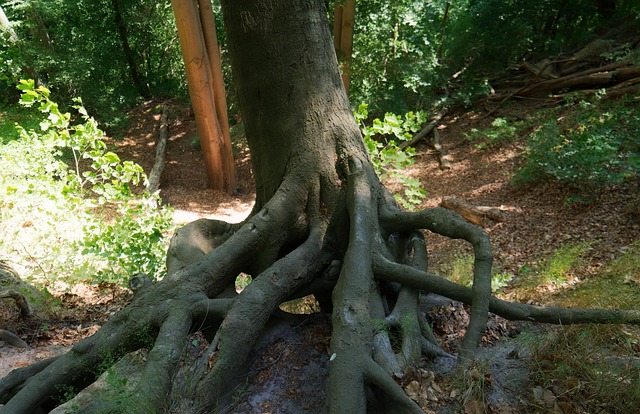
The natural lifespan of trees varies significantly between species, with some, like the bristlecone pine (Pinus longaeva), capable of living over 5,000 years[1]. This longevity is not merely a number but a biological strategy. Trees such as the bristlecone pine allocate minimal resources to reproduction[1], focusing instead on defensive compounds and structural integrity. Their slow growth rate and extensive root systems, often in symbiotic relationships with mycorrhizae[5], allow them to withstand harsh environmental conditions over centuries. This adaptation is not about rapid growth but about sustained survival, enabling them to outlive many faster-growing species.
Long-lived trees exhibit unique physiological mechanisms that facilitate their extended lifespans. For instance, the xylem in these trees is highly efficient at water transport and storage, reducing the risk of embolism[2]. Additionally, these trees often show delayed senescence, maintaining cellular and metabolic functions over prolonged periods[3]. This delayed senescence is crucial for their survival, as it allows them to repair damage and maintain structural integrity over decades and centuries. The ecological strategy of these trees is not to grow fast but to endure, showcasing the complexity of biological time scales in natural ecosystems.