
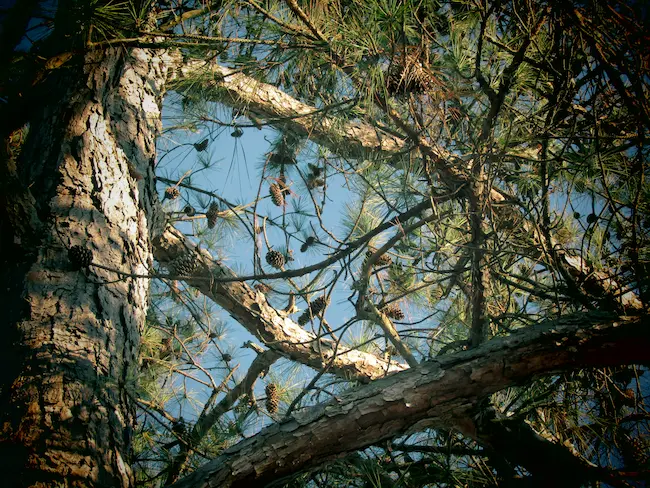
Tree species exhibit significant variations in natural lifespans, a phenomenon rooted in their distinct biological strategies[1]. Unlike animals, where age often correlates with declining health, old trees do not necessarily weaken; instead, they are adapted for slow survival rather than rapid growth[2]. This longevity is facilitated by mechanisms such as the development of extensive xylem networks, which enhance water and nutrient transport, and the establishment of mycorrhizal associations that improve nutrient uptake[3]. Additionally, long-lived trees often invest in defensive compounds and structural reinforcements to combat environmental stresses and pathogens over centuries[4]. These adaptations illustrate how trees are engineered for persistence across geological time scales, rather than short-term competitive success.
The biological time scales over which trees operate are critical to understanding their longevity[5]. Unlike annual plants, trees undergo senescence at vastly different rates, influenced by genetic factors and environmental interactions[3]. For instance, bristlecone pines allocate minimal resources to reproduction[1], focusing energy on defensive compounds instead. This strategy allows them to withstand harsh conditions and survive for millennia. The transposon theory of aging suggests that the accumulation of genetic mutations over time contributes to senescence in long-lived organisms[4]. However, trees have evolved mechanisms to mitigate these effects, such as efficient DNA repair systems and the ability to compartmentalize damaged tissues. These adaptations enable trees to maintain structural integrity and functionality over extended periods, highlighting the complexity of their biological strategies for longevity.