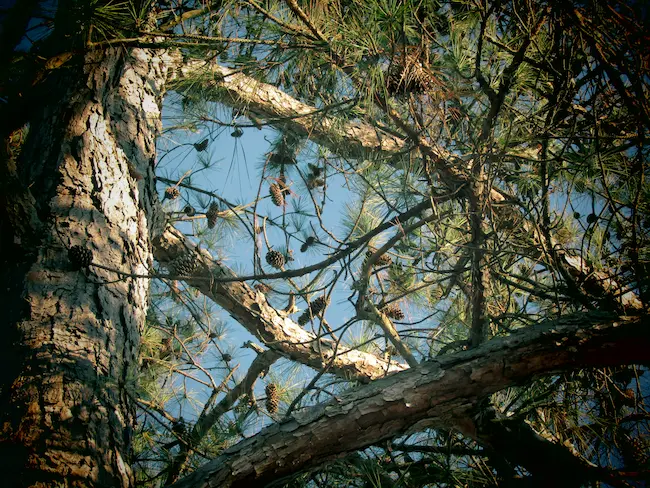

The lifespan of trees varies significantly across species, reflecting diverse biological strategies rather than a uniform age limit[1]. Long-lived trees, such as bristlecone pines, exhibit minimal resource allocation to reproduction, prioritizing defensive compounds and structural integrity[2]. These species have evolved to thrive in harsh environments, where slow growth and robust defense mechanisms are advantageous. Their xylem structure allows for efficient water transport and resistance to environmental stresses[3]. This adaptation ensures longevity through efficient resource management and resilience, rather than rapid growth. The mycorrhizal associations further enhance nutrient uptake, supporting their prolonged survival[4].
The concept of senescence in trees differs from that in animals; old age in trees does not equate to weakness or reduced functionality[5]. Instead, aged trees often exhibit heightened resistance to pathogens and environmental stresses due to accumulated defensive compounds and structural adaptations. Their growth rings provide a record of environmental conditions over centuries, illustrating the tree's ability to withstand and adapt to changing conditions[2]. This long-term perspective highlights the importance of biological time scales in understanding tree longevity, emphasizing that age is a strategy for survival, not merely a measure of time elapsed[3].