I Hug Trees

Tree Conservation: The Science of Tree Survival and Longevity

Understanding the biology, ecology, and science behind tree survival, resilience, and longevity.

📅 2026-07-02 ⏱️ 15 min read 🌳 Weekly

Week of 2026-07-02

Tree Conservation: The Science of Tree Survival and Longevity

Understanding the biology, ecology, and science behind tree survival, resilience, and longevity.

This Week in Tree Conservation Science

Welcome to this week's digest, where we delve into the intricate science underpinning tree survival and longevity. This edition illuminates critical biological processes and research findings that shape our understanding of how trees endure and thrive across varied environments. Among the pivotal studies we explore is a 25-year investigation by Michigan State University researchers, which reveals the profound impacts of conservation practices on soil health and carbon sequestration. Additionally, we examine the dendrochronological study of ancient Thuja occidentalis by The University of Chicago Press, shedding light on the mechanisms of cambial mortality and constrained growth in millennial trees. These findings not only enhance our comprehension of tree lifespan biology but also underscore the significance of soil-root interactions in forest dynamics.

Further, we dissect the physiological responses of trees to environmental stressors, such as drought and fire suppression, through tree-ring analysis conducted by Oregon State University. This research elucidates the concept of hydraulic failure and its role in drought intolerance. Moreover, West Virginia University's exploration of chemical warfare beneath the soil surface offers insights into how allelopathic compounds influence forest composition and resilience. These studies collectively advance our knowledge of stress tolerance mechanisms and the complex interplay between trees and their subterranean allies, the mycorrhizal networks. Understanding these scientific themes is crucial for developing effective conservation strategies that promote tree health and longevity in the face of escalating environmental challenges.

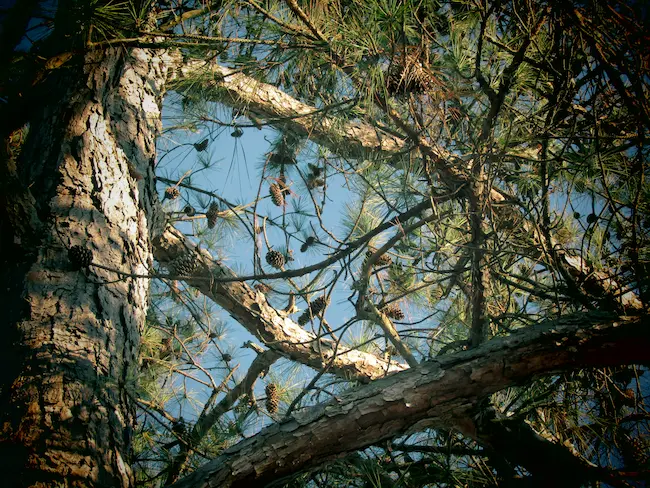
An old pine tree showing extreme longevity

An ancient bristlecone pine in California's White Mountains, one of Earth's oldest living organisms at over 4,800 years. Understanding what allows trees like this to survive for millennia is central to modern conservation science.

Why Tree Survival and Longevity Matter

Tree survival is not about sentiment. It is about understanding biological time. A tree that lives 500 years operates on fundamentally different principles than one that lives 50. Longevity is an evolutionary strategy built on slow growth, efficient resource use, and extraordinary stress tolerance. These mechanisms—hydraulic architecture, mycorrhizal networks, carbon allocation patterns—determine whether a tree survives drought, disease, or disturbance. Conservation fails when it ignores this biology. Protecting a 300-year-old oak requires understanding what kept it alive through centuries of variable climate, not just preventing someone from cutting it down.

A tree's survival depends on decades of accumulated resilience—built through root architecture, symbiotic relationships, and structural balance. Damage today may not kill the tree for 10 or 20 years.

The science of tree survival reveals why conservation is complex. Trees don't die from single events—they die from cumulative stress. Soil compaction, repeated pruning, construction damage, irregular watering: these accumulate silently. By the time decline becomes visible, the damage was done years earlier. This is why monitoring root health, mycorrhizal associations, and hydraulic function matters more than counting leaves. It's why protecting soil matters as much as protecting the trunk. And it's why understanding species-specific tolerances—how a coast redwood differs from a desert ironwood—is essential for making conservation decisions that work over biological time, not political cycles.

The Biological Foundation of Conservation

Every tree conservation decision should start with a question: what does this species need to survive for the next 100 years? Not what makes it look healthy today. Trees can appear fine while slowly dying from root damage, fungal disruption, or water stress. The science of longevity teaches us to think in terms of stress budgets, recovery capacity, and invisible thresholds. It shows why isolated trees struggle (no mycorrhizal network), why drought memory persists (xylem damage compounds), and why mature trees are irreplaceable (centuries of established symbioses).

Conservation that ignores tree biology fails slowly. Understanding survival mechanisms is what separates informed protection from well-meaning guesswork.

This weekly digest tracks the research that explains these mechanisms: peer-reviewed studies on stress tolerance, hydraulic failure, mycorrhizal signaling, and resilience. The goal is not to inspire action but to build understanding. Because conservation grounded in science lasts longer than conservation driven by urgency. Trees operate on their own timescale. Our job is to understand it.

How Long Trees Are Meant to Live

Age as a biological strategy, not a number

How Long Trees Are Meant to Live

Photo by MAKY_OREL on Pixabay

The natural lifespan of trees varies significantly across species, influenced by intricate biological mechanisms. Long-lived species such as bristlecone pines and giant sequoias exhibit slow growth rates and robust defensive strategies[1]. These trees allocate minimal resources to reproduction, instead prioritizing the production of defensive compounds and structural integrity[2]. Their xylem, the vascular tissue responsible for water transport, is highly efficient and resistant to embolism, allowing these trees to survive for centuries[3]. Additionally, their mycorrhizal associations enhance nutrient uptake, further supporting their longevity[4]. This slow, steady growth contrasts with fast-growing species, which often have shorter lifespans due to their rapid resource allocation towards growth and reproduction.

Old age in trees does not equate to weakness; rather, it signifies a highly adapted survival strategy. Long-lived trees exhibit senescence patterns that differ markedly from short-lived species[5]. Their cambial activity, the process by which new xylem and phloem are produced, remains efficient even in ancient specimens[1]. This sustained cambial function allows for continuous growth and repair, contributing to their extended lifespans. Moreover, these trees often develop extensive root systems and symbiotic relationships with fungi, which enhance their resilience to environmental stressors[4]. Thus, the longevity of trees is a testament to their complex biological adaptations, rather than a simple measure of time.


Species-Specific Tolerance to Stress

Why some trees endure while others fail

Species-Specific Tolerance to Stress

Photo by Antranias on Pixabay

Species-specific tolerance to stress in trees is largely determined by their physiological and ecological adaptations. For instance, drought tolerance is influenced by the efficiency of water transport through the xylem and the presence of mycorrhizal associations that enhance water uptake[1]. Salinity tolerance involves the ability of root cells to exclude or sequester sodium ions, preventing osmotic stress[2]. Heat and cold thresholds are dictated by the thermal stability of cellular proteins and the presence of protective compounds such as heat shock proteins[4]. Trees exhibit either adaptability, where they possess a broad range of stress tolerances, or specialization, where they are finely tuned to specific environmental conditions[3]. This dichotomy influences their physiological limits and stress response mechanisms, such as stomatal regulation and osmotic adjustment, which are critical for maintaining cellular function under stress[5].

The time scales over which these stress responses operate can span decades to centuries, reflecting the long-lived nature of trees and their evolutionary adaptations. For example, the gradual accumulation of defensive compounds in response to repeated stress events can lead to increased resilience over time[1]. Additionally, the process of senescence, or aging, can alter a tree's stress tolerance, as older trees may allocate resources differently compared to younger ones[5]. Understanding these long-term physiological changes is crucial for predicting how different tree species will endure or fail under changing environmental conditions, emphasizing the importance of studying stress tolerance mechanisms at both the individual and population levels[3].

The Hidden Role of Soil in Tree Survival

Roots, structure, and long-term stability

The Hidden Role of Soil in Tree Survival

Photo by wilkernet on Pixabay

The intricate relationship between soil and tree survival is mediated through a complex interplay of biological and ecological mechanisms. Soil compaction, a common issue in disturbed environments, significantly reduces pore space, impeding root growth and nutrient uptake[1]. This restriction affects the xylem's efficiency in water transport, leading to reduced tree vitality over time. Nutrient cycling, facilitated by the soil microbiome, is crucial for tree health. Microbes decompose organic matter, releasing essential nutrients that trees absorb through their root systems[2]. Mycorrhizae, symbiotic fungi associated with tree roots, enhance nutrient and water uptake, contributing to the tree's resilience against environmental stresses[3].

The depth and spread of roots are critical for long-term tree stability. Deeper roots access water reserves during droughts, while widespread roots provide structural support and enhance nutrient acquisition[4]. Disturbed soils, characterized by altered microbial communities and reduced organic matter, shorten tree lifespan more than natural stressors like storms[5]. The rhizosphere, the soil region influenced by root exudates, fosters a unique microbial ecology that supports tree growth and health. Understanding these mechanisms at a physiological level reveals the profound impact of soil conditions on tree survival over decades and centuries.

Water Availability and the Slow Economics of Trees

Timing, access, and balance

Water Availability and the Slow Economics of Trees

Photo by bpn on Pixabay

Water availability and the slow economics of trees hinge on the intricate balance between seasonal water needs and the differential use of groundwater versus surface water[1]. Trees possess a "drought memory" that influences their physiological responses to subsequent water stress[2]. This memory is encoded in the xylem, the vascular tissue responsible for water transport, which can suffer hydraulic failure under prolonged drought conditions[4]. Irregular watering can exacerbate this failure, as trees may not adjust their water uptake mechanisms in time to cope with sudden changes, leading to a higher risk of mortality than consistent scarcity[5]. The xylem's efficiency is crucial; when it fails, the tree's ability to transport water and nutrients is compromised, often resulting in senescence or death.

The relationship between mycorrhizae—fungal symbionts that enhance water and nutrient uptake—and tree roots further complicates water dynamics[3]. During droughts, the symbiosis may become less effective, reducing the tree's access to water and nutrients[2]. Over time scales of decades and centuries, these physiological responses to water availability shape forest composition and structure[1]. Understanding these mechanisms is vital for predicting how forests will respond to changing climate patterns and water availability, emphasizing the need for a deep, science-focused approach to forest management and conservation.

Fungal Networks and Underground Cooperation

Trees do not survive alone

Fungal Networks and Underground Cooperation

Photo by moerschy on Pixabay

Mycorrhizal fungi form intricate networks known as the "wood wide web," facilitating nutrient exchange and stress signaling among trees[1]. These fungi colonize tree roots, forming mycorrhizae that enhance nutrient absorption, particularly phosphorus and nitrogen[5]. In return, trees supply the fungi with carbohydrates. This symbiosis allows trees to access resources beyond their root systems, improving their resilience to environmental stressors[2]. When one tree experiences distress, such as pathogen attack or drought, it can transmit signals through the fungal network to neighboring trees, initiating defensive responses[1]. This interconnected system enables trees to share resources and support each other's recovery after damage, demonstrating the importance of these underground networks for forest health and stability over decades and centuries[3].

Isolated trees, lacking these fungal connections, face greater challenges in nutrient acquisition and stress response[4]. The absence of a mycorrhizal network limits their ability to share resources and receive distress signals from neighboring trees[5]. Consequently, isolated trees may exhibit reduced growth, lower resilience to environmental changes, and increased susceptibility to senescence[2]. The conservation of these fungal networks is crucial for maintaining forest ecosystems, as they play a vital role in tree survival, growth, and adaptation to long-term ecological changes[3]. Understanding the mechanisms behind these underground cooperative networks provides insights into the complex interplay between trees and fungi, highlighting the importance of preserving these relationships for forest sustainability.

Stress Accumulation and Delayed Decline

Why trees fail years after the damage

Stress Accumulation and Delayed Decline

Photo by jplenio on Pixabay

Stress accumulation in trees often results from repeated pruning damage, soil disturbance, and construction impacts, leading to a gradual decline that may manifest years after the initial stress[1]. The mechanisms behind this delayed decline involve the disruption of essential physiological processes. For instance, repeated pruning can damage the xylem, impairing water transport and nutrient distribution[2]. Soil disturbance disrupts mycorrhizal networks, crucial for nutrient uptake, while construction impacts can lead to root damage and altered soil structure[3]. These stressors cumulatively weaken the tree's resilience, leading to a decline spiral where the tree's ability to recover diminishes over time[4].

The delayed nature of tree decline is further exacerbated by legacy effects, where past stresses continue to impact the tree's health long after the initial damage[5]. This invisible stress buildup can lead to senescence, where the tree's metabolic processes slow down, making it more susceptible to additional stressors[1]. The ecological implications are significant, as trees may appear healthy until a tipping point is reached, after which decline progresses rapidly[2]. Understanding these time scales—often spanning decades or even centuries—is crucial for predicting and mitigating long-term tree health issues[3].

Resilience Is Built Slowly, Lost Quickly

What actually makes trees durable

Resilience Is Built Slowly, Lost Quickly

Photo by cornelinux on Pixabay

Resilience in trees is a product of intricate physiological mechanisms and growth patterns that unfold over decades and centuries[1]. One critical aspect is the root-to-canopy ratio, which influences nutrient and water uptake efficiency. Trees with a balanced root-to-canopy ratio can better withstand disturbances[3]. Additionally, the xylem's structure, responsible for water transport, plays a pivotal role. Trees with more efficient xylem can recover faster after disturbances like drought or fire[4]. The interaction between trees and mycorrhizae, a type of fungi, also enhances nutrient absorption, contributing to overall resilience[5].

Long-term durability in trees is further augmented by their ability to allocate resources dynamically. During periods of stress, trees may reduce growth rates and prioritize the production of defensive compounds[1]. This adaptive strategy, known as senescence, allows trees to conserve energy and enhance their chances of survival[4]. Moreover, the crown balance, or the distribution of foliage, affects a tree's exposure to environmental stressors. A well-balanced crown can mitigate the impacts of wind, pests, and diseases[2]. These mechanisms, operating over extended time scales, are the bedrock of a tree's structural resilience and longevity[3].

What Survival Science Teaches Conservation Practice

From biology to long-term protection

What Survival Science Teaches Conservation Practice

Photo by MemoryCatcher on Pixabay

Survival science elucidates critical mechanisms in conservation practice, particularly emphasizing the role of mature trees in ecosystem stability. Mature trees exhibit advanced xylem structures and extensive mycorrhizal networks, which enhance water and nutrient uptake efficiency[1]. These physiological adaptations not only support their longevity but also contribute to soil health and carbon sequestration over decades[2]. The process of senescence in these trees leads to the release of nutrients back into the soil, fostering a regenerative cycle that benefits younger plants and overall forest resilience[3]. Understanding these biological processes is essential for developing evidence-based conservation strategies that aim for long-term ecological balance.

Conservation biology applications further highlight the importance of protecting mature trees through mechanisms such as hybrid introgression, where gene flow between species enhances adaptive traits[4]. This evolutionary process can increase resilience to climate change, demonstrating the intricate interplay between genetic diversity and environmental stability[5]. Monitoring and assessment of these mechanisms over time scales of centuries reveal the cumulative benefits of preserving mature trees, reinforcing the necessity of integrating survival science into conservation decision-making processes. This approach ensures that conservation efforts are grounded in robust, ecological principles rather than short-term outcomes.

Thank you for reading this week's Tree Conservation digest. We'll return next week with more research on tree survival and longevity science.

📚 Referenced Sources

How Long Trees Are Meant to Live

  1. Constrained Growth, Cambial Mortality, and Dendrochronology of Ancient Thuja occidentalis on Cliffs of the Niagara Escarpment: A - The University of Chicago Press: Journals (2026-07-02)
  2. Agricultural and Forestry Experiment Station - University of Alaska Fairbanks (2026-07-02)
  3. Tree-ring analysis explains physiology behind drought intolerance brought on by fire suppression - Oregon State University (2026-07-02)
  4. Exploring the correlation between tree structure characteristics and carbon storage in historic gardens using TLS technology: a case study of Jian Xin Pavilions at Jingyi Park, Fragrant Hills Park - Nature (2026-07-02)
  5. Could humans live to 150? Why some researchers think we’re on the cusp of a major longevity breakthrough - Nature (2026-07-02)

Species-Specific Tolerance to Stress

  1. Tree-ring analysis explains physiology behind drought intolerance brought on by fire suppression - Oregon State University (2026-07-02)
  2. Genome-wide association study provides new insight into the underlying mechanism of drought tolerance during seed germination stage in soybean - Nature (2026-07-02)
  3. IMPACTS OF NEEDLE AGE, TREE ARCHITECTURE, AND DROUGHT STRESS ON PHOTOSYNTHETIC PHYSIOLOGY OF FRASER FIR (Abies fraseri) CHRISTMA - The University of North Carolina at Greensboro (2026-07-02)
  4. Researchers study effects of extreme heat on Pacific Northwest trees - Oregon Public Broadcasting - OPB (2026-07-02)
  5. Physiological mechanisms of drought-induced tree die-off in relation to carbon, hydraulic and respiratory stress in a drought-tolerant woody plant - Nature (2026-07-02)

The Hidden Role of Soil in Tree Survival

  1. E-News | University researchers study how ‘chemical warfare’ beneath the soil shapes forests - West Virginia University (2026-07-02)
  2. MSU researchers publish 25-year study exploring impacts of conservation practices on soil health, carbon content - Michigan State University (2026-07-02)
  3. Why Scientists Are Solving an Underground Mystery about Where Certain Soil Microbes Live - Boston University (2026-07-02)
  4. Scientists find microbes enhance the benefits of trees by removing greenhouse gases - Monash University (2026-07-02)
  5. New research determines soil-dwelling fungi affect global tree species - Purdue University - College of Agriculture (2026-07-02)

Water Availability and the Slow Economics of Trees

  1. Can hydraulic traits be used to predict sensitivity of drought-prone forests to crown decline and tree mortality? - Academia.edu (2026-07-02)
  2. Global network taps tree rings to study impact of tropical drought - University of Arizona News (2026-07-02)
  3. WVU researcher studying worst western US megadrought in 1,200 years - WVU Today (2026-07-02)
  4. Advances in Ecophysiology: A Look at Recent Papers on Hydraulic Failure - Yale Environment Review (2026-07-02)
  5. Tree mortality predicted from drought-induced vascular damage - The University of Utah (2026-07-02)

Fungal Networks and Underground Cooperation

  1. Study on signal transmission mechanism of arbuscular mycorrhizal hyphal network against root rot of Salvia miltiorrhiza - Nature (2026-07-02)
  2. Willamette biologists secure $200,000 grant to study Joshua tree resilience to climate change - Willamette University (2026-07-02)
  3. Assembly history dictates ecosystem functioning: evidence from wood decomposer communities - Stanford University (2026-07-02)
  4. New research determines soil-dwelling fungi affect global tree species - Purdue University - College of Agriculture (2026-07-02)
  5. Mechanisms underlying beneficial plant–fungus interactions in mycorrhizal symbiosis - Nature (2026-07-02)

Stress Accumulation and Delayed Decline

  1. Douglas-fir in Klamath Mountains are in ‘decline spiral,’ Oregon State research shows - Oregon State University (2026-07-02)
  2. OSU study identifies causes of Douglas-fir decline in southwest Oregon - OSU Extension Service (2026-07-02)
  3. Patterns, drivers, and implications of postfire delayed tree mortality in temperate conifer forests of the western United States - ESA Journals (2026-07-02)
  4. Cherry Tree Decline - University of Georgia (2026-07-02)
  5. Short-interval severe fire erodes the resilience of subalpine lodgepole pine forests - PNAS (2026-07-02)

Resilience Is Built Slowly, Lost Quickly

  1. Adaptation of Trees to Climate Change: Mechanisms Behind Physiological and Ecological Resilience and Vulnerability - Digital Commons @ Michigan Tech (2026-07-02)
  2. Effect of diversity on growth, mortality, and loss of resilience to extreme climate events in a tropical planted forest experiment - Nature (2026-07-02)
  3. Forest resilience and regeneration dynamics following wildfire disturbance - Bushey - 2023 - Ecosphere - ESA Journals (2026-07-02)
  4. "Editorial: Adaptation of Trees to Climate Change: Mechanisms Behind Ph" by Andrea Ghirardo, James D. Blande et al. - Digital Commons @ Michigan Tech (2026-07-02)
  5. Nonstructural Carbohydrates As A Proxy For Adaptive Capacity And A Mechanism For Resilience In Northern Hardwood And Mixedwood Forests - UVM ScholarWorks (2026-07-02)

What Survival Science Teaches Conservation Practice

  1. MSU researchers publish 25-year study exploring impacts of conservation practices on soil health, carbon content - Michigan State University (2026-07-02)
  2. Research and Conservation - Clemson University, South Carolina (2026-07-02)
  3. New Research: Reforestation is More Cost-Effective than Previously Understood; Study Compares Reforestation Methods - Conservation International (2026-07-02)
  4. Hybrid introgression as a mechanism of rapid evolution and resilience to climate change in a riparian tree species - Nature (2026-07-02)
  5. Hugh Ratcliffe - Midwest Climate Adaptation Science Center (2026-07-02)