
I Hug Trees

Tree Conservation: The Science of Tree Survival and Longevity

Understanding the biology, ecology, and science behind tree survival, resilience, and longevity.

📅 2026-07-30 ⏱️ 15 min read 🌳 Weekly

Week of 2026-07-30

Tree Conservation: The Science of Tree Survival and Longevity

Understanding the biology, ecology, and science behind tree survival, resilience, and longevity.

This Week in Tree Conservation Science

This week's digest dives into the intricate science underpinning tree survival and longevity, spotlighting groundbreaking research that unravels the biological complexities trees face. A pivotal 25-year study from Michigan State University reveals how conservation practices significantly impact soil health and carbon content, offering a deep dive into the long-term effects of human intervention on forest ecosystems. Meanwhile, researchers at the University at Buffalo have developed a novel model predicting hydraulic failure in tropical trees, emphasizing the critical role of tree traits over climate variability. Additionally, Oregon State University's analysis of tree rings sheds light on the physiological mechanisms behind drought intolerance exacerbated by fire suppression, highlighting species-specific responses to environmental stress.

Further enriching our understanding, West Virginia University explores the subtle yet profound "chemical warfare" occurring beneath the soil, illustrating how root systems and soil microorganisms shape forest dynamics. The decline of Douglas-fir in the Klamath Mountains, as documented by Oregon State University, serves as a stark example of cumulative stress leading to species decline. Complementing these findings, a study in ESA Journals examines the dual nature of ecosystem resilience and vulnerability in forest-grassland mosaics post-wildfire. These insights not only enhance our comprehension of tree conservation science but also underscore the importance of targeted research in developing effective conservation strategies.

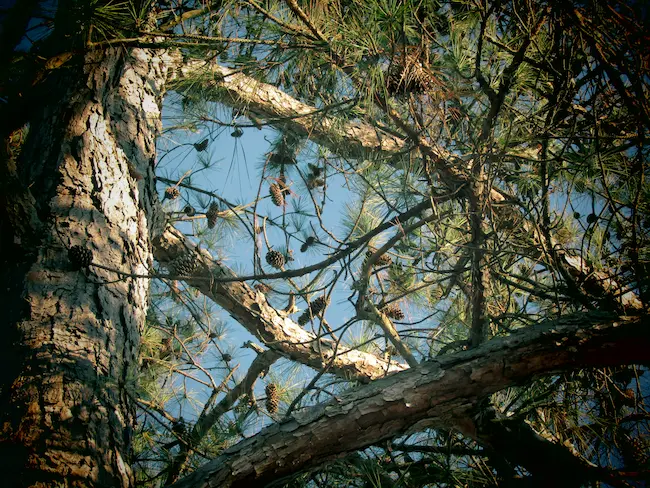
An old pine tree showing extreme longevity

An ancient bristlecone pine in California's White Mountains, one of Earth's oldest living organisms at over 4,800 years. Understanding what allows trees like this to survive for millennia is central to modern conservation science.

Why Tree Survival and Longevity Matter

Tree survival is not about sentiment. It is about understanding biological time. A tree that lives 500 years operates on fundamentally different principles than one that lives 50. Longevity is an evolutionary strategy built on slow growth, efficient resource use, and extraordinary stress tolerance. These mechanisms—hydraulic architecture, mycorrhizal networks, carbon allocation patterns—determine whether a tree survives drought, disease, or disturbance. Conservation fails when it ignores this biology. Protecting a 300-year-old oak requires understanding what kept it alive through centuries of variable climate, not just preventing someone from cutting it down.

A tree's survival depends on decades of accumulated resilience—built through root architecture, symbiotic relationships, and structural balance. Damage today may not kill the tree for 10 or 20 years.

The science of tree survival reveals why conservation is complex. Trees don't die from single events—they die from cumulative stress. Soil compaction, repeated pruning, construction damage, irregular watering: these accumulate silently. By the time decline becomes visible, the damage was done years earlier. This is why monitoring root health, mycorrhizal associations, and hydraulic function matters more than counting leaves. It's why protecting soil matters as much as protecting the trunk. And it's why understanding species-specific tolerances—how a coast redwood differs from a desert ironwood—is essential for making conservation decisions that work over biological time, not political cycles.

The Biological Foundation of Conservation

Every tree conservation decision should start with a question: what does this species need to survive for the next 100 years? Not what makes it look healthy today. Trees can appear fine while slowly dying from root damage, fungal disruption, or water stress. The science of longevity teaches us to think in terms of stress budgets, recovery capacity, and invisible thresholds. It shows why isolated trees struggle (no mycorrhizal network), why drought memory persists (xylem damage compounds), and why mature trees are irreplaceable (centuries of established symbioses).

Conservation that ignores tree biology fails slowly. Understanding survival mechanisms is what separates informed protection from well-meaning guesswork.

This weekly digest tracks the research that explains these mechanisms: peer-reviewed studies on stress tolerance, hydraulic failure, mycorrhizal signaling, and resilience. The goal is not to inspire action but to build understanding. Because conservation grounded in science lasts longer than conservation driven by urgency. Trees operate on their own timescale. Our job is to understand it.

How Long Trees Are Meant to Live

Age as a biological strategy, not a number

The longevity of trees is a complex biological strategy rather than a fixed numerical value, varying significantly across species due to differences in natural lifespans[1]. Trees such as the bristlecone pine exhibit extended lifespans through mechanisms like slow growth rates and robust defensive compounds, which allow them to survive for centuries[2]. Unlike fast-growing species, these long-lived trees invest in structural integrity and resistance to environmental stressors, utilizing xylem efficiency and mycorrhizal associations to enhance survival[3]. This adaptation is not about rapid growth but about enduring through biological time scales that span decades and even millennia[4].

Old age in trees does not equate to weakness; instead, it reflects a highly evolved strategy for survival in variable environments[1]. The physiological processes underlying this longevity include efficient resource allocation, minimal senescence, and strong regenerative capabilities[2]. For instance, the ability to store carbon effectively over long periods and maintain structural integrity through thick bark and deep root systems contributes to their extended lifespans[4]. These traits are crucial for trees to withstand ecological challenges over centuries, demonstrating that longevity in trees is a testament to their adaptive success rather than a vulnerability[5].
Species-Specific Tolerance to Stress

Why some trees endure while others fail

Species-specific tolerance to stress in trees is primarily dictated by their physiological and genetic mechanisms. Drought tolerance, for instance, is influenced by the efficiency of xylem water transport and the presence of mycorrhizal associations, which enhance water and nutrient uptake[1]. Salinity tolerance is often linked to the tree's ability to exclude or compartmentalize salts within its tissues, preventing osmotic stress[2]. Heat and cold thresholds are determined by the tree's cellular membrane stability and the presence of heat shock proteins or antifreeze proteins, respectively[3]. The balance between adaptability and specialization plays a crucial role; generalist species may exhibit broader stress tolerance due to a wider range of physiological responses, whereas specialists may excel under specific conditions but fail under changing environments[4].

The physiological limits of trees under stress are further defined by their stress response mechanisms. For example, during drought, some trees employ stomatal closure to conserve water, while others may undergo leaf senescence to reduce transpirational demand[5]. These responses are not merely survival tactics but are deeply rooted in the tree's evolutionary history and genetic makeup. Over time scales of decades and centuries, these mechanisms have been shaped by natural selection, allowing certain species to endure while others may succumb to environmental pressures. Understanding these complex interactions is crucial for predicting species resilience in the face of changing climate conditions.

The Hidden Role of Soil in Tree Survival

Roots, structure, and long-term stability

The Hidden Role of Soil in Tree Survival

Photo by ASPCT on Pixabay

The survival of trees is intricately linked to the soil's physical and biological properties, which influence root growth, nutrient uptake, and overall tree health. Soil compaction, a common issue in disturbed environments, impedes root expansion and water infiltration, thereby limiting the xylem's efficiency in transporting water and nutrients[1]. Nutrient cycling, facilitated by the soil microbiome, ensures a continuous supply of essential elements like nitrogen and phosphorus, which are crucial for tree growth and development[3]. The depth and spread of roots are critical for anchoring the tree and accessing a broader range of resources, with deeper roots often accessing more stable water sources[2]. The rhizosphere, a dynamic zone of soil influenced by root exudates, fosters a symbiotic relationship with mycorrhizae, enhancing nutrient absorption and providing protection against pathogens[5].

Disturbed soils, more than transient events like storms, pose a long-term threat to tree lifespan due to their impact on soil structure and microbial communities. The disruption of soil layers and the rhizosphere ecology can lead to a decline in mycorrhizal associations, reducing the tree's ability to cope with environmental stresses[3]. Over decades, this can result in premature senescence and a weakened tree structure, making it more susceptible to diseases and adverse weather conditions[4]. The long-term stability of trees is thus deeply rooted in the intricate balance of soil health, microbial activity, and root system integrity, which collectively determine the tree's resilience and longevity[1][5].

Water Availability and the Slow Economics of Trees

Timing, access, and balance

Water availability and the slow economics of trees reveal intricate physiological mechanisms that govern their survival strategies[1]. Seasonal water needs vary significantly, with trees relying on both groundwater and surface water sources. During periods of drought, trees exhibit a "drought memory" where past water scarcity influences current physiological responses[2]. Irregular watering can exacerbate stress more than consistent scarcity, leading to hydraulic failure—a condition where the tree's xylem, responsible for water transport, becomes compromised[3]. This failure disrupts the delicate balance of water and nutrient flow, often leading to senescence. The mycorrhizal networks, symbiotic associations between tree roots and fungi, play a crucial role in enhancing water uptake and stress resilience[4].

The long-term survival of trees is contingent upon their ability to maintain xylem function amidst fluctuating water availability[5]. Over decades and centuries, trees adapt through various strategies, including adjusting their root-to-shoot ratios and altering leaf morphology to optimize water use efficiency. These adaptations are critical in mitigating the impacts of prolonged droughts. The interplay between hydraulic failure and carbon starvation further complicates tree survival, as both mechanisms can lead to a cascading failure in tree physiology. Understanding these slow, cumulative processes is essential for predicting and managing the impacts of changing water availability on forest ecosystems.

Fungal Networks and Underground Cooperation

Trees do not survive alone

Fungal networks, primarily composed of mycorrhizal fungi, form an intricate underground web facilitating nutrient exchange and stress signaling among trees[4]. These mycorrhizae envelop the roots, creating a symbiotic relationship where fungi receive carbohydrates from the trees while providing essential nutrients like phosphorus and nitrogen[5]. This mutualistic interaction is critical for tree survival, especially in nutrient-poor soils. Moreover, mycorrhizal networks enable trees to transmit stress signals, such as those induced by pathogens or environmental changes, allowing neighboring trees to activate defense mechanisms preemptively[1]. This interconnectedness fosters a cooperative ecosystem where the survival of one tree can influence the health of many others over decades.

The "wood wide web" concept illustrates how these fungal networks contribute to forest resilience over centuries[3]. When a tree experiences senescence or damage, it can redistribute nutrients through the mycorrhizal network to younger or healthier trees, ensuring the continuity of the forest ecosystem[2]. Isolated trees, lacking this underground support system, face greater challenges in nutrient acquisition and stress resistance, making them harder to conserve[5]. The long-term ecological benefits of these fungal networks underscore the importance of preserving soil biodiversity and the complex interactions within forest ecosystems.

Stress Accumulation and Delayed Decline

Why trees fail years after the damage

Stress accumulation in trees, particularly due to repeated pruning damage, soil disturbance, and construction impacts, often results in a delayed decline that may not manifest visibly for years[1]. This phenomenon is rooted in the intricate physiological mechanisms governing tree health. When trees experience these stressors, their xylem and phloem tissues can become compromised, leading to reduced water and nutrient transport[2]. Additionally, disruptions to the mycorrhizal networks in the soil can impair the tree's nutrient uptake capabilities, further exacerbating stress[3]. These cumulative effects gradually weaken the tree's resilience, setting the stage for a decline that may appear sudden but is actually the result of prolonged stress accumulation.

The delayed decline observed in trees is also influenced by legacy effects, where past disturbances continue to impact tree health over extended time scales[4]. For instance, fire-damaged forests exhibit altered sap flow and wood anatomy, which can predispose trees to future mortality events[5]. The senescence process is accelerated by these cumulative stresses, leading to a state where the tree's defense mechanisms are overwhelmed. This delayed response is not merely a rapid collapse but a complex interplay of biological and ecological factors that have been building over time, often spanning decades or even centuries[1].

Resilience Is Built Slowly, Lost Quickly

What actually makes trees durable

Resilience Is Built Slowly, Lost Quickly

Photo by KevinSchmid on Pixabay

Resilience in trees is a gradual process, intricately tied to growth patterns, crown balance, and root-to-canopy ratios[1]. Over decades, trees develop extensive root systems that enhance water and nutrient uptake, crucial for withstanding environmental stresses[2]. The xylem, responsible for water transport, matures and becomes more efficient, contributing to the tree's overall stability[3]. Mycorrhizae, symbiotic fungi associated with tree roots, play a significant role in nutrient exchange and stress tolerance[4]. These biological mechanisms collectively build a tree's structural resilience, allowing it to recover from disturbances such as wildfires or storms[5].

Long-term durability in trees is not merely a result of rapid adaptation but a slow accumulation of physiological and ecological traits[1]. Senescence, the gradual decline in function with age, is countered by the tree's ability to allocate resources efficiently towards growth and defense[2]. Recovery after disturbance involves the reactivation of dormant buds and the reestablishment of mycorrhizal networks, processes that are slow but essential for survival[3]. The interplay between above-ground canopy structure and below-ground root systems ensures that trees can maintain balance and stability over centuries[4]. This slow, deliberate process of building resilience underscores the importance of understanding the time scales involved in ecological stability[5].

What Survival Science Teaches Conservation Practice

From biology to long-term protection

Survival science elucidates the intricate biological mechanisms that underpin effective conservation practices. For instance, mature trees exhibit heightened resilience to environmental stressors due to their well-developed xylem and mycorrhizal networks[1]. These structures enhance water and nutrient uptake, crucial for sustaining growth during periods of drought or nutrient scarcity. Additionally, the process of senescence in trees allows for the reallocation of resources towards defense mechanisms, thereby increasing their longevity and adaptive capacity[3]. Understanding these physiological processes is essential for devising strategies that protect mature trees, which serve as critical carbon sinks and habitat providers[2].

Conservation biology applications further highlight the importance of evidence-based approaches in long-term protection efforts. Assisted migration, for example, leverages hybrid introgression to enhance the genetic diversity of tree species, thereby improving their resilience to climate change[4]. This method not only aids in the adaptation of forests to future climates but also ensures the preservation of ecological functions over centuries[5]. Monitoring and assessment of these interventions are vital, as they provide data-driven insights into the efficacy of conservation strategies, allowing for continuous refinement and optimization of practices aimed at sustaining ecological integrity and biodiversity[1].

Thank you for reading this week's Tree Conservation digest. We'll return next week with more research on tree survival and longevity science.

📚 Referenced Sources

How Long Trees Are Meant to Live

  1. Future tree mortality is impossible to observe, but a new model reveals why tropical tree traits matter more than climate change variability for predicting hydraulic failure - University at Buffalo (2026-07-30)
  2. Agricultural and Forestry Experiment Station - University of Alaska Fairbanks (2026-07-30)
  3. Tree-ring analysis explains physiology behind drought intolerance brought on by fire suppression - Oregon State University (2026-07-30)
  4. Exploring the correlation between tree structure characteristics and carbon storage in historic gardens using TLS technology: a case study of Jian Xin Pavilions at Jingyi Park, Fragrant Hills Park - Nature (2026-07-30)
  5. Could humans live to 150? Why some researchers think we’re on the cusp of a major longevity breakthrough - Nature (2026-07-30)

Species-Specific Tolerance to Stress

  1. Tree-ring analysis explains physiology behind drought intolerance brought on by fire suppression - Oregon State University (2026-07-30)
  2. Genome-wide association study provides new insight into the underlying mechanism of drought tolerance during seed germination stage in soybean - Nature (2026-07-30)
  3. The grapevine as a model plant to describe intra- and interspecific mechanisms of drought acclimation - Nature (2026-07-30)
  4. Researchers study effects of extreme heat on Pacific Northwest trees - Oregon Public Broadcasting - OPB (2026-07-30)
  5. Physiological mechanisms of drought-induced tree die-off in relation to carbon, hydraulic and respiratory stress in a drought-tolerant woody plant - Nature (2026-07-30)

The Hidden Role of Soil in Tree Survival

  1. E-News | University researchers study how ‘chemical warfare’ beneath the soil shapes forests - West Virginia University (2026-07-30)
  2. Study: Modest moss supports billions of tons of carbon storage - University of Michigan News (2026-07-30)
  3. Beech decline reshapes fine root traits, microbial composition and soil carbon–nutrient cycling - besjournals (2026-07-30)
  4. MSU researchers publish 25-year study exploring impacts of conservation practices on soil health, carbon content - Michigan State University (2026-07-30)
  5. Why Scientists Are Solving an Underground Mystery about Where Certain Soil Microbes Live - Boston University (2026-07-30)

Water Availability and the Slow Economics of Trees

  1. Future tree mortality is impossible to observe, but a new model reveals why tropical tree traits matter more than climate change variability for predicting hydraulic failure - University at Buffalo (2026-07-30)
  2. An allometry‐based model of the survival strategies of hydraulic failure and carbon starvation - Uriarte Lab (2026-07-30)
  3. Global network taps tree rings to study impact of tropical drought - University of Arizona News (2026-07-30)
  4. WVU researcher studying worst western US megadrought in 1,200 years - WVU Today (2026-07-30)
  5. Tree drought physiology: critical research questions and strategies for mitigating climate change effects on forests - Wiley & Sons (2026-07-30)

Fungal Networks and Underground Cooperation

  1. Study on signal transmission mechanism of arbuscular mycorrhizal hyphal network against root rot of Salvia miltiorrhiza - Nature (2026-07-30)
  2. Assembly history dictates ecosystem functioning: evidence from wood decomposer communities - Stanford University (2026-07-30)
  3. New research determines soil-dwelling fungi affect global tree species - Purdue University - College of Agriculture (2026-07-30)
  4. Mechanisms underlying beneficial plant–fungus interactions in mycorrhizal symbiosis - Nature (2026-07-30)
  5. What Are Mycorrhizal Fungi and What Role Do… | Autumn 2025 | Articles | Forest Insights - University of Vermont (2026-07-30)

Stress Accumulation and Delayed Decline

  1. Douglas-fir in Klamath Mountains are in ‘decline spiral,’ Oregon State research shows - Oregon State University (2026-07-30)
  2. OSU study identifies causes of Douglas-fir decline in southwest Oregon - OSU Extension Service (2026-07-30)
  3. Resilience or decline? Insights from long-term sap flow and wood anatomy monitoring in fire-damaged Pinus pinaster Aiton forest - Frontiers (2026-07-30)
  4. Patterns, drivers, and implications of postfire delayed tree mortality in temperate conifer forests of the western United States - ESA Journals (2026-07-30)
  5. Beech decline reshapes fine root traits, microbial composition and soil carbon–nutrient cycling - besjournals (2026-07-30)

Resilience Is Built Slowly, Lost Quickly

  1. Wildfire disturbance reveals evidence of ecosystem resilience and precariousness in a forest–grassland mosaic - ESA Journals (2026-07-30)
  2. Adaptation of Trees to Climate Change: Mechanisms Behind Physiological and Ecological Resilience and Vulnerability - Digital Commons @ Michigan Tech (2026-07-30)
  3. Effect of diversity on growth, mortality, and loss of resilience to extreme climate events in a tropical planted forest experiment - Nature (2026-07-30)
  4. "Editorial: Adaptation of Trees to Climate Change: Mechanisms Behind Ph" by Andrea Ghirardo, James D. Blande et al. - Digital Commons @ Michigan Tech (2026-07-30)
  5. "Editorial: Adaptation of Trees to Climate Change: Mechanisms Behind Ph" by Andrea Ghirardo, James D. Blande et al. - Digital Commons @ Michigan Tech (2026-07-30)

What Survival Science Teaches Conservation Practice

  1. MSU researchers publish 25-year study exploring impacts of conservation practices on soil health, carbon content - Michigan State University (2026-07-30)
  2. New Research: Reforestation is More Cost-Effective than Previously Understood; Study Compares Reforestation Methods - Conservation International (2026-07-30)
  3. Adapting forests to future climates through assisted migration - University of Minnesota Extension (2026-07-30)
  4. Hybrid introgression as a mechanism of rapid evolution and resilience to climate change in a riparian tree species - Nature (2026-07-30)
  5. Operationalizing forest‐assisted migration in the context of climate change adaptation: Examples from the eastern USA - site.uvm.edu (2026-07-30)