
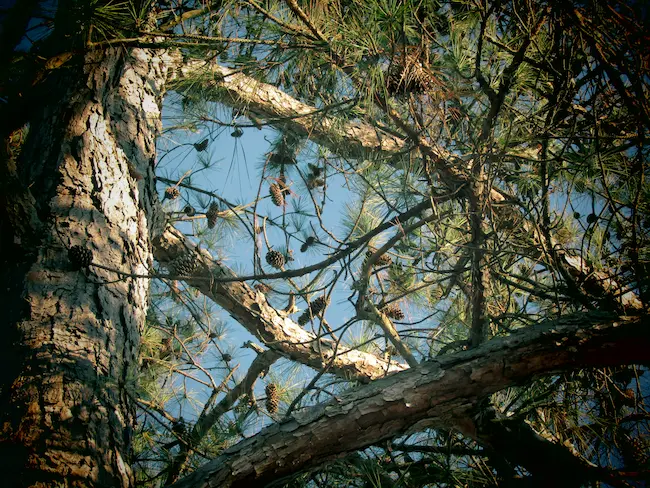
Trees exhibit a wide range of natural lifespans, from decades to millennia, reflecting their unique biological strategies for survival[1]. Unlike animals, whose lifespans are often linked to size and metabolic rate, trees' longevity is more closely tied to their growth patterns and defensive mechanisms. Species like the bristlecone pine invest heavily in defensive compounds and xylem reinforcement, enabling them to withstand harsh environments for centuries[2]. This slow, steady growth contrasts with faster-growing species that prioritize rapid biomass accumulation over longevity. The concept of senescence in trees is complex; while some exhibit signs of aging, others, like the quaking aspen, can regenerate through clonal growth, potentially achieving biological immortality[3].
Long-lived trees are adapted to survive, not thrive, in their environments. They allocate resources to maintain structural integrity and defend against pathogens and herbivores, rather than maximizing reproductive output[4]. This strategy is evident in their deep root systems, which form extensive mycorrhizal networks, enhancing nutrient uptake and stress resistance[5]. These adaptations allow trees to persist through changing climates and ecological disturbances, demonstrating that age in trees is not a measure of weakness, but a testament to their evolutionary success in slow, stable environments.