
I Hug Trees

Gentle Urban Green Trees

Urban trees and forestry insights from around the world, every week.

📅 2026-01-21 ⏱️ 21 min read 🌳 Weekly

Week of 2026-01-21

Gentle Urban Green Trees

Urban trees and forestry insights from around the world, every week.

This Week's Highlights

Welcome to this week's Urban Forestry Digest, where we dive into the latest trends shaping our urban green spaces. This week, we see a strong focus on adapting to climate change, with Michigan State University leading the charge in researching tree species that can thrive in future Michigan climates and planting thousands to test their resilience. Technology is also stepping up to the plate, with Purdue University's AI initiative revolutionizing urban tree monitoring and analysis, and geospatial technology aiding city planners in protecting and expanding urban forests. However, the story isn't all sunshine; urban tree-planting programs nationwide are grappling with the challenges posed by federal funding retractions, highlighting the critical need for innovative solutions and resilient strategies in the face of changing climates and resource landscapes.

Urban green spaces and city trees

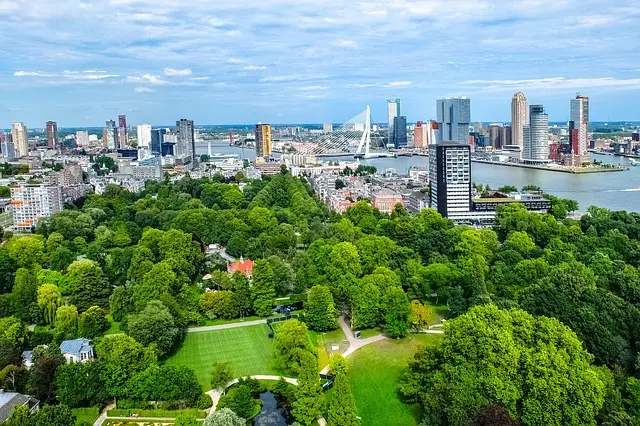
A city image of Osaka, Japan above, one of the most liveable top 10 cities in the world. Courtesy: Pixabay

At I Hug Trees, we want to tell clear stories about our greenery and urban life: shaping how we live, how we breathe, and how we cope with rising heat.

Why Urban Trees Matter

Urban forests are not just decoration. They are critical infrastructure that cities cannot function without. Trees in cities provide real, measurable benefits. They reduce temperatures by 2 to 8 degrees Celsius through shade and evapotranspiration. They intercept stormwater runoff, preventing billions in flood damage. They capture millions of tons of carbon from the atmosphere every year. They filter out air pollutants that cause respiratory disease.

A single mature tree can provide over $150 in annual benefits, from energy savings through building shade to mental health improvements for residents.

Cities with 30 to 40 percent canopy cover experience much lower heat related mortality, reduced urban heat island effects, and higher property values. Beyond money, urban forests support biodiversity in otherwise harsh environments. They provide crucial habitat corridors and offer fair access to nature for communities that have been denied green space.

The Challenges Ahead

Yet urban trees face serious challenges that threaten all these benefits. Climate change is pushing tree species beyond what they can tolerate while bringing more pests and diseases. Cities struggle with maintenance backlogs, not enough funding, and shortages of trained workers. Meanwhile, development pressures keep removing trees.

The gap between wealthy neighborhoods with many trees and underserved areas keeps growing wider, creating environmental injustice.

Without coordinated action (better policies, creative financing, community engagement, and science based management), cities risk losing the infrastructure that makes urban life livable. This weekly digest tracks the innovations, setbacks, and solutions coming from urban forestry practitioners worldwide. The future of livable cities depends on getting this right.

Root Systems & Soil Science

Root Systems and Soil Science

Placeholder image

Understanding root systems and soil science is crucial for maintaining urban soil health and ensuring optimal tree performance[1]. Soil compaction, a common issue in urban environments, can significantly hinder root growth and nutrient uptake[2]. Moreover, mycorrhizae networks, symbiotic associations between fungi and tree roots, play a vital role in nutrient exchange and overall tree health[3]. These networks are influenced by soil density and composition, highlighting the importance of studying root architecture and underground dynamics[4]. Research into these areas can lead to more resilient urban tree populations and improved soil health[5].

Investigating the density dependence of tree growth in relation to temperature gradients and mycorrhizal types offers valuable insights into how different environmental factors impact tree performance[4]. Urban soil health can be enhanced by introducing beneficial microbes and organic matter, which support robust mycorrhizal networks and promote better root development[1]. This, in turn, can lead to more resilient trees that are better equipped to handle urban stressors[5]. Continued research and application of these findings are essential for the sustainability of urban green spaces and the well-being of city dwellers[2].

Technology & Remote Sensing

Technology and Remote Sensing

Placeholder image

Technology has revolutionized remote sensing, providing unprecedented capabilities for urban forest management. GIS applications enable precise mapping and analysis of tree distribution, facilitating informed decision-making for city planners[2]. LiDAR mapping offers detailed 3D representations of urban canopies, enhancing our understanding of tree structure and health[5]. Satellite monitoring allows for continuous observation of forest changes, aiding in the assessment of canopy coverage and growth trends over time[4]. These technologies collectively contribute to more effective urban forest management strategies.

Advanced technologies like AI are now being employed to detect tree health issues with greater accuracy. Purdue University's AI initiative uses machine learning to monitor and analyze urban trees, improving overall city life[1]. Digital inventory tools assist in maintaining comprehensive records of urban forests, helping to identify at-risk trees and prioritize maintenance efforts[3]. By integrating these innovative approaches, cities can better protect and expand their urban forests, ensuring long-term environmental and social benefits.

Species Selection & Climate Adaptation

Species Selection and Climate Adaptation

Placeholder image

Species selection is crucial for adapting urban forests to changing climates. Researchers at Michigan State University have received grants to study which tree species will thrive in future Michigan climates[1][3]. These trials involve planting thousands of trees to assess their resilience to drought and heat[2]. The goal is to identify species that can withstand increasing temperatures and water scarcity, ensuring the sustainability of urban green spaces. This approach not only aids in preserving biodiversity but also enhances the ecological and social benefits provided by trees in urban environments.

Assisted migration and climate-adapted species trials are essential strategies for future-proofing urban forests. By selecting species that are naturally more tolerant to drought and heat, cities can create more resilient green infrastructures[4]. This proactive approach helps mitigate the impacts of climate change on urban ecosystems. Additionally, detailed analyses of the benefits and trade-offs of different tree species inform decision-making processes, allowing for the optimization of urban forestry practices to support long-term climate adaptation goals[5].

Ecosystem Services & Valuation

Ecosystem Services and Valuation

Placeholder image

Ecosystem services provided by urban green spaces, such as trees and shrubs, play a crucial role in mitigating climate change and enhancing urban livability. Carbon sequestration studies have shown that urban trees can absorb significant amounts of carbon dioxide, contributing to reduced greenhouse gas concentrations[2][5]. Additionally, the cooling benefits of urban vegetation help alleviate the urban heat island effect, leading to lower energy consumption for cooling and improved air quality[1]. Stormwater management is another vital ecosystem service, as urban green spaces can absorb and filter rainwater, reducing the burden on stormwater infrastructure and preventing flooding[3].

Economic valuation methodologies are essential for quantifying the benefits of ecosystem services provided by urban vegetation. These methodologies assign monetary values to services such as carbon sequestration, cooling, and stormwater management, allowing policymakers to make informed decisions about green space investments[4]. By understanding the economic value of ecosystem services, cities can prioritize strategies that maximize the benefits of urban green spaces, leading to more sustainable and resilient urban environments. Incorporating economic valuation into urban planning ensures that the full range of benefits provided by ecosystem services is considered, ultimately contributing to more effective and efficient urban development.

Biosecurity & Invasive Pest Threats

Biosecurity and Invasive Pest Threats

Placeholder image

Biosecurity is a critical defense against invasive tree pests and disease outbreaks, which can have devastating effects on urban and natural ecosystems[1]. The Emerald Ash Borer, for example, has caused widespread destruction of ash trees across the United States[4]. Surveillance technologies play a vital role in early detection, allowing for rapid response and containment measures[5]. These technologies include remote sensing, DNA barcoding, and citizen science platforms that engage the public in monitoring efforts[2]. Early detection systems are essential for identifying new threats before they become established, enabling more effective quarantine measures and reducing the potential for widespread damage[3].

Quarantine measures are a key component of biosecurity strategies, aimed at preventing the spread of invasive pests and diseases[5]. These measures can include restrictions on the movement of plants and plant products, as well as targeted treatments to eradicate or control outbreaks[4]. Effective quarantine requires collaboration between governments, industries, and the public to ensure compliance and awareness[1]. Continued investment in research and development of new surveillance technologies and early detection systems is crucial for staying ahead of emerging threats and protecting our valuable tree resources[2][3].

Urban Wood Circular Economy

Urban Wood Circular Economy

Placeholder image

The urban wood circular economy presents a transformative approach to managing wood waste in metropolitan areas. By utilizing wood waste through processes like urban lumber milling and biochar production, cities can significantly reduce landfill diversion[1]. Urban lumber mills convert waste wood into usable lumber, offering a sustainable alternative to traditional timber sources[2]. Additionally, biochar production from wood waste not only sequesters carbon but also provides a valuable soil amendment, enhancing agricultural productivity[3]. This circular approach not only mitigates environmental impact but also creates economic opportunities by generating local jobs and fostering innovative business models centered around recycled wood products[4].

Implementing an urban wood circular economy requires collaboration between municipalities, private enterprises, and community organizations. Cities like Providence have established urban wood depots to centralize the collection and processing of wood waste, making it accessible for various applications[2]. Moreover, initiatives such as Camp Small's wood recycling program demonstrate the potential for community-driven solutions to contribute to the circular economy[4]. By diverting wood waste from landfills and transforming it into valuable resources, urban areas can achieve significant environmental and economic benefits, paving the way for a more sustainable future[5].

Risk Management & Legal Liability

Risk Management and Legal Liability

Placeholder image

Risk management in tree care involves evaluating potential hazards associated with trees and implementing strategies to mitigate these risks. Advanced technologies, such as Tele-Arborist™ by The Sustainable Green Team, Ltd. (SGTM), leverage blockchain for enhanced tree risk assessment[1]. Legal liability in this field often arises from tree failures or improper maintenance, leading to litigation. Understanding and adhering to professional standards is crucial for arborists to minimize liability risks. These standards guide proper tree care practices and risk assessments, ensuring that arborists operate within legal and safety frameworks.

Insurance requirements for tree care professionals are becoming more stringent, especially in regions prone to natural disasters like wildfires[4]. Comprehensive insurance policies can protect businesses from financial losses due to liability claims. Additionally, the use of sophisticated risk assessment methods, such as hierarchical fuzzy inference trees, can improve the accuracy of risk predictions and enhance safety measures[2]. By integrating these technologies and adhering to professional standards, arborists can effectively manage risks and reduce legal liabilities.

Maintenance Crisis

Maintenance Crisis

Placeholder image

The maintenance crisis facing urban forestry programs is multifaceted, with significant challenges arising from pruning backlogs, watering difficulties, and budget constraints[1]. Cities across the nation are grappling with a growing number of trees requiring care, exacerbated by federal funding retractions that have left many municipalities struggling to allocate sufficient resources[1]. This situation is further complicated by the aging infrastructure and missing data that hinder efficient maintenance operations[5]. The result is a precarious balance where tree mortality from neglect looms large, threatening the urban canopy and the myriad benefits it provides[2].

In response to these pressing issues, cities are exploring innovative maintenance solutions to mitigate the impacts of the crisis[3]. These solutions range from adopting new technologies for better data management and tree health monitoring to implementing community-driven maintenance programs that engage local residents in the care of their urban forests[4]. Such approaches not only aim to address the immediate challenges of pruning backlogs and watering but also seek to foster a more resilient and engaged urban forestry ecosystem capable of adapting to future uncertainties[3][4].

Staffing & Workforce Development

Staffing and Workforce Development

Placeholder image

Urban forestry faces significant staffing challenges, particularly in addressing urban forester shortages[1]. To combat this, institutions like Kentucky State University have received substantial funding to bolster arborist training programs[3]. These programs are critical in developing a skilled workforce capable of managing urban tree populations effectively. Certification trends indicate a growing emphasis on professional qualifications in arboriculture, ensuring practitioners meet industry standards[4]. Additionally, volunteer steward programs play a vital role in community engagement and education, helping to supplement the efforts of professional staff[5].

The development of arborist training programs is essential for meeting the demands of urban forestry[3]. These programs not only enhance the skills of current practitioners but also attract new talent to the field. Certification trends reflect a shift towards higher qualifications, ensuring that arborists are well-prepared to handle the complexities of urban environments[4]. Volunteer steward programs further contribute to workforce development by fostering a community-driven approach to tree care and maintenance[5]. Together, these initiatives are crucial for sustaining healthy urban forests and addressing the ongoing challenges faced by the sector.

Funding & Resource Allocation

Funding and Resource Allocation

Placeholder image

Funding and resource allocation for urban tree-planting and green infrastructure projects have become increasingly challenging due to federal budget cuts[1][2]. These reductions have forced municipalities to explore alternative financing methods. Creative financing options such as bonds and carbon credits are being utilized to bridge funding gaps[3]. Public-private partnerships have emerged as a viable strategy, allowing local governments to leverage private sector investments for green initiatives[4]. Additionally, grant programs from state and federal agencies continue to play a crucial role in supporting these projects, though competition for limited funds has intensified[5].

The shift towards innovative funding mechanisms is evident as urban areas adapt to constrained budgets. For instance, the use of carbon credits not only provides financial resources but also aligns with broader environmental goals[3]. Public-private partnerships facilitate knowledge sharing and resource pooling, enhancing the effectiveness of green infrastructure projects[4]. Grant programs, despite facing cuts, remain essential for seeding new initiatives and fostering community engagement in sustainable urban development[5]. As funding landscapes evolve, cities must remain agile and resourceful to maintain momentum in their green infrastructure efforts.

Urban Development Pressure

Urban Development Pressure

Placeholder image

Urban development pressure often leads to conflicts between housing needs and tree canopy preservation. In many regions, including the Chesapeake Bay area, urban tree canopy continues to shrink due to development[1]. This trend raises concerns about the loss of mature trees, such as old oaks, which are sometimes removed to make way for new projects[2]. Municipalities face the challenge of balancing growth with environmental conservation. Tree protection ordinances are implemented to mitigate these impacts, but enforcement varies. For instance, Oakland has specific permits for project-related tree removal, aiming to regulate and minimize canopy loss[3]. However, the effectiveness of these ordinances depends on consistent enforcement and community engagement.

Seattle’s contested tree protection ordinance highlights the complexities of enforcing tree preservation laws[4]. Developers often push for faster tree removal to expedite projects, leading to tensions with local advocates for stronger canopy protection. In Wilmington, some development projects designate 'tree protection areas' to balance growth and conservation[5]. These areas aim to preserve significant trees while allowing for necessary urban expansion. The success of such approaches relies on clear policies, effective enforcement, and ongoing public involvement to ensure that urban development does not come at the expense of valuable green spaces.

Climate Resilience & Extreme Events

Climate Resilience and Extreme Events

Placeholder image

Climate resilience in urban environments is increasingly challenged by extreme events such as droughts, heat waves, and storms. Drought impacts, in particular, have been a focus of recent research, with institutions like Michigan State University and Purdue University exploring tree species that can withstand future climates[1][3]. Heat wave responses are critical, as urban areas experience higher temperatures due to the urban heat island effect. Studies have shown that trees need adequate water and space to maximize cooling effects[5]. Storm damage mitigation is another key area, where climate-proofing strategies are being developed to enhance the resilience of urban forests.

Emergency response to extreme events requires robust planning and implementation of climate-proofing strategies. Collaborations between major research institutions, such as those in Illinois, aim to improve urban forest drought resilience[4]. These efforts include the use of artificial intelligence for urban forest inventory, which helps in identifying vulnerable areas and planning effective interventions[3]. As climate events become more frequent and severe, the integration of research findings into practical applications will be essential for enhancing urban resilience.

Social Equity & Environmental Justice

Social Equity and Environmental Justice

Placeholder image

Social equity and environmental justice are increasingly critical components in urban planning, particularly in tree equity initiatives. These programs aim to address disparities in tree canopy coverage across different neighborhoods, often revealing a correlation between lower canopy cover and historically marginalized communities[1]. However, there is a delicate balance to be maintained; greening efforts must be carefully managed to avoid gentrification, which can lead to displacement of long-term residents[2]. Effective community engagement and representation are vital to ensure that the benefits of increased greenery, such as improved air quality and reduced urban heat island effects, are equitably distributed[3].

Incorporating community voices in the planning process helps to tailor tree planting and maintenance strategies to local needs and preferences, fostering a sense of ownership and stewardship among residents[4]. Additionally, leveraging technology, such as online tools for local planning, can enhance the precision and effectiveness of tree equity initiatives[5]. By prioritizing social equity and environmental justice, urban forestry programs can contribute to healthier, more resilient, and inclusive urban environments.

Policy & Planning Updates

Policy and Planning Updates

Placeholder image

Recent policy and planning updates in urban forestry reveal a growing emphasis on comprehensive urban forest master plans. Cities like Georgetown and Louisville have invested significantly in developing these plans to enhance urban green spaces[1][2]. Additionally, the City of Irvine has made strides in reviewing and updating its Urban Forest Master Plan to better align with contemporary environmental goals[3]. These initiatives often include setting municipal canopy cover targets, a critical component for sustainable urban development. However, challenges arise as some targets are deemed unrealistic given current fast-track housing plans, as noted in Melbourne's recent assessment[4]. This underscores the need for balanced urban planning that considers both environmental and developmental needs.

Legislation and ordinances play a pivotal role in shaping urban forestry policies. Allentown's upcoming community meeting on its city tree plan exemplifies the importance of public engagement in these processes[5]. Such meetings provide a platform for residents to voice their concerns and suggestions, ensuring that the final plans are inclusive and reflective of community needs. Moreover, these legislative efforts are crucial for establishing regulations that protect and promote urban forests. As cities continue to evolve, the integration of robust urban forest master plans, supported by effective legislation and community input, will be essential in achieving sustainable urban ecosystems.

Case Study Spotlight

Case Study Spotlight

Placeholder image

Portland's Urban Forestry program has achieved significant success through strategic partnerships and community engagement. By collaborating with Friends of Trees, the city has expanded its community tree planting efforts, resulting in a substantial increase in urban green spaces[3]. This initiative not only enhances the city's aesthetic appeal but also contributes to environmental benefits such as improved air quality and reduced urban heat island effects. The program's replicable strategy involves leveraging local partnerships, securing funding through grants, and involving community volunteers in planting and maintenance activities.

In contrast, the Deer Valley East Village Fuels Reduction Program demonstrates effective forest management techniques that can be adapted to urban settings. This program has successfully reduced fire hazards while promoting sustainable forest practices[4]. Key lessons learned include the importance of community buy-in, the use of data-driven approaches to identify high-risk areas, and the integration of traditional ecological knowledge with modern forest management techniques. These strategies can be replicated in other cities facing similar challenges, highlighting the potential for cross-sector collaboration in achieving urban forestry goals.

Thank you for reading this week's Gentle Urban Greens digest. We'll return next week with more insights from the world of urban forestry.

📚 Referenced Sources

Root Systems & Soil Science

  1. A framework for soil microbial ecology in urban ecosystems - Nugent - 2022 - Ecosphere - ESA Journals (2026-01-21)
  2. Root Systems Research for Bioinspired Resilient Design: A Concept Framework for Foundation and Coastal Engineering - Frontiers (2026-01-21)
  3. Getting to the root of the problem in tree digital twin models - Phys.org (2026-01-21)
  4. Density dependence of tree growth varies with temperature gradient and mycorrhizal type - besjournals (2026-01-21)
  5. Holden scientists hope a pinch of forest dirt can help Cleveland trees thrive - cleveland.com (2026-01-21)

Technology & Remote Sensing

  1. Purdue AI urban tree monitoring and analysis initiative to improve city life - Purdue University - College of Agriculture (2026-01-21)
  2. Geospatial Technology Helps City Planners Protect and Expand Urban Forests - Geo Week News (2026-01-21)
  3. Twin Cities suburbs turn to technology to identify troubled trees - Star Tribune (2026-01-21)
  4. Quantifying urban tree canopy cooling capacity using Bayesian hierarchical models and satellite imagery - Wiley (2026-01-21)
  5. Mapping Georgia’s Urban Forest: Georgia Tech Tools Help Planners Prioritize Tree Canopy - Georgia Tech News Center (2026-01-21)

Species Selection & Climate Adaptation

  1. MSU researcher receives $500K grant to study tree species suited to future Michigan climates - Michigan State University (2026-01-21)
  2. Can these trees withstand climate change? MSU researchers are planting thousands to find out - WCMU Public Radio (2026-01-21)
  3. MSU researcher to study which tree species will best fit Michigan's future climate - wxyz.com (2026-01-21)
  4. Detailed analysis of the benefits and trade-offs of urban street trees in Las Vegas - Phys.org (2026-01-21)
  5. Tropical trees are fighting an uphill battle with climate change. And they’re losing. - Wake Forest University (2026-01-21)

Ecosystem Services & Valuation

  1. Urban tree planting should consider local characteristics: assessing spatial heterogeneity in canopy cooling effects on land surface temperature using Bayesian spatially varying coefficient models - Frontiers (2026-01-21)
  2. ‘L.A. trees are kicking ass.’ Urban plants capture more CO2 than expected, study finds - latimes.com (2026-01-21)
  3. Ecosystem benefits of urban woody plants for sustainable green space planning: a case study from Wroclaw - Nature (2026-01-21)
  4. URBAN FOREST INVENTORY USING ARTIFICIAL INTELLIGENCE - Purdue University - College of Agriculture (2026-01-21)
  5. L.A.’s urban trees absorb more carbon than expected, USC Dornsife study finds - USC Dornsife (2026-01-21)

Biosecurity & Invasive Pest Threats

  1. Researchers issue warning to US region after frightening revelation: 'People were hopeless' - The Cool Down (2026-01-21)
  2. City living isn't good for a tree's microbiome, study shows. Here's what that means - wbur.org (2026-01-21)
  3. Scientists link urban tree structure to mental health - news.clemson.edu (2026-01-21)
  4. Emerald Ash Borer | Animal and Plant Health Inspection Service - aphis.usda.gov (2026-01-21)
  5. Pests and Plants: Laws that Combat Invasive Species - mass.gov (2026-01-21)

Urban Wood Circular Economy

  1. Turning Urban Wood Waste into Local, Sustainable Opportunities - Environmental and Energy Study Institute (2026-01-21)
  2. What to know about Providence's new Urban Wood Depot and how to use it. - providencejournal.com (2026-01-21)
  3. Evaluating biochar extraction from waste tree stumps in different pyrolysis systems using life cycle analysis - Nature (2026-01-21)
  4. New beer raises money for Camp Small wood recycling program - wbaltv.com (2026-01-21)
  5. California is home to millions of urban trees. What happens when they die? - latimes.com (2026-01-21)

Risk Management & Legal Liability

  1. The Sustainable Green Team, Ltd. (SGTM) Introduces Tele-Arborist™: A Blockchain-Powered Innovation in Tree Care and Global Restoration - markets.businessinsider.com (2026-01-21)
  2. Risk assessment in sociotechnical systems based on functional resonance analysis method and hierarchical fuzzy inference tree - Nature (2026-01-21)
  3. What is OB Ficus Tree Condition, Context, and Failure Assessment Study? - obrag.org (2026-01-21)
  4. California’s Latest Wildfire Problem: Insuring the Tree Trimmers (Published 2019) - The New York Times (2026-01-21)
  5. Agent’s Plea That Landscaping Includes Tree Removal Fails - Insurance Journal (2026-01-21)

Maintenance Crisis

  1. Urban tree-planting programs adapt to federal funding retraction - Smart Cities Dive (2026-01-21)
  2. Trees & Sidewalks program funding cut as homeowners deal with long wait times, dangerous conditions - silive.com (2026-01-21)
  3. New street tree planning study offers insights into a greener Seattle future - sdotblog.seattle.gov (2026-01-21)
  4. City Council Adopts Portland’s Updated Urban Forest Plan - portland.gov (2026-01-21)
  5. Aging infrastructure, missing data, and backlog of repairs plague PG&E - ktvu.com (2026-01-21)

Staffing & Workforce Development

  1. ‘So excited’: UNLV program plants 18 trees in North Las Vegas neighborhood - reviewjournal.com (2026-01-21)
  2. One tree matters: reflections on data as a design material in urban forestry - Frontiers (2026-01-21)
  3. Kentucky State University awarded $1.2 M to support urban forestry - lanereport.com (2026-01-21)
  4. After impactful 2025, Huntsville Landscape Management plans arboretum, veterans memorial grove in 2026 - 256today.com (2026-01-21)
  5. Sacramento plans to add more trees as it faces service-request backlog - kcra.com (2026-01-21)

Funding & Resource Allocation

  1. Urban tree-planting programs adapt to federal funding retraction - Smart Cities Dive (2026-01-21)
  2. Allegheny County loses millions in green infrastructure grants as feds cut funding, ease regulations - publicsource.org (2026-01-21)
  3. DEEP Announces Grant Recipients and New Funding Opportunity for Urban and Community Forestry - portal.ct.gov (2026-01-21)
  4. William Bond, grasslands researcher who reminded conservation that context matters, has died - Mongabay (2026-01-21)
  5. Funding for Green Infrastructure Projects Now Available from the Illinois EPA - riverbender.com (2026-01-21)

Urban Development Pressure

  1. Forests, urban tree canopy still shrinking in Chesapeake Bay region - bayjournal.com (2026-01-21)
  2. Old oak removal at development site sparks concern - smdailyjournal.com (2026-01-21)
  3. Project-Related Tree Removal Permits - oaklandca.gov (2026-01-21)
  4. Developers’ tree-cutting pace surges under contested Seattle tree protection ordinance - InvestigateWest (2026-01-21)
  5. Some projects in Wilmington include a 'tree protection area.' Here's how it works. - starnewsonline.com (2026-01-21)

Climate Resilience & Extreme Events

  1. MSU researcher receives $500K grant to study tree species suited to future Michigan climates - Michigan State University (2026-01-21)
  2. Can these trees withstand climate change? MSU researchers are planting thousands to find out - WCMU Public Radio (2026-01-21)
  3. URBAN FOREST INVENTORY USING ARTIFICIAL INTELLIGENCE - Purdue University - College of Agriculture (2026-01-21)
  4. Four major Illinois research institutions form a collaboration to improve urban forest drought resilience - anl.gov (2026-01-21)
  5. Urban heat relief: Trees need water and space to maximize cooling, study finds - Phys.org (2026-01-21)

Social Equity & Environmental Justice

  1. Greening Without Displacement: The USDA’s Urban Forestry Approach - Environmental and Energy Study Institute (2026-01-21)
  2. Colorado environmental justice groups are struggling to keep their projects alive after federal funding cuts - cpr.org (2026-01-21)
  3. Climate change is making cities hotter. Here’s how planting trees can help - The Conversation (2026-01-21)
  4. Rhode Island Uses Urban Forestry to Improve Public Health - U.S. Environmental Protection Agency (.gov) (2026-01-21)
  5. A new online tool could aid in local planning to increase tree coverage - heraldnet.com (2026-01-21)

Policy & Planning Updates

  1. Georgetown invests in trees, Urban Forest Master Plan - wilcosun.com (2026-01-21)
  2. Louisville Urban Forest Master Plan - louisvilleky.gov (2026-01-21)
  3. Review the Urban Forest Master Plan - cityofirvine.org (2026-01-21)
  4. Tree canopy target ‘unrealistic’ under new fast-track housing plans - theage.com.au (2026-01-21)
  5. Allentown officials to hold community meeting on city tree plan; survey still open - lehighvalleynews.com (2026-01-21)

Case Study Spotlight

  1. Greening Without Displacement: The USDA’s Urban Forestry Approach - Environmental and Energy Study Institute (2026-01-21)
  2. FCCP publishes white paper and hyper-realistic urban tree visualization summarizing the impact of Emerald Ash Borer in Detroit, MI - Forest Carbon and Climate Program - Michigan State University (2026-01-21)
  3. Portland Parks & Recreation Urban Forestry Partners with Friends of Trees to Expand Community Tree Planting - portland.gov (2026-01-21)
  4. Deer Valley East Village Fuels Reduction Program marks transformative success in forest management - townlift.com (2026-01-21)
  5. City Tree Planting Program - fairfaxva.gov (2026-01-21)