
I Hug Trees

Gentle Urban Green Trees

Urban trees and forestry insights from around the world, every week.

📅 2026-03-11 ⏱️ 22 min read 🌳 Weekly

Week of 2026-03-11

Gentle Urban Green Trees

Urban trees and forestry insights from around the world, every week.

This Week's Highlights

Welcome to this week's Urban Forestry Digest, where we delve into the latest advancements and challenges shaping our urban green spaces. This week, we spotlight the critical theme of species-climate adaptation, with Michigan State University leading the charge in researching tree species that can thrive in Michigan's evolving climate. Alongside, we explore the intricate relationship between root systems and soil, uncovering how soil-dwelling fungi influence global tree species. Technology takes center stage as we witness the fusion of AI and satellite data for enhanced urban tree monitoring. Additionally, we address the pressing issues of biosecurity and pests, alongside the impact of federal funding retractions on urban tree-planting programs. Join us as we navigate these pivotal topics and more in the world of urban forestry.

Urban green spaces and city trees

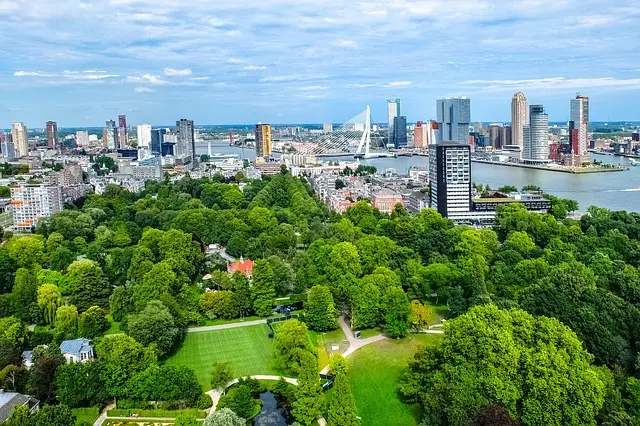
A city image of Osaka, Japan above, one of the most liveable top 10 cities in the world. Courtesy: Pixabay

At I Hug Trees, we want to tell clear stories about our greenery and urban life: shaping how we live, how we breathe, and how we cope with rising heat.

Why Urban Trees Matter

Urban forests are not just decoration. They are critical infrastructure that cities cannot function without. Trees in cities provide real, measurable benefits. They reduce temperatures by 2 to 8 degrees Celsius through shade and evapotranspiration. They intercept stormwater runoff, preventing billions in flood damage. They capture millions of tons of carbon from the atmosphere every year. They filter out air pollutants that cause respiratory disease.

A single mature tree can provide over $150 in annual benefits, from energy savings through building shade to mental health improvements for residents.

Cities with 30 to 40 percent canopy cover experience much lower heat related mortality, reduced urban heat island effects, and higher property values. Beyond money, urban forests support biodiversity in otherwise harsh environments. They provide crucial habitat corridors and offer fair access to nature for communities that have been denied green space.

The Challenges Ahead

Yet urban trees face serious challenges that threaten all these benefits. Climate change is pushing tree species beyond what they can tolerate while bringing more pests and diseases. Cities struggle with maintenance backlogs, not enough funding, and shortages of trained workers. Meanwhile, development pressures keep removing trees.

The gap between wealthy neighborhoods with many trees and underserved areas keeps growing wider, creating environmental injustice.

Without coordinated action (better policies, creative financing, community engagement, and science based management), cities risk losing the infrastructure that makes urban life livable. This weekly digest tracks the innovations, setbacks, and solutions coming from urban forestry practitioners worldwide. The future of livable cities depends on getting this right.

Root Systems & Soil Science

Root Systems and Soil Science

Placeholder image

Root systems play a crucial role in soil science, particularly in understanding soil compaction and its effects on tree performance[1]. Compacted soils can restrict root growth, reducing water and nutrient uptake, and ultimately affecting tree health[5]. Mycorrhizae networks, formed by fungi and tree roots, are essential for nutrient exchange and can mitigate some effects of soil compaction[1]. In urban environments, soil health is often compromised due to construction and pollution, making the study of root architecture and underground dynamics even more critical[5]. Recent research has uncovered a second set of deep roots in some plants, which may offer new insights into how trees adapt to compacted urban soils[3].

The interaction between root systems and soil microbes is a burgeoning area of study, particularly in urban ecosystems[5]. Urban soil health is influenced by factors such as pollution, limited organic matter, and altered microbial communities[5]. Understanding these interactions can lead to better management practices for urban trees[5]. Additionally, the study of argan fruit microbiomes provides a model for how specific microbial communities can influence plant health and root system efficiency[2]. This knowledge can be applied to improve urban tree performance and resilience in the face of soil compaction and other challenges[4].

Technology & Remote Sensing

Technology and Remote Sensing

Placeholder image

Technological advancements have revolutionized urban forestry management through Geographic Information System (GIS) applications, LiDAR mapping, and satellite monitoring[1]. These tools provide precise data for informed decision-making. For instance, Purdue University's digital forestry team utilizes AI combined with satellite data to monitor urban trees, enhancing tree health detection and management[1]. Similarly, LiDAR technology, as employed in Laredo, Texas, offers detailed 3D mapping of tree canopies, aiding in accurate urban forest assessments[3]. Satellite monitoring further complements these efforts by providing extensive coverage and real-time data on tree conditions and growth patterns[2].

Artificial Intelligence (AI) plays a crucial role in modern urban forestry by enabling advanced tree health detection and digital inventory tools[4]. AI algorithms analyze complex data sets from various sources, including satellite imagery and LiDAR scans, to identify stressed or diseased trees promptly[5]. This proactive approach allows city planners to address issues before they escalate, ensuring the sustainability and resilience of urban forests[4]. Additionally, digital inventory tools facilitate the systematic documentation and management of urban tree populations, supporting long-term urban planning and environmental conservation efforts[5].

Species Selection & Climate Adaptation

Species Selection and Climate Adaptation

Placeholder image

Michigan State University (MSU) researchers are conducting extensive trials to identify tree species that can thrive in Michigan's evolving climate. These trials involve planting thousands of trees to assess their resilience to drought and heat, crucial factors for future-proofing urban forests[1][2]. The goal is to select species that not only survive but also flourish under projected climate conditions, ensuring the sustainability of urban green spaces. This research is part of a broader effort to adapt urban forestry practices to climate change, emphasizing the need for species that can withstand increasing temperatures and reduced water availability[3].

Assisted migration is another strategy being explored, where tree species are intentionally relocated to areas where they are expected to thrive under future climate scenarios[4]. This approach helps in maintaining biodiversity and ecosystem services in urban environments. Additionally, studies on soil-dwelling fungi are revealing their significant impact on tree species distribution globally, suggesting that understanding these relationships could further enhance climate adaptation strategies for urban forests[5]. Through these combined efforts, cities aim to create resilient, climate-adapted urban forests that can support both ecological and human well-being.

Ecosystem Services & Valuation

Ecosystem Services and Valuation

Placeholder image

Ecosystem services provided by urban trees, such as carbon sequestration and cooling benefits, play a crucial role in mitigating climate change and enhancing urban livability[1]. Carbon sequestration studies have shown that urban trees can absorb significant amounts of CO₂, often surpassing the emissions from local car traffic[5]. Additionally, trees provide cooling effects that reduce land surface temperatures, contributing to more comfortable urban environments[1]. Stormwater management is another vital service, where trees help in reducing runoff and improving water quality[4]. These services underscore the importance of integrating trees into urban planning.

The economic valuation of these ecosystem services is essential for informed decision-making. Methodologies such as the Sustainable Asset Valuation (SAVi) provide a framework to assess the monetary value of tree-planting initiatives[2]. By quantifying the benefits in economic terms, stakeholders can better understand the return on investment for urban greening projects[3]. This valuation not only highlights the financial benefits but also supports the case for increased funding and policy support for urban forestry initiatives[2].

Biosecurity & Invasive Pest Threats

Biosecurity and Invasive Pest Threats

Placeholder image

Biosecurity measures are crucial in mitigating the risks posed by invasive tree pests and disease outbreaks. These threats can have devastating impacts on native ecosystems, agriculture, and urban forestry. Effective surveillance technologies play a pivotal role in early detection, allowing for timely intervention. For instance, nearly 20 certified fallers with the South Carolina Forestry Commission (SCFC) cut down almost 1,000 trees infested by the invasive Asian Longhorned Beetle during a recent two-week tree felling project[1]. Quarantine measures are also essential to prevent the spread of invasive pests. These measures include restricting the movement of potentially infested materials and implementing strict monitoring protocols[2]. Early detection systems, such as remote sensing and DNA-based diagnostics, enhance the ability to identify and respond to emerging threats promptly.

The integration of advanced surveillance technologies with traditional pest management practices is vital for sustainable biosecurity. For example, the use of drones and satellite imagery can provide real-time data on pest infestations, enabling more targeted and effective responses[3]. Additionally, public awareness and community involvement in reporting suspicious pest sightings can significantly contribute to early detection efforts[4]. The Animal and Plant Health Inspection Service (APHIS) emphasizes the importance of a coordinated approach involving government agencies, researchers, and the public to combat invasive pest threats effectively[5]. By leveraging these strategies, we can better protect our forests, crops, and urban green spaces from the detrimental effects of invasive pests.

Urban Wood Circular Economy

Urban Wood Circular Economy

Placeholder image

The Urban Wood Circular Economy is an innovative approach that focuses on the sustainable utilization of wood waste in urban environments. By implementing urban lumber milling, cities can process wood waste into usable lumber, reducing the demand for new timber and minimizing landfill contributions[1]. This process not only conserves natural resources but also creates economic opportunities through the production and sale of recycled wood products[2]. Additionally, the conversion of wood waste into biochar offers another layer of sustainability. Biochar, produced through pyrolysis, can be used to improve soil quality and sequester carbon, further enhancing environmental benefits[4]. This multifaceted approach to wood waste management supports landfill diversion efforts and fosters a more resilient urban ecosystem.

Economic opportunities within the Urban Wood Circular Economy extend beyond the direct sale of recycled products. Initiatives like those in Philadelphia demonstrate how urban forestry can be funded through innovative means, such as partnerships and community engagement[3]. These programs not only generate revenue but also raise awareness about the importance of sustainable practices. Furthermore, creative projects, such as the beer initiative supporting Camp Small’s wood recycling program, illustrate the potential for community-driven economic models that benefit both the environment and local economies[5]. By integrating these strategies, cities can create a robust circular economy that maximizes resource efficiency and promotes sustainable development.

Risk Management & Legal Liability

Risk Management and Legal Liability

Placeholder image

Risk management in arboriculture involves evaluating and mitigating potential hazards associated with trees, particularly those that could lead to property damage or personal injury[1]. Advanced technologies like drone assessments and computer modeling are increasingly used to predict tree failure risks more accurately[1]. Legal liability is a significant concern for property owners and professionals involved in tree care. Failure to maintain trees properly can result in litigation if damage occurs[3]. It is crucial for property owners to adhere to professional standards and ensure that qualified arborists conduct regular assessments and maintenance[3].

Insurance requirements for tree care professionals have become more stringent, especially in regions prone to natural disasters like wildfires[5]. Professionals must carry adequate liability insurance to cover potential damages and legal fees arising from their work[5]. Homeowners are also advised to review their insurance policies to ensure they have adequate coverage for tree-related incidents[4]. By following professional standards and ensuring proper insurance coverage, both professionals and homeowners can better manage the risks associated with tree care[2].

Maintenance Crisis

Maintenance Crisis

Placeholder image

Urban tree maintenance is facing a critical juncture due to mounting challenges. The backlog of pruning tasks has escalated as cities grapple with budget constraints, forcing a reevaluation of maintenance priorities[1]. Watering urban trees, particularly in drought-prone areas, presents a significant logistical and financial challenge, exacerbating tree mortality rates from neglect[2]. Federal funding retractions have further strained municipal budgets, compelling cities to seek innovative maintenance solutions to sustain their urban forests[3]. The interplay of these factors has led to a maintenance crisis, where the neglect of essential care practices threatens the vitality and longevity of urban trees.

Innovative approaches are being explored to address the maintenance crisis. Cities are adopting technology-driven solutions to manage tree care more efficiently, such as using drones for monitoring and precision watering systems to optimize water usage[4]. Additionally, there is a growing emphasis on community involvement in tree maintenance, leveraging volunteer efforts to supplement municipal resources[5]. These strategies aim to mitigate the impacts of budget constraints and backlogs, ensuring the health and resilience of urban forests in the face of evolving challenges.

Staffing & Workforce Development

Staffing and Workforce Development

Placeholder image

Staffing and workforce development are critical focus areas in urban forestry, particularly addressing the shortages of urban foresters and arborists. Many cities face challenges in maintaining adequate staffing levels to manage and grow their urban tree canopies[2]. To combat this, initiatives like UNLV's program, which recently planted 18 trees in a North Las Vegas neighborhood, are crucial[1]. Additionally, arborist training programs and certification trends are gaining traction, ensuring that professionals are well-equipped with the latest knowledge and skills in tree care and management. These efforts are essential for enhancing the quality and sustainability of urban forests.

Volunteer steward programs play a significant role in workforce development by engaging community members in urban forestry initiatives. Programs like the Community Stewardship Program by the Toronto and Region Conservation Authority (TRCA) empower volunteers to participate in tree planting, maintenance, and educational activities[3]. This not only helps in alleviating the pressure on professional staff but also fosters a community-driven approach to urban forestry. As cities like Sacramento and Miami-Dade County strive to increase their tree canopies, the involvement of trained volunteers and certified professionals becomes increasingly vital[4][5].

Funding & Resource Allocation

Funding and Resource Allocation

Placeholder image

Budget cuts have significantly impacted funding for green infrastructure projects, as seen in Allegheny County, where millions in federal grants were lost due to federal funding cuts and eased regulations[1]. To address these financial gaps, creative financing methods such as bonds and carbon credits are being explored. For instance, Midland University recently received a $50,300 grant for community forestry infrastructure, highlighting the importance of grant programs in supporting environmental initiatives[2]. Public-private partnerships are also emerging as a viable solution, providing additional resources and expertise to enhance project outcomes.

The elimination of programs like Washington’s tree-planting initiative in Tacoma underscores the vulnerability of environmental funding to budget cuts[4]. In response, communities are increasingly turning to diverse funding sources, including local government grants and private sector investments. The City of Portland, for example, offers community grants aimed at supporting nonprofit organizations in their environmental efforts[5]. These varied approaches to resource allocation are crucial for sustaining and expanding green infrastructure projects in the face of financial uncertainties.

Urban Development Pressure

Urban Development Pressure

Placeholder image

Urban development pressure often leads to the removal of trees to make way for new construction, creating a conflict between housing needs and the desire to maintain or increase urban tree canopy[1]. This tension is particularly evident in areas where rapid urbanization is occurring, and the demand for housing is high[2]. Tree protection ordinances are implemented in many cities to mitigate this issue, aiming to balance development with environmental preservation[3]. However, the enforcement of these ordinances can be challenging, leading to instances where trees are removed despite existing protections[4]. The removal of mature trees, such as the old oak in San Mateo, highlights the ongoing struggle between development pressures and the need to preserve urban green spaces[5].

Effective urban forestry management requires a delicate balance between accommodating growth and protecting natural resources[2]. Cities must navigate policy conflicts that arise when development interests clash with environmental regulations[3]. Strengthening tree protection ordinances and improving enforcement mechanisms are critical steps in addressing these challenges[4]. Additionally, promoting public awareness and engagement in urban forestry initiatives can help foster a community-driven approach to preserving tree canopy amidst urban development pressures[5].

Climate Resilience & Extreme Events

Climate Resilience and Extreme Events

Placeholder image

Climate resilience is increasingly vital as extreme weather events become more frequent and severe. Drought impacts are a growing concern, with many regions facing prolonged water scarcity. This necessitates the development of drought-resistant tree species, as highlighted by Michigan State University's research into future-proof Michigan climates[1]. Heat waves demand robust responses, including the expansion of urban tree canopies to mitigate the urban heat island effect, as detailed by The University of Rhode Island[3]. Storm damage underscores the need for resilient infrastructure and effective emergency response strategies. Collaborations like those formed by four major Illinois research institutions aim to enhance urban forest resilience against drought[4]. Climate-proofing strategies are essential, involving both natural solutions like urban forests and engineered defenses to protect communities from the escalating threats of climate change.

In addressing heat wave responses, the role of urban forests is critical. Researchers at Michigan State University are planting thousands of trees to assess their resilience to climate change, contributing valuable data to our understanding of urban forest dynamics[2]. Storm damage mitigation requires a multifaceted approach, incorporating advanced modeling and predictive analytics to anticipate and prepare for extreme events. Emergency response systems must be agile and well-coordinated, leveraging technology to enhance communication and resource allocation. Climate-proofing strategies should be tailored to local conditions, integrating both ecological and infrastructural elements to build comprehensive resilience. The study of urban forests across the United States by Dartmouth provides insights into the diverse challenges and opportunities in different regions[5].

Social Equity & Environmental Justice

Social Equity and Environmental Justice

Placeholder image

Social equity and environmental justice are critical components in urban planning and greening initiatives. Tree equity initiatives aim to address disparities in tree canopy coverage across different neighborhoods, ensuring that all communities, regardless of socioeconomic status, have access to the benefits of urban forests[3]. However, there is a growing concern that greening efforts can lead to gentrification, displacing long-term residents and altering the social fabric of neighborhoods[4]. This phenomenon, known as green gentrification, underscores the need for careful planning and community engagement to ensure that green spaces benefit existing residents without leading to displacement.

Effective community engagement and representation are essential to achieving true environmental justice. Involving local residents in decision-making processes ensures that their needs and concerns are addressed[1]. Additionally, representation in environmental policy-making bodies can help advocate for marginalized communities, ensuring that their voices are heard[2]. By prioritizing community input and fostering inclusive practices, urban greening projects can contribute to both environmental and social equity, creating sustainable and equitable urban environments for all residents.

Policy & Planning Updates

Policy and Planning Updates

Placeholder image

Several cities are actively updating their urban forest master plans to enhance their tree canopy cover. West University has recently updated and strengthened its city tree ordinance[1]. Asheville is inviting community members to participate in workshops to shape its first Urban Forest Master Plan[2][3]. Louisville has also rolled out its Urban Forest Master Plan, aiming to increase the urban forest canopy cover by 10% over the next 10 years[4]. These initiatives highlight a growing emphasis on urban forestry as a critical component of sustainable city planning.

Legislation and ordinances are being revised to support these new urban forest master plans. For instance, Cambridge is conducting a 5-year update of its Urban Forest Master Plan, with a public meeting scheduled to gather community input[5]. These efforts not only aim to increase municipal canopy cover targets but also to ensure the long-term health and sustainability of urban forests. The involvement of community members in these planning processes underscores the importance of public engagement in environmental stewardship.

Case Study Spotlight

Case Study Spotlight

Placeholder image

The city of Portland, Oregon, has successfully implemented an urban forestry plan in partnership with local organizations like Friends of Trees[4]. This initiative focuses on expanding community tree planting, aiming to increase the urban canopy and enhance environmental benefits[4]. Similarly, the USDA’s Urban Forestry Approach emphasizes greening without displacement, ensuring that urban development incorporates tree planting without disrupting existing communities[2]. These strategies highlight the importance of collaboration between municipal governments and community groups to achieve sustainable urban greening[2][4].

In another example, the "Greener Bantams" initiative in the UK has made significant strides in tree planting, demonstrating the impact of community-led efforts[5]. This project not only increases green spaces but also engages local residents in environmental stewardship[5]. Lessons learned from these case studies suggest that replicable strategies involve clear planning, community engagement, and consistent funding[3]. By adopting these practices, other cities can effectively implement their own urban forestry programs[1][3][5].

Thank you for reading this week's Gentle Urban Greens digest. We'll return next week with more insights from the world of urban forestry.

📚 Referenced Sources

Root Systems & Soil Science

  1. New research determines soil-dwelling fungi affect global tree species - Purdue University - College of Agriculture (2026-03-11)
  2. UM6P Researcher Leads First Study Mapping Argan Fruit Microbiome - Morocco World News (2026-03-11)
  3. Plants have a secret, second set of roots deep underground that scientists didn't know about - Live Science (2026-03-11)
  4. Early warning system could prevent a stink when it comes to street tree roots blocking sewer pipes - UniSA - University of South Australia (2026-03-11)
  5. A framework for soil microbial ecology in urban ecosystems - Nugent - 2022 - Ecosphere - ESA Journals (2026-03-11)

Technology & Remote Sensing

  1. Digital forestry team combines AI with satellite data to monitor urban trees - Purdue University - College of Agriculture (2026-03-11)
  2. Geospatial Technology Helps City Planners Protect and Expand Urban Forests - Geo Week News (2026-03-11)
  3. Study Center Using Lidar to Map Tree Canopy in Laredo, Texas - GovTech (2026-03-11)
  4. Twin Cities suburbs turn to technology to identify troubled trees - Star Tribune (2026-03-11)
  5. URBAN FOREST INVENTORY USING ARTIFICIAL INTELLIGENCE - Purdue University - College of Agriculture (2026-03-11)

Species Selection & Climate Adaptation

  1. MSU researcher receives $500K grant to study tree species suited to future Michigan climates - Michigan State University (2026-03-11)
  2. Can these trees withstand climate change? MSU researchers are planting thousands to find out - WCMU Public Radio (2026-03-11)
  3. MSU researcher to study which tree species will best fit Michigan's future climate - WXYZ Channel 7 (2026-03-11)
  4. Detailed analysis of the benefits and trade-offs of urban street trees in Las Vegas - Phys.org (2026-03-11)
  5. New research determines soil-dwelling fungi affect global tree species - Purdue University - College of Agriculture (2026-03-11)

Ecosystem Services & Valuation

  1. Urban tree planting should consider local characteristics: assessing spatial heterogeneity in canopy cooling effects on land surface temperature using Bayesian spatially varying coefficient models - Frontiers (2026-03-11)
  2. Sustainable Asset Valuation (SAVi) of a Small-Scale Tree Planting Initiative in Côte d'Ivoire - International Institute for Sustainable Development (2026-03-11)
  3. URBAN FOREST INVENTORY USING ARTIFICIAL INTELLIGENCE - Purdue University - College of Agriculture (2026-03-11)
  4. MetroCOG Urban Tree Canopy Project - ArcGIS StoryMaps (2026-03-11)
  5. Summer Urban Trees Absorb More CO₂ Than Cars Emit, New Study Shows - BIOENGINEER.ORG (2026-03-11)

Biosecurity & Invasive Pest Threats

  1. Nearly 20 certified fallers with the SCFC cut down almost 1,000 trees infested by the invasive Asian Longhorned Beetle during a two-week tree felling project last month. Our crews had the pleasure of assisting Clemson University’s Department of Plant Industry - facebook.com (2026-03-11)
  2. Farmland trees and integrated pest management: A review of current knowledge and developing strategies for sustainable systems - besjournals (2026-03-11)
  3. Trees — not grass and other greenery — associated with lower heart disease risk in cities - University of California - Davis Health (2026-03-11)
  4. City living isn't good for a tree's microbiome, study shows. Here's what that means - WBUR (2026-03-11)
  5. The Threat | Animal and Plant Health Inspection Service - aphis.usda.gov (2026-03-11)

Urban Wood Circular Economy

  1. Ann Arbor and Urban Ashes Partner on Municipal Wood Recycling Model - DBusiness Magazine (2026-03-11)
  2. Turning Urban Wood Waste into Local, Sustainable Opportunities - Environmental and Energy Study Institute (EESI) (2026-03-11)
  3. A new way to fund urban forestry takes root in Philadelphia - Smart Cities Dive (2026-03-11)
  4. Evaluating biochar extraction from waste tree stumps in different pyrolysis systems using life cycle analysis - Nature (2026-03-11)
  5. New beer raises money for Camp Small wood recycling program - WBAL-TV (2026-03-11)

Risk Management & Legal Liability

  1. SECURETREE: PURSUING NEW TRAJECTORIES FOR RISK ASSESSMENT MODELS IN PRECISION FORESTRY - Frontiers (2026-03-11)
  2. Local Arborists Help Colorado Springs Homeowners Create Defensible Space Through Trimming - Digital Journal (2026-03-11)
  3. Hire qualified professionals for tree evaluation, removal - Mississippi State University Extension Service (2026-03-11)
  4. Trees and Storms – Mitigating the Damage - Purdue University (2026-03-11)
  5. California’s Latest Wildfire Problem: Insuring the Tree Trimmers (Published 2019) - The New York Times (2026-03-11)

Maintenance Crisis

  1. Urban tree-planting programs adapt to federal funding retraction - Smart Cities Dive (2026-03-11)
  2. New street tree planning study offers insights into a greener Seattle future - Seattle.gov (2026-03-11)
  3. City Council Adopts Portland’s Updated Urban Forest Plan - City of Portland, Oregon (.gov) (2026-03-11)
  4. Aging infrastructure, missing data, and backlog of repairs plague PG&E - KTVU (2026-03-11)
  5. City Councilor Proposes Stripping Urban Forestry’s Tree Regulation Team, Directing Savings Toward Parks - Willamette Week (2026-03-11)

Staffing & Workforce Development

  1. ‘So excited’: UNLV program plants 18 trees in North Las Vegas neighborhood - Las Vegas Review-Journal (2026-03-11)
  2. Analysis | Which cities have the most trees? See how yours stacks up. - The Washington Post (2026-03-11)
  3. Community Stewardship Program - Toronto and Region Conservation Authority (TRCA) (2026-03-11)
  4. Sacramento plans to add more trees as it faces service-request backlog - KCRA (2026-03-11)
  5. Miami-Dade County’s urban tree project unable to shade residents from record heat - Miami Herald (2026-03-11)

Funding & Resource Allocation

  1. Allegheny County loses millions in green infrastructure grants as feds cut funding, ease regulations - Pittsburgh's Public Source (2026-03-11)
  2. Midland University Receives $50,300 Community Forestry Infrastructure Grant - Midland University (2026-03-11)
  3. William Bond, grasslands researcher who reminded conservation that context matters, has died - Mongabay (2026-03-11)
  4. WA program that pays to plant trees in Tacoma, elsewhere faces elimination - Tacoma News Tribune (2026-03-11)
  5. Community Grants: Funding opportunities for nonprofits - City of Portland, Oregon (.gov) (2026-03-11)

Urban Development Pressure

  1. Big Easy Tree Cutting Introduces No-Cost Estimate Policy Across All Service Categories for Property Owners - The Providence Journal (2026-03-11)
  2. Urban Forestry Management - FortWorthTexas.gov (2026-03-11)
  3. UTC storymap selected as finalist in global ArcGIS competition - University of Tennessee at Chattanooga (UTC) (2026-03-11)
  4. Forests, urban tree canopy still shrinking in Chesapeake Bay region - Bay Journal (2026-03-11)
  5. Old oak removal at development site sparks concern - San Mateo Daily Journal (2026-03-11)

Climate Resilience & Extreme Events

  1. MSU researcher receives $500K grant to study tree species suited to future Michigan climates - Michigan State University (2026-03-11)
  2. Can these trees withstand climate change? MSU researchers are planting thousands to find out - WCMU Public Radio (2026-03-11)
  3. More Than Just Shade: Understanding Tree Canopy and the Urban Heat Island Effect - The University of Rhode Island (2026-03-11)
  4. Four major Illinois research institutions form a collaboration to improve urban forest drought resilience - anl.gov (2026-03-11)
  5. Study Examines Urban Forests Across the United States - Dartmouth (2026-03-11)

Social Equity & Environmental Justice

  1. Greening Without Displacement: The USDA’s Urban Forestry Approach - Environmental and Energy Study Institute (EESI) (2026-03-11)
  2. Colorado environmental justice groups are struggling to keep their projects alive after federal funding cuts - Colorado Public Radio (2026-03-11)
  3. What is tree equity and what are the health benefits of trees? - The Journalist's Resource (2026-03-11)
  4. Green gentrification cycle: Double-edged sword of environmental justice - The University of Utah (2026-03-11)
  5. Climate change is making cities hotter. Here’s how planting trees can help - The Conversation (2026-03-11)

Policy & Planning Updates

  1. West University officials update, strengthen city tree ordinance - Community Impact | News (2026-03-11)
  2. City of Asheville invites community to register for the Urban Forestry Plan Workshop and tree seedling giveaway - The City of Asheville (.gov) (2026-03-11)
  3. Help shape Asheville's first Urban Forest Master Plan - AVLtoday (2026-03-11)
  4. Louisville Urban Forest Master Plan - LouisvilleKY.gov (2026-03-11)
  5. Cambridge Urban Forest Master Plan 5-Year Update Public Meeting on November 20 - City of Cambridge, MA (.gov) (2026-03-11)

Case Study Spotlight

  1. City adopts urban forest management plan to guide future tree initiatives - WTIP (2026-03-11)
  2. Greening Without Displacement: The USDA’s Urban Forestry Approach - Environmental and Energy Study Institute (EESI) (2026-03-11)
  3. 2026 Urban Forestry Grants Announced | - Granicus (2026-03-11)
  4. Portland Parks & Recreation Urban Forestry Partners with Friends of Trees to Expand Community Tree Planting - City of Portland, Oregon (.gov) (2026-03-11)
  5. 'Greener Bantams' leading tree-planting initiative - BBC (2026-03-11)