
I Hug Trees

Gentle Urban Green Trees

Urban trees and forestry insights from around the world, every week.

📅 2026-04-29 ⏱️ 23 min read 🌳 Weekly

Week of 2026-04-29

Gentle Urban Green Trees

Urban trees and forestry insights from around the world, every week.

This Week's Highlights

Welcome to this week's Urban Forestry Digest, where we delve into the latest trends shaping our green urban landscapes. This week, we spotlight the critical intersection of climate change and tree species adaptation, with Michigan State University leading the charge in researching resilient tree species for future Michigan climates and planting thousands to test their endurance. Additionally, technological advancements take center stage as Purdue University harnesses AI for urban tree monitoring, while Austin employs satellite data to identify and address canopy gaps. Amidst these innovations, the digest also navigates the challenges posed by federal funding retractions, impacting urban tree-planting programs and green infrastructure grants nationwide. Join us as we explore these pivotal themes and more, offering insights into the evolving world of urban forestry.

Urban green spaces and city trees

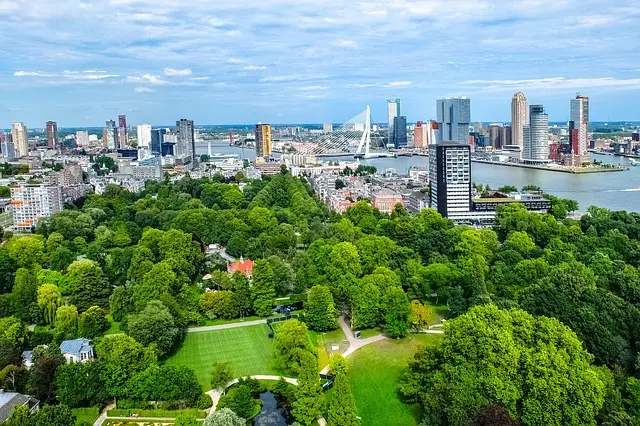
A city image of Osaka, Japan above, one of the most liveable top 10 cities in the world. Courtesy: Pixabay

At I Hug Trees, we want to tell clear stories about our greenery and urban life: shaping how we live, how we breathe, and how we cope with rising heat.

Why Urban Trees Matter

Urban forests are not just decoration. They are critical infrastructure that cities cannot function without. Trees in cities provide real, measurable benefits. They reduce temperatures by 2 to 8 degrees Celsius through shade and evapotranspiration. They intercept stormwater runoff, preventing billions in flood damage. They capture millions of tons of carbon from the atmosphere every year. They filter out air pollutants that cause respiratory disease.

A single mature tree can provide over $150 in annual benefits, from energy savings through building shade to mental health improvements for residents.

Cities with 30 to 40 percent canopy cover experience much lower heat related mortality, reduced urban heat island effects, and higher property values. Beyond money, urban forests support biodiversity in otherwise harsh environments. They provide crucial habitat corridors and offer fair access to nature for communities that have been denied green space.

The Challenges Ahead

Yet urban trees face serious challenges that threaten all these benefits. Climate change is pushing tree species beyond what they can tolerate while bringing more pests and diseases. Cities struggle with maintenance backlogs, not enough funding, and shortages of trained workers. Meanwhile, development pressures keep removing trees.

The gap between wealthy neighborhoods with many trees and underserved areas keeps growing wider, creating environmental injustice.

Without coordinated action (better policies, creative financing, community engagement, and science based management), cities risk losing the infrastructure that makes urban life livable. This weekly digest tracks the innovations, setbacks, and solutions coming from urban forestry practitioners worldwide. The future of livable cities depends on getting this right.

Root Systems & Soil Science

Root Systems and Soil Science

Photo by Sunriseforever on Pixabay

Soil compaction poses significant challenges to urban soil health, directly impacting root systems and overall tree performance[4]. Compacted soils restrict root growth, leading to shallower root systems that are more susceptible to environmental stresses[3]. Moreover, the intricate mycorrhizae networks, crucial for nutrient uptake and tree resilience, are often disrupted in compacted soils[1]. Urban environments exacerbate these issues through construction activities and heavy foot traffic, further degrading soil structure and microbial diversity[4]. Understanding the underground dynamics of root architecture is essential for developing strategies to mitigate soil compaction and enhance urban tree health[5].

The discovery of a secret, second set of roots deep underground highlights the complexity of root systems and their adaptation to environmental conditions[2]. These hidden roots play a vital role in accessing water and nutrients, contributing to the overall resilience of trees[2]. In urban settings, maintaining healthy mycorrhizae networks is critical for supporting tree growth and performance[1]. Innovative approaches, such as the use of structural soils, are being explored to improve soil conditions and promote deeper root growth in compacted urban environments[5]. Continued research into root systems and soil science is essential for developing effective urban forestry practices.


Technology & Remote Sensing

Technology and Remote Sensing

Photo by Sunriseforever on Pixabay

The integration of technology and remote sensing has revolutionized urban forestry management. Geographic Information System (GIS) applications now enable precise mapping and analysis of tree canopies, facilitating informed decision-making[1]. LiDAR mapping provides high-resolution, three-dimensional data of forest structures, enhancing the accuracy of urban forest inventories[4]. Satellite monitoring offers continuous, large-scale observation of tree health and canopy coverage, identifying gaps and areas needing attention[2]. Artificial Intelligence (AI) is increasingly employed for tree health detection, using machine learning algorithms to analyze satellite imagery and detect early signs of disease or stress in trees[3]. Digital inventory tools streamline the collection and management of urban forest data, making it easier for cities to maintain and improve their green spaces[5].

These technological advancements collectively contribute to more effective urban forest management. By leveraging GIS, LiDAR, satellite data, AI, and digital tools, cities can conduct comprehensive urban forest inventories, monitor tree health in real-time, and implement targeted interventions to enhance canopy coverage and tree vitality[1][3][5]. This holistic approach not only improves the urban environment but also supports biodiversity, mitigates climate change impacts, and enhances the overall quality of life for city residents[1].

Species Selection & Climate Adaptation

Species Selection and Climate Adaptation

Photo by geralt on Pixabay

Species selection for climate adaptation is a critical strategy in addressing the challenges posed by changing climates. Researchers at Michigan State University have received substantial funding to study tree species that are best suited to future Michigan climates[1]. These trials involve planting thousands of trees to assess their resilience to climate change[2]. The goal is to identify species that exhibit drought and heat tolerance, essential traits for withstanding the increasing temperatures and reduced water availability predicted in many regions[3]. This research is vital for future-proofing urban forests, ensuring they remain viable and beneficial in the face of climate change.

Assisted migration is another key approach in species selection for climate adaptation. This involves relocating species to areas where they are more likely to thrive under future climate conditions[4]. For instance, trees from the Deep South are being considered for planting in cities like Louisville to provide shade and cooling during scorching summers[5]. This method not only helps in maintaining urban green spaces but also enhances the ecological and social benefits of trees in urban environments. By carefully selecting and relocating species, cities can build more resilient and adaptable urban forests.

Ecosystem Services & Valuation

Ecosystem Services and Valuation

Photo by karthik77605 on Pixabay

Ecosystem services provided by urban trees are increasingly recognized for their critical role in urban sustainability. Carbon sequestration studies reveal that city trees and soil are capturing more carbon dioxide from the atmosphere than previously estimated[4]. This natural process not only mitigates climate change but also offers cooling benefits that reduce urban heat island effects. Additionally, urban trees play a vital role in stormwater management by intercepting rainfall and reducing runoff, which helps in preventing flooding and improving water quality[1]. These services underscore the importance of integrating trees into urban planning and management strategies.

The economic valuation of these ecosystem services is essential for informed decision-making. Methodologies for valuing carbon sequestration, cooling benefits, and stormwater management services involve assessing both direct and indirect economic impacts. For instance, the reduction in energy costs due to cooling benefits and the avoidance of flood-related damages can be quantified to demonstrate the financial value of urban trees[1]. Accurate valuation enables policymakers and urban planners to justify investments in green infrastructure, highlighting the long-term economic benefits of maintaining and expanding urban forests.

Biosecurity & Invasive Pest Threats

Biosecurity and Invasive Pest Threats

Photo by daravisuals on Pixabay

Biosecurity is paramount in protecting our ecosystems from invasive tree pests and disease outbreaks[1]. These threats can cause significant damage to native tree populations, disrupting ecosystems and economies[3]. Effective surveillance technologies play a crucial role in early detection, allowing for timely intervention[4]. Implementing robust quarantine measures is essential to prevent the spread of invasive species[1]. Early detection systems, powered by advanced technologies, enable rapid response to emerging threats, minimizing potential damage[4]. Collaborative efforts between governments, researchers, and communities are vital in combating these invasive pest threats and preserving our natural heritage.

Integrated pest management (IPM) strategies are increasingly employed to tackle invasive tree pests and diseases[1]. These approaches combine biological, chemical, and cultural methods to manage pest populations effectively[1]. Surveillance technologies, such as remote sensing and molecular diagnostics, enhance early detection capabilities[4]. Quarantine measures, including inspections and restrictions on movement, help prevent the introduction and spread of invasive species[1]. By investing in research, technology, and collaboration, we can strengthen our defenses against invasive pest threats and protect our valuable tree resources for future generations.

Urban Wood Circular Economy

Urban Wood Circular Economy

Photo by Juergen57BS on Pixabay

The urban wood circular economy is an innovative approach to managing wood waste in urban environments, focusing on wood waste utilization, urban lumber milling, biochar production, landfill diversion, and economic opportunities. By implementing urban lumber mills, cities can process wood waste into reusable lumber, reducing the volume of waste sent to landfills[1]. Additionally, biochar production from wood waste offers a sustainable solution for carbon sequestration and soil enhancement[2]. This process not only diverts wood waste from landfills but also creates a valuable product that can be used in agriculture and horticulture[3]. The circular economy model promotes the reuse and recycling of wood materials, minimizing environmental impact and fostering local economic growth through job creation and new business opportunities[4].

Landfill diversion is a critical component of the urban wood circular economy, as it reduces the amount of wood waste that ends up in landfills, thereby lowering greenhouse gas emissions and conserving landfill space[5]. Economic opportunities arise from the demand for recycled wood products and biochar, encouraging the development of new markets and industries. Cities like Ann Arbor, Michigan, have pioneered municipal wood recycling models that demonstrate the feasibility and benefits of this approach[1]. By converting wood waste into valuable resources, the urban wood circular economy not only addresses waste management challenges but also contributes to sustainable urban development and economic resilience[2].

Risk Management & Legal Liability

Risk Management and Legal Liability

Placeholder image

Risk management in arboriculture is paramount, especially with the advent of new tree risk assessment technologies. These innovations, such as those discussed in SECURETREE, offer more precise evaluations of tree stability and potential hazards[2]. However, the implementation of these technologies must adhere to stringent professional standards to mitigate legal liability. Arborists and forestry professionals are increasingly required to demonstrate competence and adherence to these standards to avoid litigation. The complexity of tree risk assessments, coupled with the potential for severe consequences from tree failures, underscores the necessity for comprehensive insurance requirements[4][5]. This ensures that professionals are protected against claims arising from tree-related incidents.

Liability litigation in the field of tree risk management often arises from incidents where trees cause property damage or personal injury[4]. To navigate these risks, professionals must stay abreast of the latest legal requirements and insurance mandates. This includes understanding the implications of recent policy changes, such as the Trump administration's cuts to California's tree-monitoring program, which impacted fire risk assessment capabilities[3]. By maintaining high standards of practice and ensuring adequate insurance coverage, professionals can better manage their exposure to legal liabilities, safeguarding both their practices and the public.

Maintenance Crisis

Maintenance Crisis

Photo by smuldur on Pixabay

Urban areas across the United States are grappling with a maintenance crisis that threatens the health and vitality of their tree populations. Pruning backlogs have become a significant issue, with cities like New York facing challenges in keeping up with the necessary maintenance of their urban forests[2]. Watering challenges exacerbate the problem, particularly in regions experiencing prolonged droughts or water restrictions[4]. Budget constraints further complicate the situation, as many cities struggle to allocate sufficient funds for tree care and maintenance[3]. This lack of resources contributes to increased tree mortality from neglect, undermining the numerous benefits that urban trees provide, including improved air quality, reduced urban heat, and enhanced aesthetic appeal[1].

In response to these challenges, cities are exploring innovative maintenance solutions to better manage their urban forests. Some are turning to technology, such as drone-assisted tree monitoring and automated irrigation systems, to improve efficiency and reduce costs[5]. Community-based initiatives are also gaining traction, with volunteer programs and partnerships with local organizations helping to alleviate some of the maintenance burdens[4]. Additionally, cities are seeking alternative funding sources and grants to supplement their budgets and ensure the long-term health of their tree populations[3]. These efforts are crucial in addressing the maintenance crisis and preserving the urban forest for future generations.

Staffing & Workforce Development

Staffing and Workforce Development

Photo by 素君 on Pixabay

Addressing urban forester shortages is critical for cities aiming to enhance their urban canopy and meet climate goals[1]. The scarcity of trained professionals in this field can impede the effective implementation of urban forestry programs. To combat this, there is a growing emphasis on arborist training programs that provide essential skills and knowledge[2]. These programs not only help in bridging the skills gap but also promote certification trends that ensure a higher standard of practice in the field. Moreover, volunteer steward programs play a vital role in supplementing the workforce[3]. These initiatives engage community members in tree planting and maintenance activities, fostering a culture of environmental stewardship and community involvement[4].

The integration of volunteer efforts with professional urban forestry practices creates a robust framework for sustainable urban greening[5]. Cities like Sacramento are recognizing the importance of both professional expertise and community engagement in their tree-planting endeavors. By investing in workforce development through training and certification, and by mobilizing volunteers, urban areas can more effectively manage their tree populations and contribute to broader environmental and social benefits. This dual approach ensures that urban forestry initiatives are both professionally sound and community-driven.

Funding & Resource Allocation

Funding and Resource Allocation

Placeholder image

The allocation of funding for urban forestry initiatives has become increasingly challenging due to budget cuts and shifting priorities. Allegheny County, for instance, has experienced significant losses in green infrastructure grants as federal funding is reduced and regulations are eased[1]. To address these financial constraints, cities are exploring creative financing options such as bonds and carbon credits. These innovative approaches allow municipalities to secure long-term funding without relying solely on traditional budget allocations. Additionally, public-private partnerships are emerging as a vital strategy, enabling cities to leverage private sector investment and expertise to support urban forestry projects[2]. This collaborative model not only enhances resource availability but also fosters community engagement and shared responsibility for environmental stewardship.

Grant programs remain a critical component in the funding landscape for urban forestry, providing essential financial support for various projects and initiatives. However, the competition for these grants is fierce, and securing them often requires demonstrating clear environmental and community benefits[3]. New York City’s approach to managing its urban forest exemplifies the importance of strategic funding and resource allocation. By utilizing a combination of city funds, grants, and innovative financing mechanisms, NYC has been able to maintain and expand its tree canopy, ensuring long-term sustainability and resilience[4][5]. This multifaceted approach underscores the need for cities to adopt flexible and adaptive funding strategies to overcome the challenges posed by budget cuts and changing priorities.

Urban Development Pressure

Urban Development Pressure

Photo by Purgin_Alexandr on Pixabay

Urban development pressure often leads to conflicts between housing needs and the preservation of tree canopy. Tree removal for development projects is a common occurrence, resulting in a loss of urban green spaces[1][2]. Policy conflicts arise as cities strive to balance the demand for new housing with the need to maintain or increase tree cover[3]. Tree protection ordinances are implemented to mitigate these conflicts, aiming to regulate tree removal and promote sustainable urban growth. However, enforcement of these ordinances can be challenging, leading to varying levels of compliance and continued canopy loss in some areas[4][5].

The implementation of stricter tree removal rules for construction projects is a response to urban development pressure[5]. These regulations seek to minimize the impact of development on tree canopy by requiring developers to obtain permits for tree removal and to replant or replace trees where possible. Despite these efforts, the enforcement of tree protection ordinances remains a critical issue. Inconsistent enforcement can result in unauthorized tree removal and a reduction in urban green spaces, undermining the goals of sustainable urban development and environmental conservation[4].

Climate Resilience & Extreme Events

Climate Resilience and Extreme Events

Photo by Sunriseforever on Pixabay

Climate resilience is crucial in addressing the increasing frequency and severity of extreme events, such as droughts, heat waves, and storms. Drought impacts, for instance, can be mitigated through strategic tree planting. Michigan State University researchers are studying tree species that can withstand future climates, which could help in maintaining ecosystem services during dry periods[1][3]. Heat wave responses can be enhanced by expanding urban tree canopy, as trees provide shade and cooling effects, reducing the urban heat island effect[4]. Storm damage can be lessened by implementing climate-proofing strategies, such as those considered by Tampa after hurricane damage, which involve selecting resilient tree species and improving urban forestry policies[2]. Emergency response plans must integrate these strategies to ensure communities are better prepared for extreme events.

Effective climate-proofing strategies involve a multi-faceted approach that includes both natural and built environment solutions. For example, artificial intelligence is being utilized to inventory urban forests, providing data-driven insights for managing tree health and resilience[5]. This technology can help identify which trees are most vulnerable to climate stresses and which species are best suited for future conditions. Additionally, integrating green infrastructure, such as green roofs and permeable pavements, can reduce storm damage by managing rainwater more effectively. These strategies, combined with community education and preparedness programs, form a comprehensive approach to enhancing climate resilience and responding to extreme events.

Social Equity & Environmental Justice

Social Equity and Environmental Justice

Placeholder image

Social equity and environmental justice are critical components in the implementation of tree equity initiatives. These initiatives aim to address disparities in urban tree canopy coverage, which disproportionately affect marginalized communities[1]. For instance, Pittsburgh’s study revealed that poorer neighborhoods experience higher temperatures due to increased asphalt and reduced tree coverage[4]. To counteract this, programs like Prince George’s County’s urban tree planting initiative have installed over 2,000 native trees, promoting both environmental and social benefits[2]. However, there is a delicate balance to maintain; greening efforts must avoid triggering gentrification, which can displace existing residents[3]. Therefore, community engagement and representation are essential to ensure that greening projects meet the needs and desires of local residents, fostering a sense of ownership and sustainability[5].

Effective tree equity initiatives require a multifaceted approach that incorporates community input from the outset. This involves not only planting trees but also considering the long-term impacts on the community[1]. For example, Toronto’s new tree equity policy emphasizes Diversity, Equity, and Inclusion (DEI) to ensure that all voices are heard in the planning process[5]. Additionally, careful monitoring is necessary to prevent green gentrification, where increased property values due to greening efforts lead to the displacement of long-term residents[3]. By prioritizing social equity and environmental justice, urban forestry programs can create more resilient and inclusive communities[2].

Policy & Planning Updates

Policy and Planning Updates

Placeholder image

The City of Asheville is currently developing an updated Urban Forest Master Plan and inviting community members to participate in workshops and tree seedling giveaways[1]. Similarly, New York City has unveiled a new urban forest plan by WXY, aimed at expanding canopy coverage and addressing urban heat issues[3][5]. These initiatives highlight a growing emphasis on urban forestry and the role of trees in mitigating climate change impacts. Additionally, the Edmonds Council has set a public hearing to discuss extending an interim landmark tree ordinance, underscoring the importance of preserving existing tree resources[2]. Municipalities across the country are increasingly recognizing the value of urban forests and implementing policies to enhance and protect them.

Municipalities are also setting specific canopy cover targets to guide their urban forestry efforts. For instance, New York City's new urban forest plan includes ambitious goals for increasing tree coverage in underserved areas[3][5]. Similarly, the City of Asheville is seeking public input for its Urban Forest Master Plan, which will likely include canopy cover objectives[4]. These targets are crucial for ensuring that urban forestry initiatives are measurable and accountable. As cities continue to urbanize, the implementation of comprehensive urban forest plans and canopy cover targets will be essential for creating sustainable, resilient, and livable urban environments.

Case Study Spotlight

Case Study Spotlight

Placeholder image

In recent years, several cities have achieved notable success in urban forestry through targeted initiatives and strategic partnerships. For instance, Newport's tree planting initiative brought dozens of new trees to the west side of the city[4], enhancing local green spaces and contributing to a healthier urban environment. Similarly, Guangzhou City in China saw significant community engagement in tree-planting activities led by NX Automotive Logistics, involving employees and their families[2]. These efforts not only improved the local canopy but also fostered a sense of community and environmental stewardship. Additionally, New York City has made strides in managing its urban forest through dedicated funding and comprehensive management strategies[5], setting a benchmark for other metropolises.

The implementation of these urban forestry projects offers valuable lessons and replicable strategies for other cities. The USDA’s approach to urban forestry emphasizes greening without displacement, ensuring that development benefits both the environment and the community[1]. Wisconsin's announcement of urban forestry grants for 2026[3] highlights the importance of financial support in sustaining such initiatives. These case studies demonstrate that with proper planning, community involvement, and funding, cities can effectively enhance their urban forests, leading to improved air quality, reduced urban heat, and increased biodiversity.

Thank you for reading this week's Gentle Urban Greens digest. We'll return next week with more insights from the world of urban forestry.

📚 Referenced Sources

Root Systems & Soil Science

  1. The More We Study Forests, the More It Seems Like Plants Might Be Cooperating and "Talking" to Each Other - ZME Science (2026-04-29)
  2. Plants have a secret, second set of roots deep underground that scientists didn't know about - Live Science (2026-04-29)
  3. Global tree root systems now more shallow than they were before human activity, study finds - KCRA (2026-04-29)
  4. A framework for soil microbial ecology in urban ecosystems - Nugent - 2022 - Ecosphere - ESA Journals (2026-04-29)
  5. Supporting trees in the inner city: the case for structural soil - Innovation News Network (2026-04-29)

Technology & Remote Sensing

  1. Purdue AI urban tree monitoring and analysis initiative to improve city life - Purdue University - College of Agriculture (2026-04-29)
  2. Austin uses satellite data to find gaps in its tree canopy - Planetizen (2026-04-29)
  3. URBAN FOREST INVENTORY USING ARTIFICIAL INTELLIGENCE - Purdue University - College of Agriculture (2026-04-29)
  4. Study Center Using Lidar to Map Tree Canopy in Laredo, Texas - govtech.com (2026-04-29)
  5. UTC storymap selected as finalist in global ArcGIS competition | UTC News - University of Tennessee at Chattanooga (UTC) (2026-04-29)

Species Selection & Climate Adaptation

  1. MSU researcher receives $500K grant to study tree species suited to future Michigan climates - Michigan State University (2026-04-29)
  2. Can these trees withstand climate change? MSU researchers are planting thousands to find out - WCMU Public Media (2026-04-29)
  3. Detailed analysis of the benefits and trade-offs of urban street trees in Las Vegas - Phys.org (2026-04-29)
  4. Tropical trees are fighting an uphill battle with climate change. And they’re losing. - Wake Forest University (2026-04-29)
  5. Can trees of the Deep South shade Louisville from scorching summers? - The Courier-Journal (2026-04-29)

Ecosystem Services & Valuation

  1. New York City’s Living Infrastructure: Funding and Managing NYC’s Urban Forest and Tree Canopy - NYC.gov (2026-04-29)
  2. Global Urban Tree Species (GUTS): Revealing tree species diversity across the world’s urban areas | Scientific Data - Nature (2026-04-29)
  3. New database captures urban tree diversity - Mongabay-India (2026-04-29)
  4. City Trees and Soil Are Sucking More Carbon Out of the Atmosphere Than Previously Thought | The Brink - Boston University (2026-04-29)
  5. Summer Urban Trees Absorb More CO₂ Than Cars Emit, New Study Shows - Bioengineer.org (2026-04-29)

Biosecurity & Invasive Pest Threats

  1. Farmland trees and integrated pest management: A review of current knowledge and developing strategies for sustainable systems - besjournals (2026-04-29)
  2. Trees — not grass and other greenery — associated with lower heart disease risk in cities - University of California - Davis Health (2026-04-29)
  3. Invasive insects, disease now kill more trees in the Northeast than logging, study finds - WBUR (2026-04-29)
  4. Uniting Indiana Residents Against Invasive Species - Purdue University (2026-04-29)
  5. Scientists link urban tree structure to mental health - Clemson News (2026-04-29)

Urban Wood Circular Economy

  1. The City of Ann Arbor, Michigan and Urban Ashes® launch the first Circular UrbanWood Triconomy™, a Municipal Wood Recycling Model - PR Newswire (2026-04-29)
  2. Turning Urban Wood Waste into Local, Sustainable Opportunities - Environmental and Energy Study Institute (EESI) (2026-04-29)
  3. Rings of Time: Seeking Clues to the Future in Urban Timber - Columbia University (2026-04-29)
  4. Evaluating biochar extraction from waste tree stumps in different pyrolysis systems using life cycle analysis - Nature (2026-04-29)
  5. Scientists craft biochar from wood waste that rivals steel in strength - Interesting Engineering (2026-04-29)

Risk Management & Legal Liability

  1. Trees — not grass and other greenery — associated with lower heart disease risk in cities - University of California - Davis Health (2026-04-29)
  2. SECURETREE: PURSUING NEW TRAJECTORIES FOR RISK ASSESSMENT MODELS IN PRECISION FORESTRY - Frontiers (2026-04-29)
  3. Trump administration cuts California tree-monitoring program used in fire risk assessment - San Francisco Chronicle (2026-04-29)
  4. Trees and Storms – Mitigating the Damage - Purdue University (2026-04-29)
  5. Tips to Manage Storm-Damaged Trees, Purdue Landscape Report - Purdue University (2026-04-29)

Maintenance Crisis

  1. Urban tree-planting programs adapt to federal funding retraction - Smart Cities Dive (2026-04-29)
  2. New York City’s Living Infrastructure: Funding and Managing NYC’s Urban Forest and Tree Canopy - NYC.gov (2026-04-29)
  3. Comptroller Levine Issues Report on Funding and Managing NYC’s Urban Forest and Tree Canopy - NYC.gov (2026-04-29)
  4. New street tree planning study offers insights into a greener Seattle future - SDOT Blog (.gov) (2026-04-29)
  5. City Council Adopts Portland’s Updated Urban Forest Plan - City of Portland, Oregon (.gov) (2026-04-29)

Staffing & Workforce Development

  1. Eugene’s Urban Forestry Department plants street trees to reach city climate goals - Oregon Public Broadcasting - OPB (2026-04-29)
  2. One tree matters: reflections on data as a design material in urban forestry - Frontiers (2026-04-29)
  3. The Nature Museum seeks volunteer planters - The Vermont Journal & The Shopper - (2026-04-29)
  4. Community Volunteers Rally to Plant Trees through the Bald Mountain Stewardship Project - National Forest Foundation (2026-04-29)
  5. Sacramento plans to add more trees as it faces service-request backlog - KCRA (2026-04-29)

Funding & Resource Allocation

  1. Allegheny County loses millions in green infrastructure grants as feds cut funding, ease regulations - Pittsburgh's Public Source (2026-04-29)
  2. Cities push urban forestry goals amid funding, safety debates - MSN (2026-04-29)
  3. William Bond, grasslands researcher who reminded conservation that context matters, has died - news - Mongabay (2026-04-29)
  4. New York City’s Living Infrastructure: Funding and Managing NYC’s Urban Forest and Tree Canopy - NYC.gov (2026-04-29)
  5. Comptroller Levine Issues Report on Funding and Managing NYC’s Urban Forest and Tree Canopy - NYC.gov (2026-04-29)

Urban Development Pressure

  1. Tampa Loses Nearly 5% of Tree Canopy After 2024 Hurricanes, Study Shows - Q105 (2026-04-29)
  2. 2024 hurricanes wiped out years of growth for Tampa’s tree canopy: Study - FOX 13 Tampa Bay (2026-04-29)
  3. Old oak removal at development site sparks concern - San Mateo Daily Journal (2026-04-29)
  4. Dozens of trees were red-tagged for removal in West Oakland. Now the plan is on hold - The Oaklandside (2026-04-29)
  5. Manasquan Approves Stricter Tree Removal Rules for Construction Projects - TAPinto (2026-04-29)

Climate Resilience & Extreme Events

  1. MSU researcher receives $500K grant to study tree species suited to future Michigan climates - Michigan State University (2026-04-29)
  2. Tampa considers tree policy changes after hurricane damage study - Spectrum Bay News 9 (2026-04-29)
  3. Can these trees withstand climate change? MSU researchers are planting thousands to find out - WCMU Public Media (2026-04-29)
  4. More Than Just Shade: Understanding Tree Canopy and the Urban Heat Island Effect - The University of Rhode Island (2026-04-29)
  5. URBAN FOREST INVENTORY USING ARTIFICIAL INTELLIGENCE - Purdue University - College of Agriculture (2026-04-29)

Social Equity & Environmental Justice

  1. Greening Without Displacement: The USDA’s Urban Forestry Approach - Environmental and Energy Study Institute (EESI) (2026-04-29)
  2. Prince George’s County, Maryland Advances Environmental Justice Through Urban Tree Planting Program, Installing More Than 2,000 Additional Native Trees - BlackPressUSA (2026-04-29)
  3. Green gentrification cycle: Double-edged sword of environmental justice - The University of Utah (2026-04-29)
  4. Pittsburgh’s poor neighborhoods are hotter due to more asphalt and fewer trees, study finds - The Allegheny Front (2026-04-29)
  5. LILLEY: Olivia Chow's Toronto adopts DEI for trees with new tree equity policy - Toronto Sun (2026-04-29)

Policy & Planning Updates

  1. City of Asheville invites community to register for the Urban Forestry Plan Workshop and tree seedling giveaway - The City of Asheville (.gov) (2026-04-29)
  2. Edmonds Council sets public hearing April 14 on plan to extend interim landmark tree ordinance - My Edmonds News (2026-04-29)
  3. New York City shares new urban forest plan by WXY aimed at expanding canopy coverage - The Architect’s Newspaper (2026-04-29)
  4. City seeks input for Urban Forest Master Plan - Mountain Xpress (2026-04-29)
  5. NYC unveils Urban Forest Plan to plant new trees where heat is a problem - PIX11 (2026-04-29)

Case Study Spotlight

  1. Greening Without Displacement: The USDA’s Urban Forestry Approach - Environmental and Energy Study Institute (EESI) (2026-04-29)
  2. NX Automotive Logistics (China) contributes to global environmental conservation with tree-planting activity in Guangzhou City -- Employees and their families join forces to create a beautiful green community - nipponexpress-holdings.com (2026-04-29)
  3. 2026 Urban Forestry Grants Announced | - Wisconsin DNR Forestry News (2026-04-29)
  4. Tree planting initiative brings dozens of new trees to west Newport - LINK nky (2026-04-29)
  5. New York City’s Living Infrastructure: Funding and Managing NYC’s Urban Forest and Tree Canopy - NYC.gov (2026-04-29)