
Urban Green Cover & Built-up Analysis — Chennai-region
Monthly Analysis of City Vegetation for Chennai-region, tracking vegetation health and urban development trends from satellite data. This digest integrates NDVI and NDBI indices, highlights zones of vegetation stress versus built-up surfaces, and assesses urban heat island effect with heat-risk mapping and 3D visualizations.
Published on: 2025-09-19
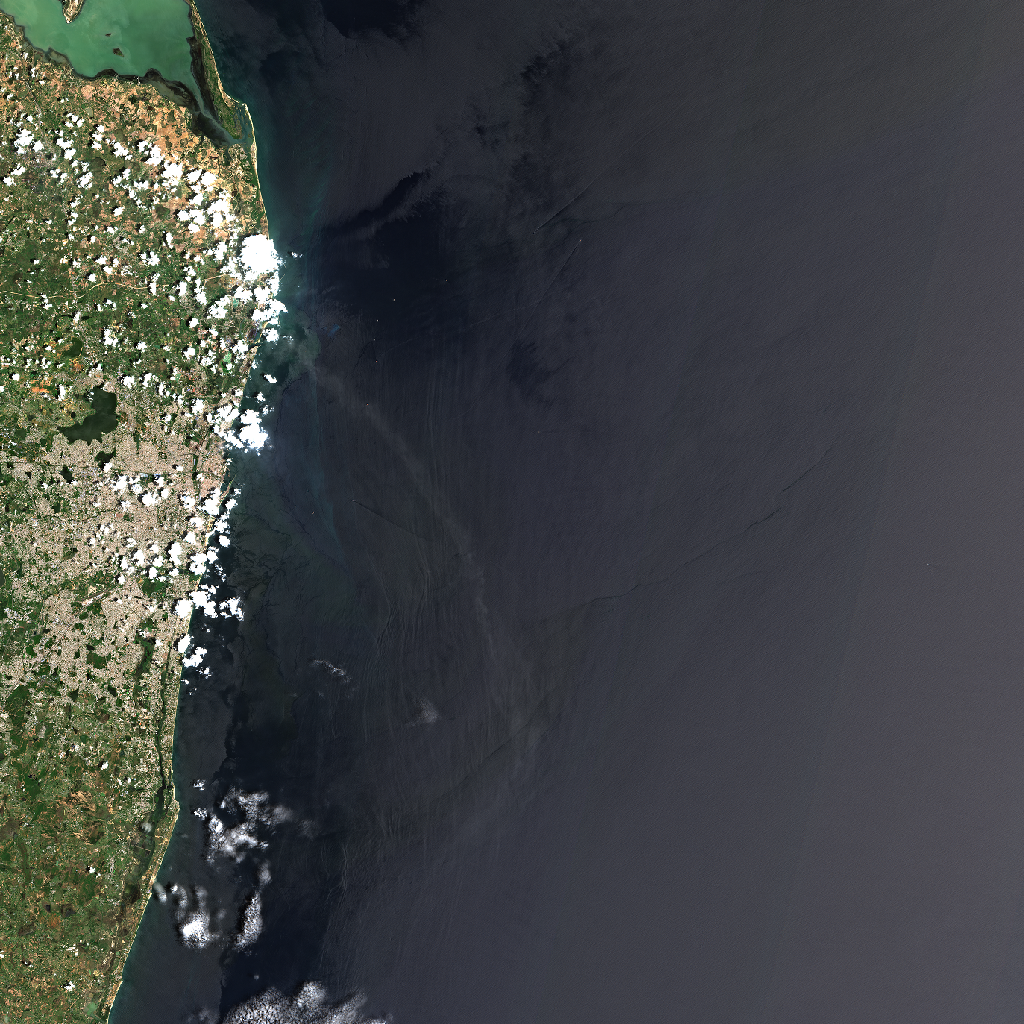
This preview, captured by the Sentinel-2 satellite from its orbit at approximately 786 km above Earth, shows the Chennai region in striking detail. The city lies at the center of the frame, stretching southward along the coast to Mahabalipuram, while in the north the dark green wetlands and inland waters of Pulicat stand out vividly. The contrasting shades highlight both the dense urban core and the surrounding natural landscapes. Imagery observed on 2025-09-08 .
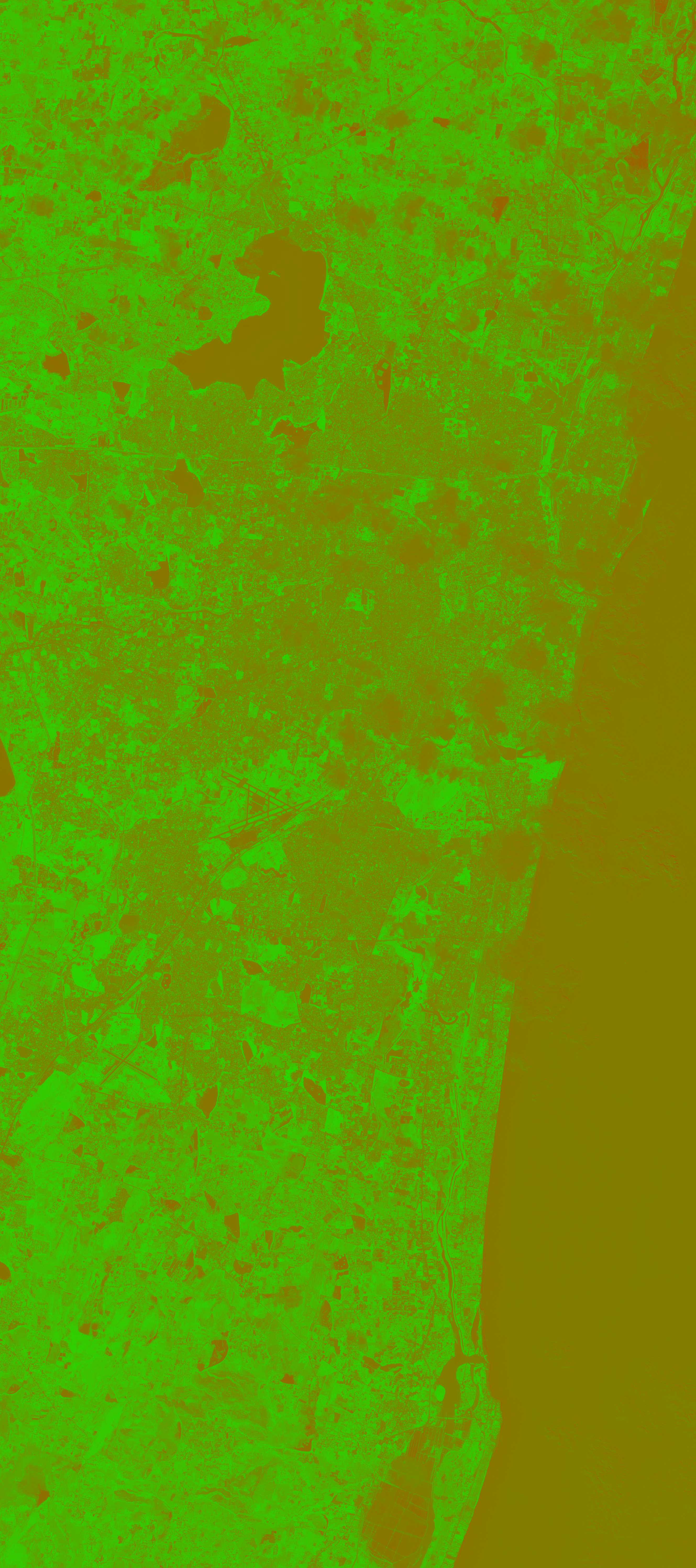
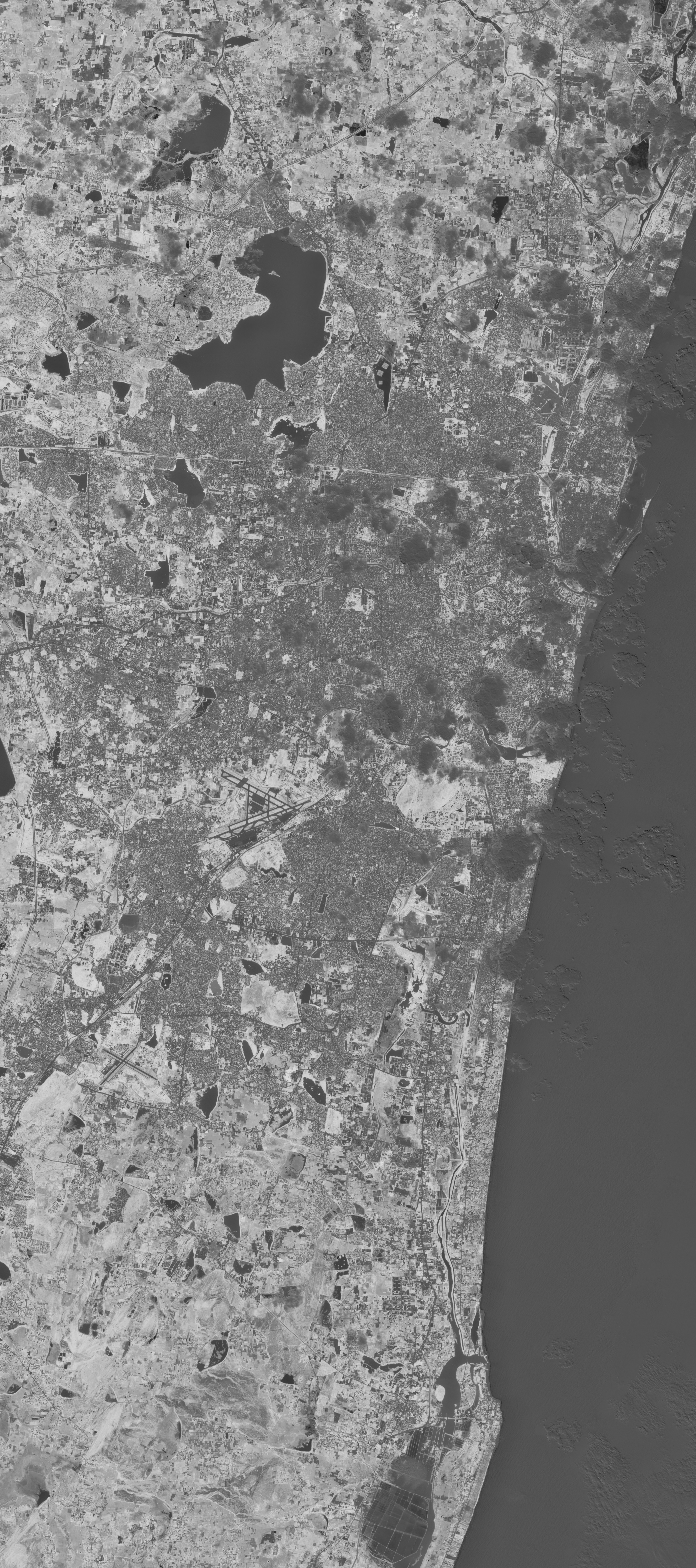
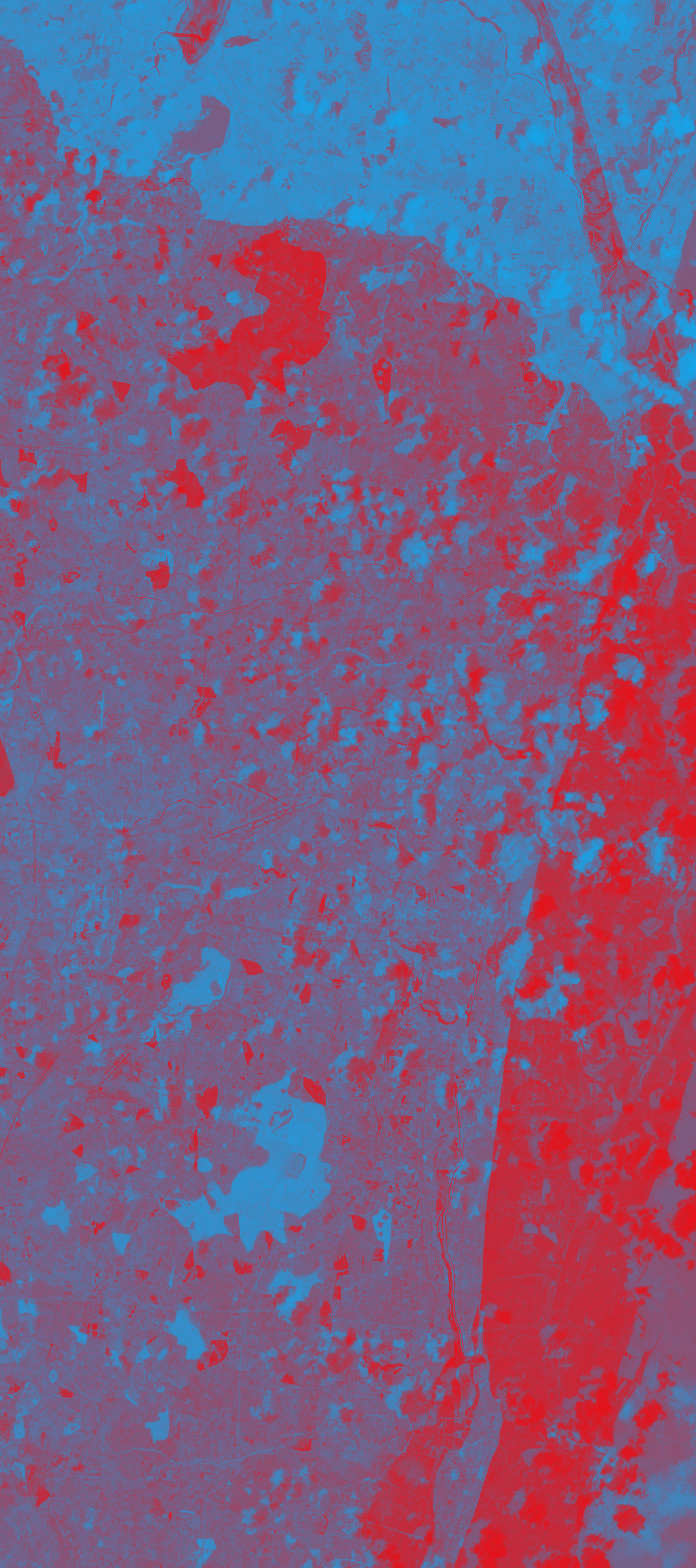
This month's environmental digest for the Chennai region uses Sentinel-2 satellite data to evaluate vegetation health via the NDVI (Normalized Difference Vegetation Index) and built-up intensity through the NDBI (Normalized Difference Built-up Index). Only images with cloud cover below 50% are considered, ensuring reliable data for our monthly analysis. This digest, curated by I Hug Trees and sourced from the Microsoft Planetary Computer, reveals a significant contrast between vegetation and built-up areas in the region.
NDVI
NDVI — color visualization
NDVI — greyscale (index values)
NDVI csv values
| min | max | mean | median | stddev |
|---|---|---|---|---|
| -0.4485921859741211 | 0.8750731348991394 | 0.21547739207744598 | 0.186454176902771 | 0.20326893031597137 |
NDBI (Built-up Index)
NDBI — color visualization
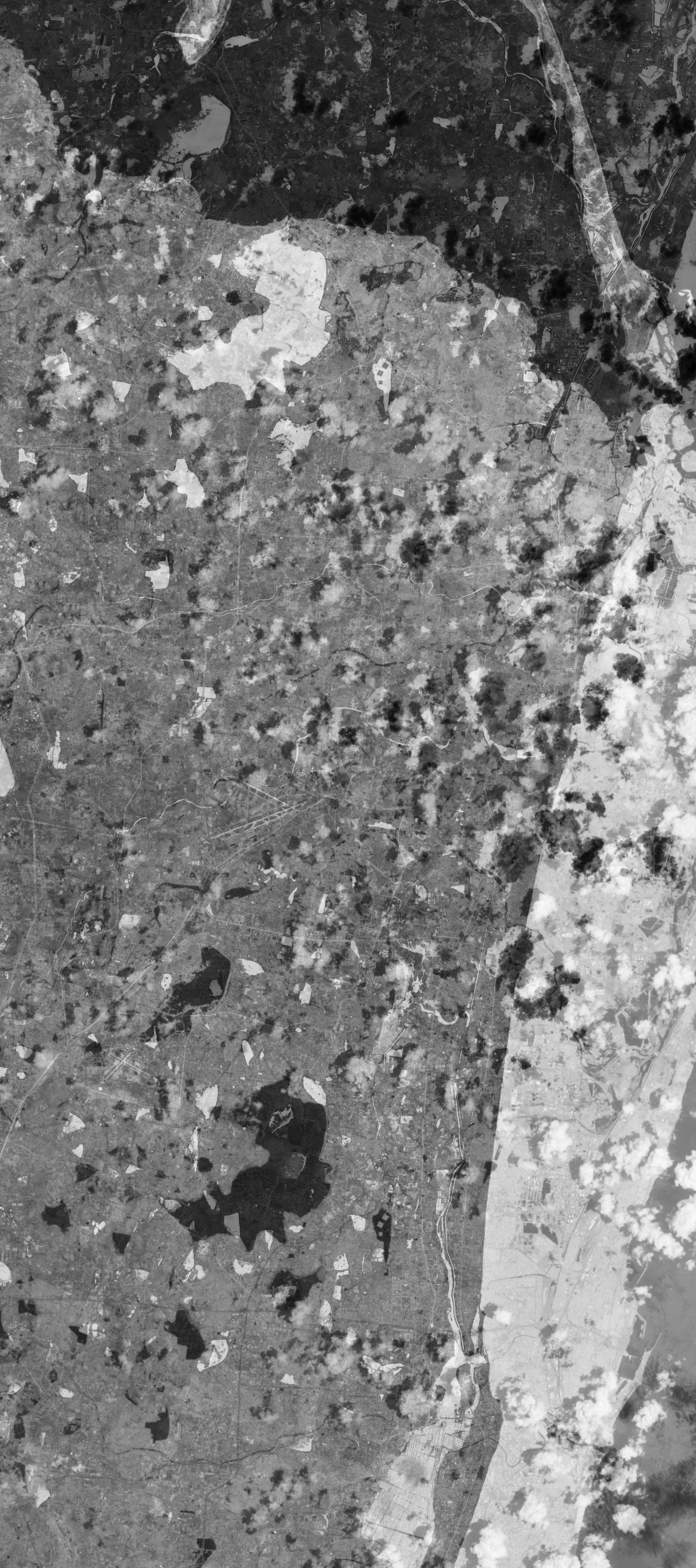
NDBI — greyscale (index values)
NDBI csv values
| min | max | mean | median | stddev |
|---|---|---|---|---|
| -0.8564348220825195 | 0.845417320728302 | -0.03905818983912468 | -0.0476665124297142 | 0.3333911895751953 |
NDVI − NDBI & Heat Risk
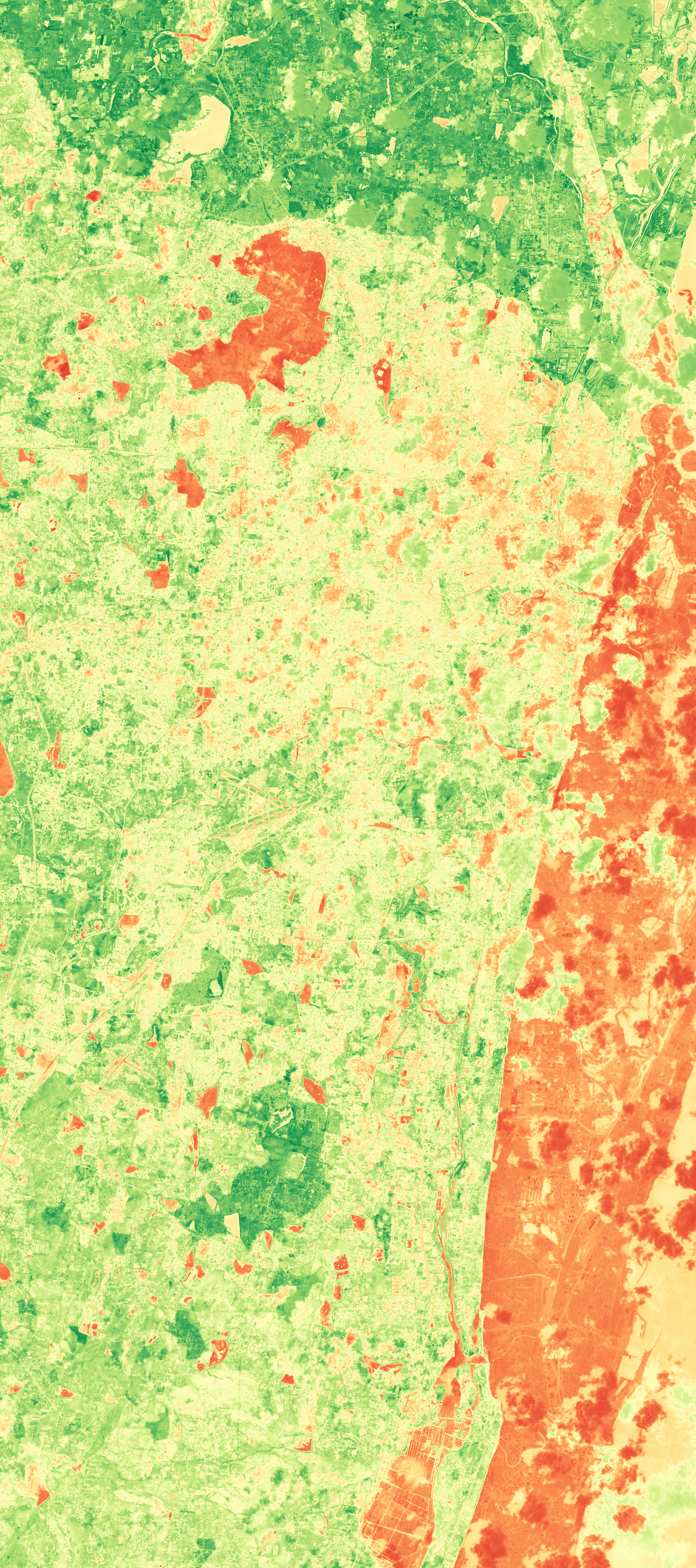
Difference visualization — highlights vegetation vs built-up dominance.
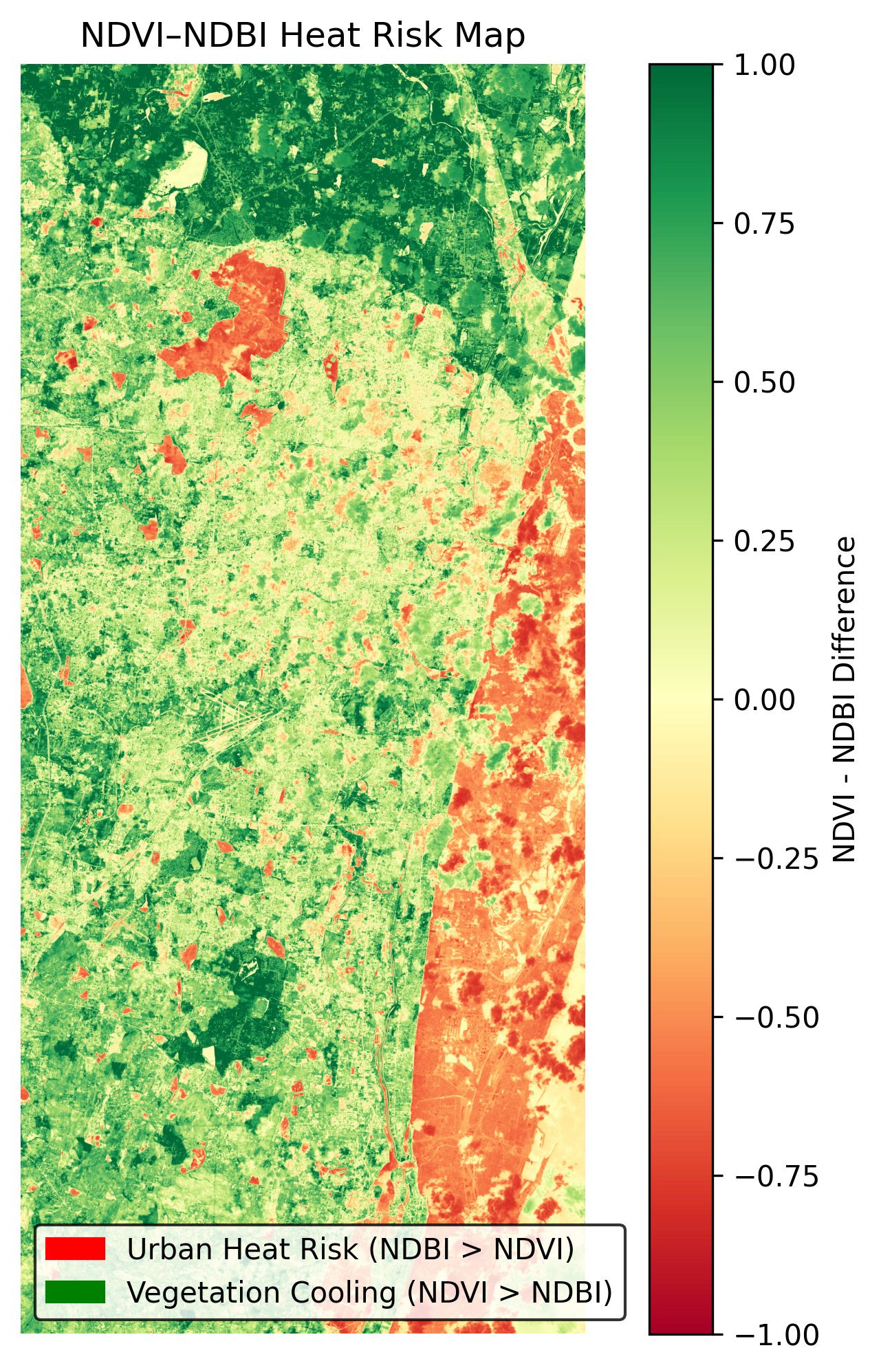
Heat risk interpretation derived from NDVI–NDBI difference.
The NDVI readings for the Chennai region show a minimum value of -0.449, indicating areas with little to no vegetation, and a maximum of 0.875, suggesting lush, healthy vegetation. The mean NDVI is 0.215, and the median is 0.186, both pointing to moderate vegetation cover across the region. The standard deviation of 0.203 highlights variability in vegetation density.
In contrast, the NDBI values reveal the extent of built-up surfaces. Although specific NDBI stats are not provided, the mean difference (NDBI - NDVI) is positive, indicating that built-up surfaces predominate in the region. This predominance of built-up areas over vegetation suggests increased urban heat risk, particularly in zones where NDBI exceeds NDVI (see ndvi_ndbi_heatrisk.png).
The NDVI–NDBI difference map (see ndvi_ndbi_diff_color.png) illustrates areas where vegetation or built-up surfaces are more dominant. Zones with NDBI greater than NDVI are flagged as higher heat-risk, while areas where NDVI exceeds NDBI are likely cooling or vegetated.
- Identify and monitor hotspots where NDBI significantly exceeds NDVI for potential heat mitigation strategies.
- Explore areas with high NDVI values as potential cool corridors for urban planning.
3D Renders (Rayshader & Rayrender)
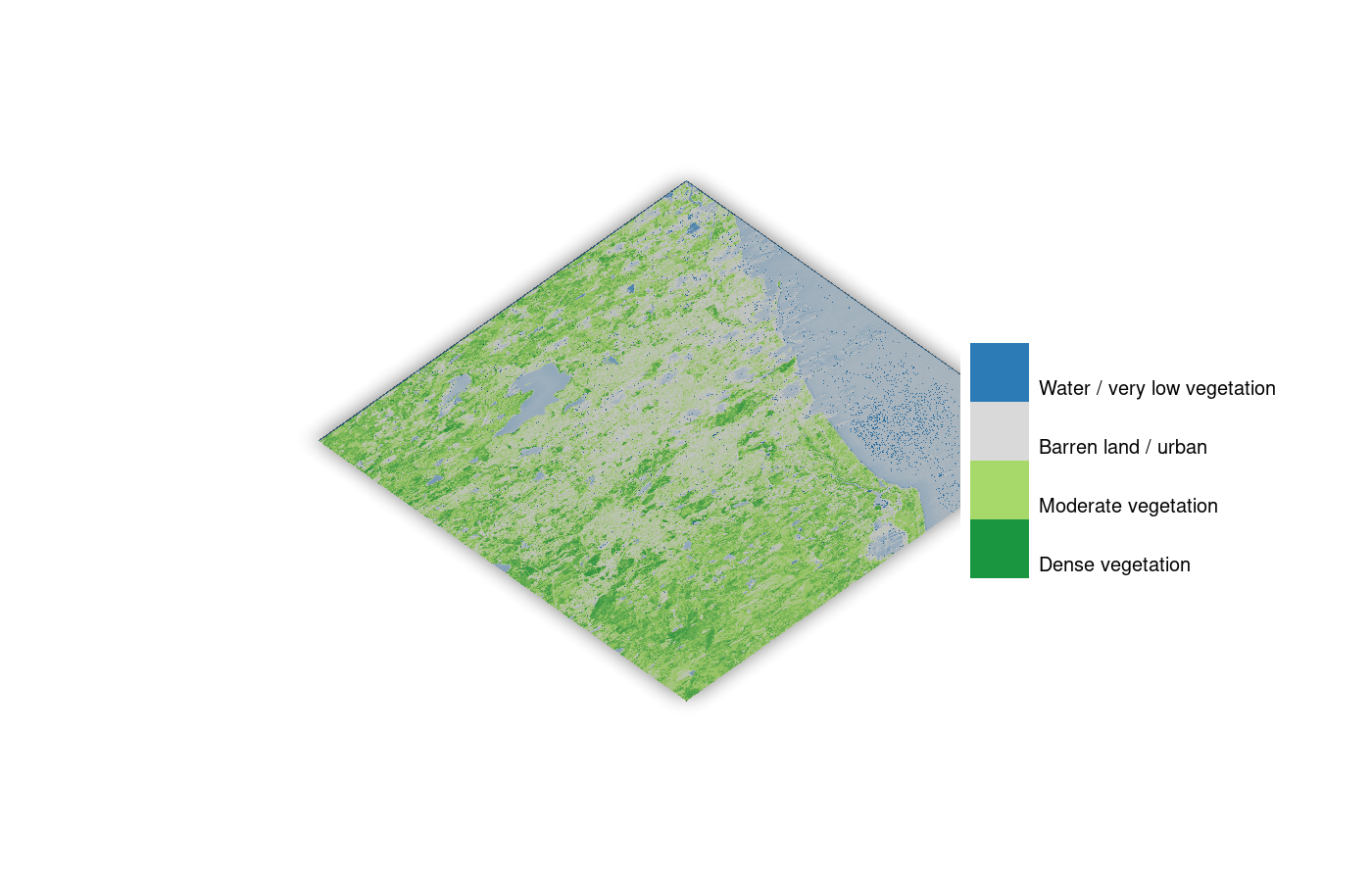
Rayshader 3D visualization derived from NDVI height-extrusion
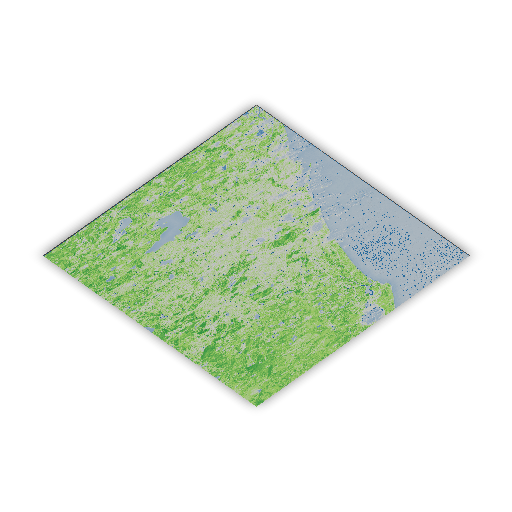
Rayrender 3D visualization derived from NDVI height-extrusion
Interactive NDVI overlay (zoom, pan, transparency). Use it alongside the static maps above.
Use the interactive overlay (ndvi_map.html) to zoom in on specific areas, adjust the transparency slider for layer comparison, and validate features against high-resolution basemaps. Note that cloud cover, though minimal at 2.41%, may affect certain areas. Immediate next steps include field validation of satellite observations and establishing a repeat monitoring cadence to track changes over time.
Urban heat island effect
The analysis indicates that built-up surfaces predominate in the Chennai region, posing increased urban heat risks. Regular monitoring, coupled with targeted restoration and cooling initiatives in high NDVI areas, is essential. We call on community members to engage in local greening projects. Disclaimer: this analysis refers to the satellite crop / geo-bounds stored under the 'Chennai-region' folder (may include extended suburbs) and does not represent the full administrative limits of Chennai.
References & Data
Free to Download (Please cite):
I Hug Trees NDVI Data Citation:
The NDVI and NDBI GeoTIFF and images are provided by I Hug Trees for scientific purposes. Please cite as:
    @misc{ihugtrees_ndvi_2025,
      author    = {I Hug Trees},
      title     = {NDVI and NDBI Analysis Data - Chennai region 2025},
      year      = 2025,
      note      = {GeoTIFF and images provided for scientific purposes},
      url       = {https://ihugtrees.org}
    }
Microsoft Planetary Computer Citation
If the Planetary Computer is useful for your work, please cite it using this record on Zenodo:
    @software{microsoft_open_source_2022_7261897,
      author       = {Microsoft Open Source and
                      Matt McFarland and
                      Rob Emanuele and
                      Dan Morris and
                      Tom Augspurger},
      title        = {microsoft/PlanetaryComputer: October 2022},
      month        = oct,
      year         = 2022,
      publisher    = {Zenodo},
      version      = {2022.10.28},
      doi          = {10.5281/zenodo.7261897},
      url          = {https://doi.org/10.5281/zenodo.7261897}
    }