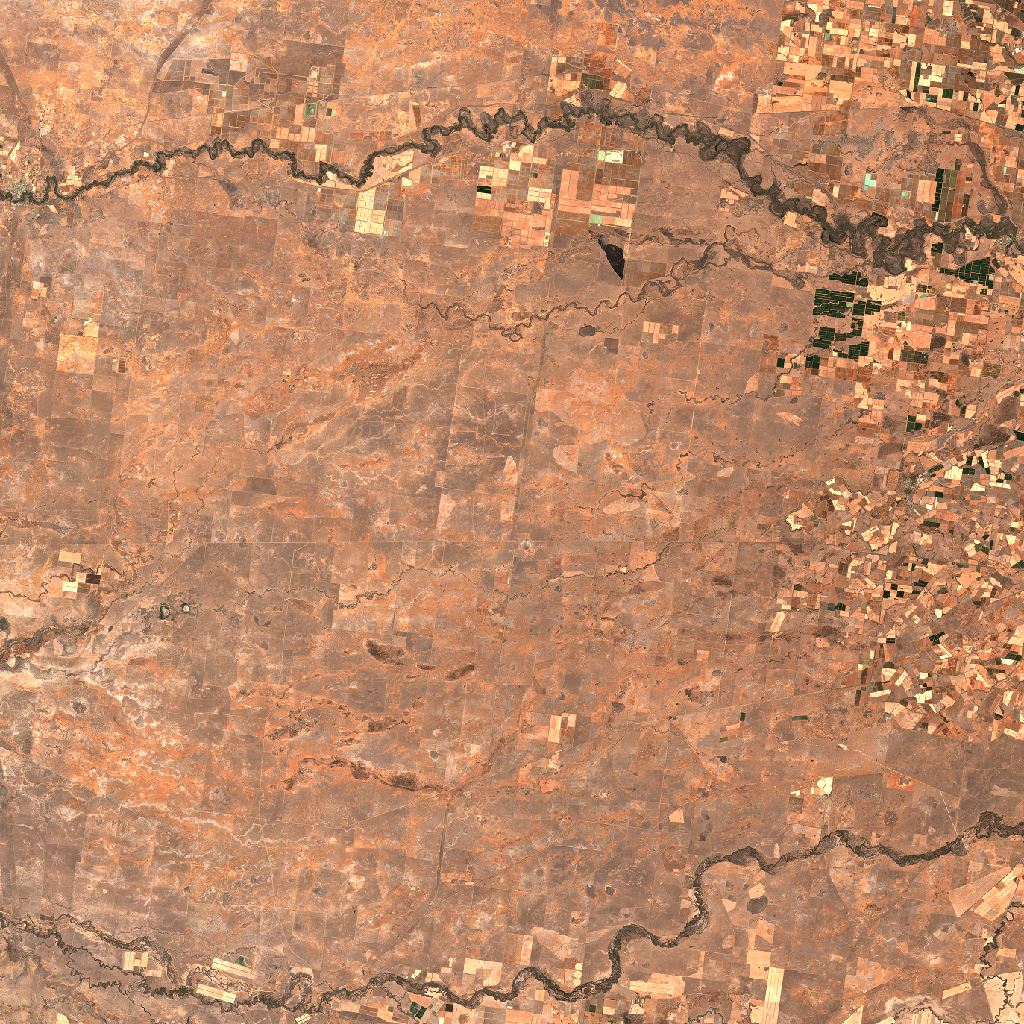
Sentinel-2 satellite preview of Australia-DarlingtonPoint-Coleambally-Bundure-part2-region, captured on 2025-12-07 from an altitude of approximately 786 km.
Statement of Problem
Climate variability, agricultural intensification, and population growth are placing unprecedented pressure on river basins worldwide. Understanding water extent, flood vulnerability, and riparian ecosystem health is essential for sustainable water management, agricultural planning, and disaster preparedness. This analysis quantifies current water resources in Australia-DarlingtonPoint-Coleambally-Bundure-part2-region, identifies inundation-prone zones, assesses riparian vegetation health, and provides evidence-based recommendations for water management and flood risk mitigation.
1. Water Resources & Riparian Vegetation Assessment
1.1 Riparian Vegetation Health (NDVI Analysis)
The analysis of Normalized Difference Vegetation Index (NDVI) for the riparian corridors within the Australia-DarlingtonPoint-Coleambally-Bundure-part2-region reveals a mean NDVI value of 0.13 and a median value of 0.12. These values suggest a moderate level of vegetation health along the waterways. Riparian vegetation plays a critical role in maintaining bank stability and supporting ecosystem health. Areas with higher NDVI values (0.3-0.8) indicate healthier vegetation, which is essential for preventing soil erosion and providing habitat for wildlife. The NDVI maps highlight these variations, showing patches of robust vegetation interspersed with areas that may require attention to enhance ecosystem resilience and function.
1.2 Water Extent Assessment (NDWI & MNDWI)
The Normalized Difference Water Index (NDWI) and Modified Normalized Difference Water Index (MNDWI) provide insights into the water extent and characteristics within the region. The NDWI statistics show a mean value of -0.22, with a minimum of -0.56 and a maximum of 0.30. Positive NDWI values indicate the presence of water, with higher values suggesting more significant water presence. In contrast, the MNDWI, designed to enhance water detection in turbid or sediment-laden conditions, exhibits a mean of -0.38, a minimum of -0.55, and a maximum of 1.0. The MNDWI's higher maximum value and broader range suggest its effectiveness in detecting water bodies under various conditions. Spatially, the NDWI and MNDWI maps reveal distinct water distribution patterns, with MNDWI highlighting areas with potentially turbid water more effectively.
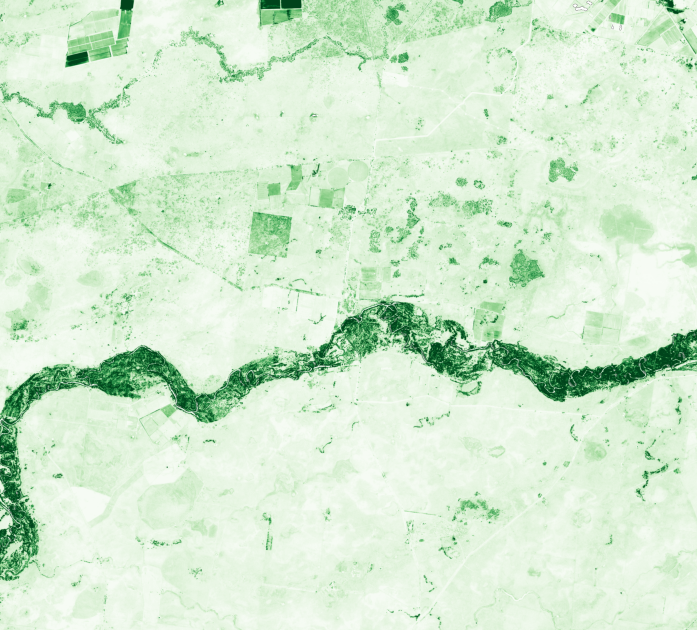
NDVI Color Visualization (Riparian Vegetation)
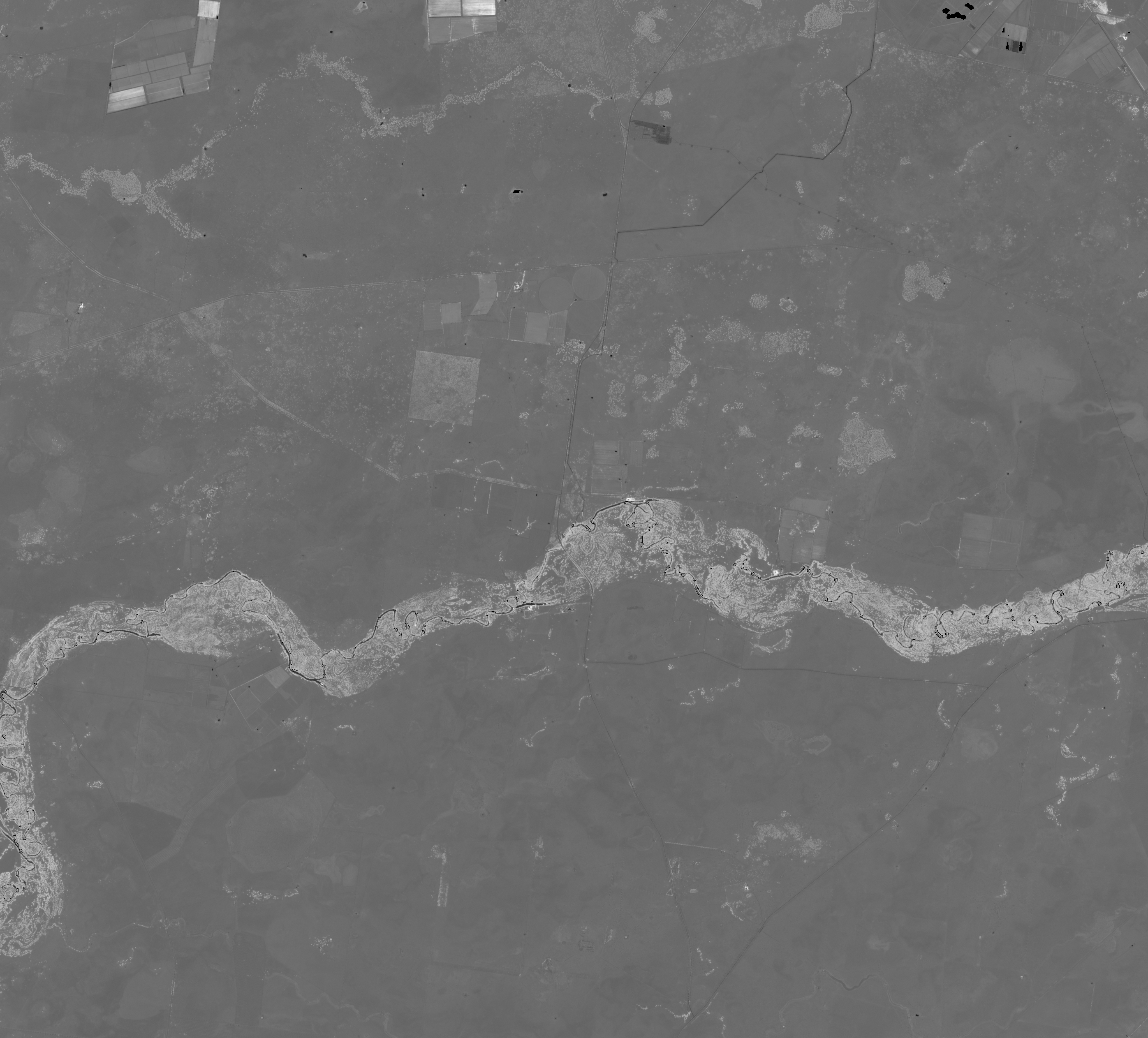
NDVI Greyscale (Index Values)
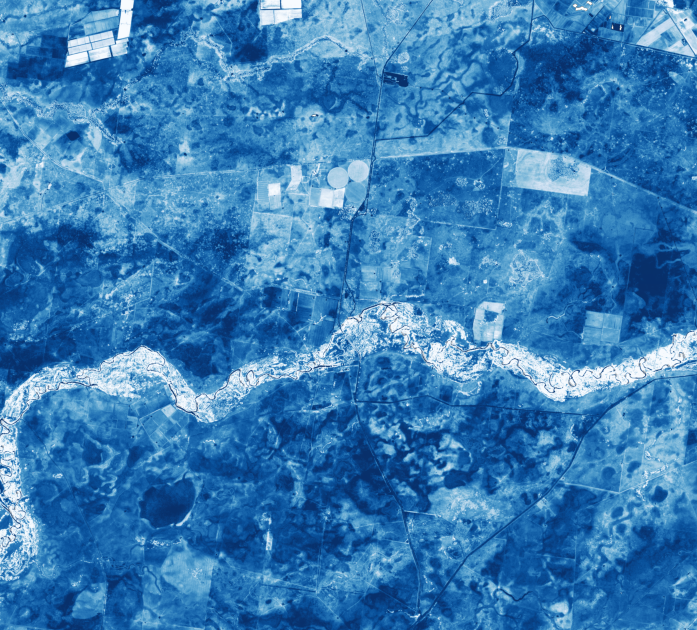
NDWI (Standard Water)
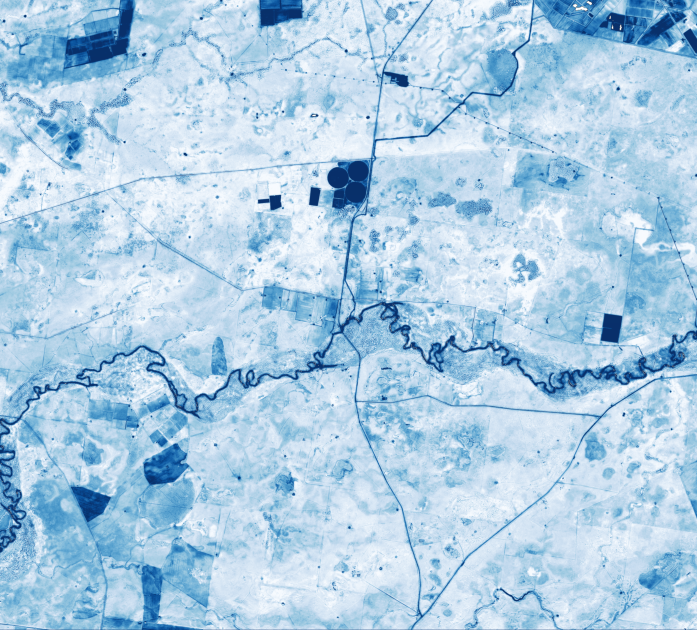
MNDWI (Enhanced Water)
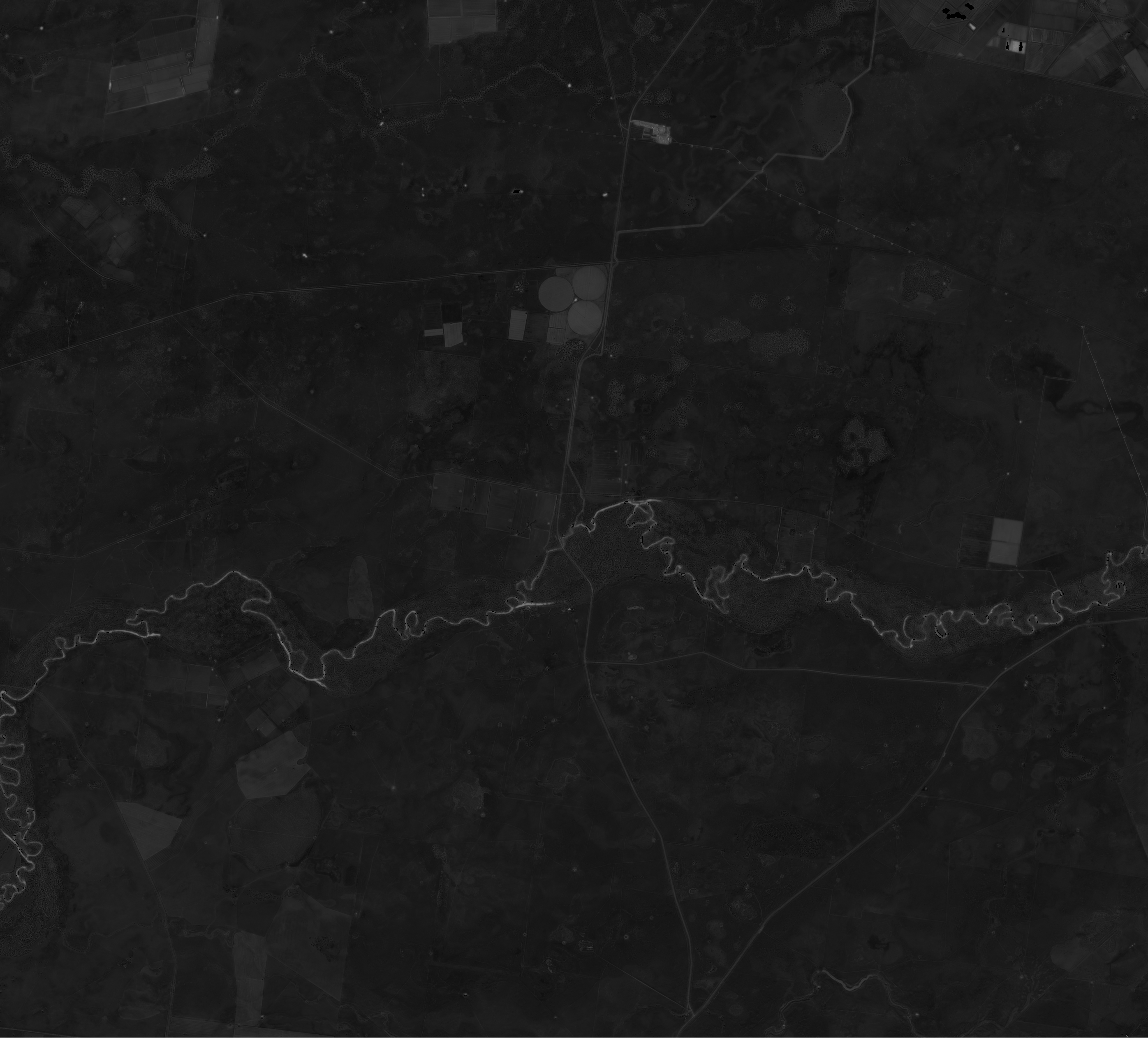
MNDWI Greyscale
2. Water Characteristics Analysis
2.1 MNDWI-NDWI Difference Analysis
The MNDWI-NDWI difference analysis, derived from the water_diff_bins data, offers a nuanced understanding of water characteristics across the region. Positive differences between MNDWI and NDWI readings indicate areas with turbid or sediment-rich water, while negative differences suggest clearer water conditions. The bins data shows that 88.96% of the pixels fall into the lowest difference category (-0.47 to -0.11), indicating predominantly clear water conditions. However, a small percentage (0.04%) of pixels show high positive differences (0.94 to 1.29), suggesting localized areas of turbid water. This analysis is crucial for assessing water quality and understanding sediment transport dynamics within the basin. The difference map and legend visually represent these variations, providing a clear picture of water quality across the region.
2.2 Combined Water Index Interpretation
The overlay image combining both NDWI and MNDWI indices reveals interesting patterns and divergences. Areas where the indices align indicate consistent water presence and characteristics. However, divergences highlight areas where water conditions may be more complex, with varying levels of turbidity or sediment load. This combined view is essential for a comprehensive understanding of the water resources within the Australia-DarlingtonPoint-Coleambally-Bundure-part2-region.
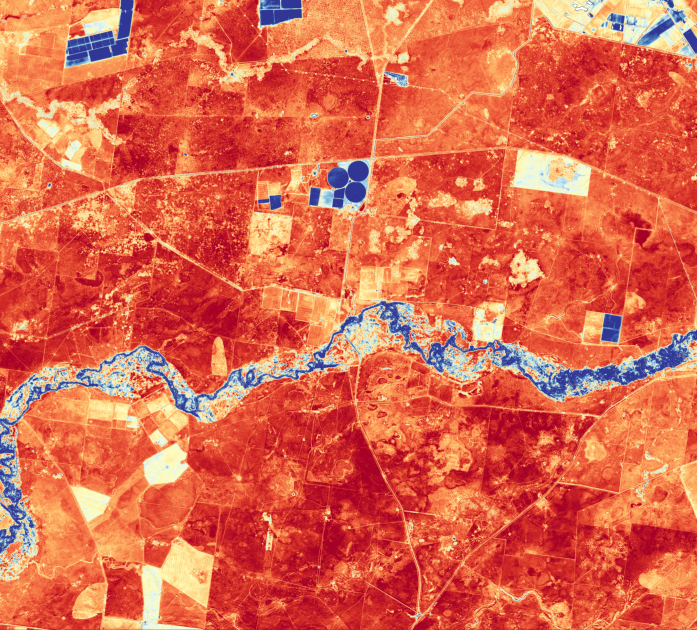
MNDWI-NDWI Difference Map (reveals water turbidity and sediment)
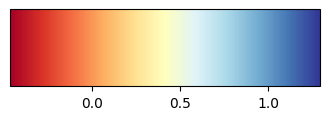
Legend
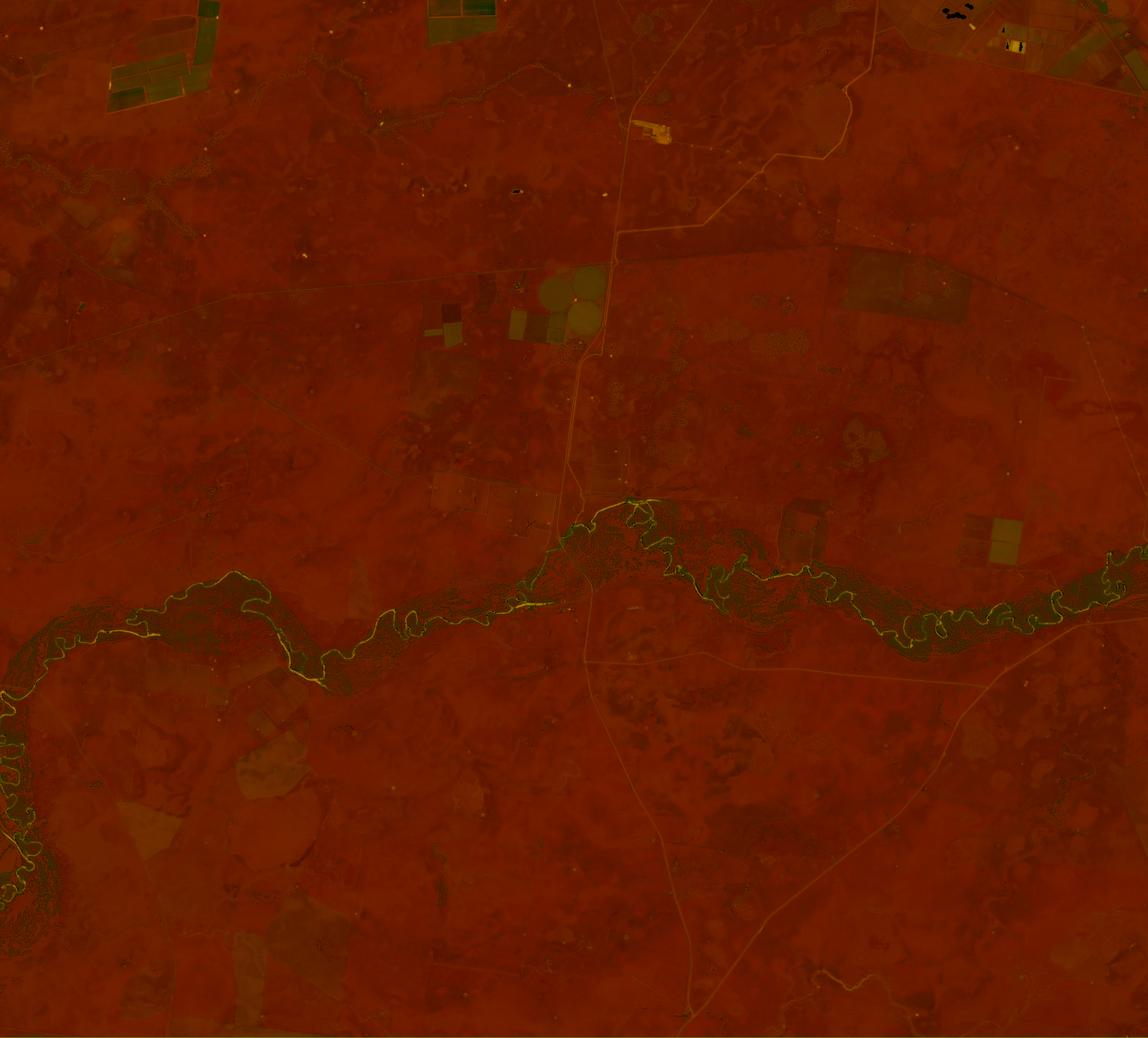
Combined MNDWI-NDWI Overlay
3. Flood Risk & Inundation Vulnerability
3.1 Inundation Zone Mapping
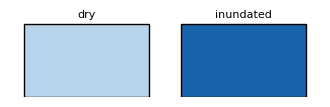
The inundation_bins data identifies flood risk zones within the region. With a mean inundation value of 0.0005 and a standard deviation of 0.02, the analysis reveals that 99% of the area is classified as dry, while a small percentage (0.05%) is inundated. The inundation map and legend visually depict these zones, highlighting areas most vulnerable to flooding. These high-risk zones are critical for agriculture, infrastructure planning, and water management strategies. Understanding the spatial patterns of flood risk is essential for implementing effective mitigation measures and ensuring the resilience of the region's water resources.
3.2 Key Findings & Water Management Implications
- Mean MNDWI value of -0.38 indicates effective water detection, even in turbid conditions.
- Low inundation percentage (0.05%) suggests minimal current flood risk but highlights the importance of monitoring and preparedness.
- Moderate NDVI values (mean 0.13) point to the need for riparian vegetation management to enhance ecosystem health and bank stability.
- MNDWI-NDWI difference reveals localized areas of turbid water, necessitating targeted water quality and sediment management strategies.

Inundation Risk Map (Red = high flood vulnerability)
Legend
4. Water Management Recommendations
4.1 Current Strengths
- Effective water detection capabilities, even in challenging conditions, as evidenced by the MNDWI statistics.
- Minimal current flood risk, allowing for strategic planning and preparedness.
4.2 Critical Challenges
- Localized areas of turbid water, indicating potential water quality issues and sediment transport concerns.
- Moderate riparian vegetation health, suggesting opportunities for enhancement to improve ecosystem services.
4.3 Water Management Recommendations
- Implement targeted riparian restoration projects to enhance vegetation health and bank stability, focusing on areas with lower NDVI values.
- Develop and enforce flood risk mitigation strategies, particularly in identified high-risk zones, to protect agriculture and infrastructure.
- Establish regular water quality monitoring programs, especially in areas with positive MNDWI-NDWI differences, to manage sediment loads and maintain water quality.
Analysis Coverage Area
The interactive map below shows the exact geographical bounds of this satellite analysis. The overlay represents the water indices coverage area overlaid on OpenStreetMap. You can zoom and pan to explore how the analysis boundaries align with rivers, floodplains, and agricultural areas in Australia-DarlingtonPoint-Coleambally-Bundure-part2-region.
Interactive map: Use mouse/touch to zoom and pan. The overlay shows the satellite image bounds used for water indices calculations.
Note: The analysis boundaries may extend beyond specific river channel limits as they represent the satellite image crop captured on 2025-12-07. This ensures comprehensive coverage of the river basin, floodplains, and surrounding agricultural areas for complete water resources and flood risk assessment.
Why Water Resources Monitoring Matters
Rivers and wetlands are lifelines for agriculture, ecosystems, and communities. Accurate monitoring of water extent, flood risk, and riparian vegetation health is essential for sustainable water management, agricultural planning, and disaster preparedness. As climate variability intensifies drought-flood cycles, satellite remote sensing provides critical data for understanding water availability, identifying flood-vulnerable areas, and protecting riparian ecosystems.
The Normalized Difference Water Index (NDWI) and Modified NDWI (MNDWI) quantify water presence and extent across river basins. NDVI tracks riparian vegetation health—a key indicator of bank stability and ecosystem function. Together, these indices reveal seasonal water patterns, inundation zones, and the balance between water resources and land use.
Understanding NDWI, MNDWI, and NDVI
NDWI (Normalized Difference Water Index) uses green and near-infrared bands to detect water bodies. Positive values indicate water presence, with higher values representing deeper or clearer water. NDWI is effective for general water extent mapping.
MNDWI (Modified NDWI) replaces the green band with a shortwave infrared band, making it more sensitive to turbid, sediment-laden, or shallow water. MNDWI better distinguishes water from built-up areas and vegetation, particularly in agricultural or developed floodplains.
NDVI (Normalized Difference Vegetation Index) measures vegetation health in riparian zones—the vegetated corridors along waterways. Healthy riparian vegetation (NDVI 0.3-0.8) stabilizes banks, filters runoff, and supports biodiversity. Degraded riparian zones increase flood risk and erosion.
README Note
Our Mission: We want this research dataset brief to be Simple, Authentic, and Repeatable.
1. Title of the Dataset
Urban Green Cover and Heat Risk Assessment
2. What This Dataset Is About
This dataset was created to help anyone understand how vegetation and green cover in this region is changing over time. It brings together processed satellite data, simple calculations, and a few observations that give the bigger picture.
3. Why This Dataset Matters
At I Hug Trees, we believe that Geospatial Satellite imagery and processed data should be accessible to everyone. While grounded in scientific principles, outputs are presented in accessible formats so that technical imagery and calculations resonate with ordinary people and communities. Because only when it is relatable, can it tell clear stories about our greenery and urban life: shaping how we live, how we breathe, and how we cope with rising heat.
This dataset tries to make that easier. Whether you are a researcher, policy maker, student or just curious about the environment, these numbers and images help you see trends that are not obvious at first glance.
4. Source of the Data
- Satellite: Sentinel-2
- Provider: Microsoft Planetary Computer
- Acquisition Window: Past 60 days (filtered by cloud cover)
- Cloud Cover Threshold: < 30%
- Initial Tile Discovery: Copernicus Data Space Ecosystem browser
5. How the Data Was Processed
Basic Preprocessing:
It is important to get the right tile from the Sentinel-2 database for imagery processing. The browser feature from the Copernicus Data Space Ecosystem helped us identify the correct tile, its bounds, and the subset coordinates needed for extraction. It is always essential to double-check the preview image to verify that the fetched tile truly corresponds to the target region.
Next, we used an AWS Lambda environment for the bounds-discovery phase. This step involved fetching band data from the Microsoft Planetary Computer for dates where cloud cover was below 30% within the past 60 days. Once the acquisition date met this condition, we moved to AWS EC2 server scripts written in Python to download raw band data and process them into COGs (Cloud Optimised GeoTIFFs) along with additional indices.
These processed COGs and index outputs are then used for image displays, NDVI interpretation, and HTML digest features published on our platform. All indices raw value outputs are in JSON files for easy repeatable processing. We currently run this workflow on a quarterly schedule for each identified region.
Cloud Masking:
This dataset uses Sentinel-2's Scene Classification Layer (SCL) to remove pixels affected by clouds, shadows, haze, and saturation. Only surface-clear classes are kept, ensuring that the vegetation indices are calculated from clean, reliable pixels. The masking is applied at the pixel level, meaning every index (NDVI, EVI, etc.) is computed only on valid areas after stripping away noisy regions. This results in more trustworthy COGs, cleaner previews, and more meaningful temporal comparisons.
Calculation Formulas Used:
NDVI = (NIR − Red) ÷ (NIR + Red)EVI = 2.5 × (NIR − Red) ÷ (NIR + 6×Red − 7.5×Blue + 1)NDWI = (Green − NIR) ÷ (Green + NIR)NDBI = (SWIR1 − NIR) ÷ (SWIR1 + NIR)
Tools Used:
Data Source: Microsoft Planetary Computer (Sentinel-2 L2A), rasterio, GDAL
Computation: Python 3, NumPy, SciPy, Pillow, Rasterio, rio-cogeo
AWS Pipeline: Lambda (triggers), EC2 (processing), S3 (storage), Bedrock (AI summaries)
Mapping: Leaflet.js, tile layers served from S3
Automation: Python boto3, Cron (EC2 quarterly jobs)
6. File Contents
The dataset includes metadata.json with satellite tile information, various index outputs
(NDVI, EVI, NDWI, NDBI, MNDWI, NDMI), and statistical summaries. Please find the detailed list of files
available for download in the Download Data & Maps section below.
7. How to Use This Dataset
You can explore the NDVI trends, plug the json file into your favourite tool, build visualisations, or compare it with earlier datasets. It's created to be flexible.
8. Leveraging AI
AI helped speed up some parts of the work, like spotting unusual patterns, creating brief insights, and checking for inconsistencies. All metadata and bin-statistics JSON files were loaded and parsed into structured dictionaries, ensuring the AI receives clean, context-rich inputs for stable summarisation and interpretation.
9. Limitations & Things to Keep in Mind
- Cloud cover may affect accuracy
- NDVI has known limitations
- Spatial resolution is 10 meters
- Some patterns may need ground truth validation
10. License / Permissions
Please refer to the How to Cite This Analysis section below for citation guidelines. This dataset is licensed under Creative Commons Attribution 4.0 International (CC BY 4.0).
11. Contact
For any questions, collaborations, or clarifications, feel free to reach out at: nature@ihugtrees.org
Data & Methods
Data Sources
- Satellite: Sentinel-2A Level-2A (atmospherically corrected)
- Provider: Microsoft Planetary Computer
- Observation Date: 2025-12-07
- Cloud Cover: 2.234316%
- Spatial Resolution: 10 meters (NDVI, NDWI), 20 meters (MNDWI, resampled to 10m)
Index Calculations
- NDVI = (NIR - Red) / (NIR + Red) using Bands 8 and 4
- NDWI = (Green - NIR) / (Green + NIR) using Bands 3 and 8
- MNDWI = (Green - SWIR1) / (Green + SWIR1) using Bands 3 and 11
- Water Difference = MNDWI - NDWI (reveals water characteristics and sediment load)
- Inundation Risk = Composite metric identifying flood-vulnerable zones based on water indices
Processing Workflow
Images were processed using Python with the pystac-client and rasterio
libraries. Cloud masking was applied using the QA60 scene classification layer. Water and
vegetation indices were computed pixel-by-pixel. Inundation zones were identified by analyzing
water index patterns, historical flooding data (where available), and topographic context.
All geospatial outputs are provided as Cloud-Optimized GeoTIFFs (COGs) for efficient web
access and GIS integration.
Limitations
- Analysis represents a single-day snapshot; seasonal patterns require time-series monitoring
- Cloud cover and atmospheric conditions affect image quality
- 10-meter resolution may not capture small streams or narrow riparian corridors
- Study area boundaries reflect the satellite image crop, not watershed boundaries
- Inundation risk is inferred from spectral indices; local hydrology and infrastructure data improve accuracy
- NDWI/MNDWI can be affected by soil moisture, shadows, and vegetation in shallow water
Download Data & Maps
Images & Visualizations
- NDVI Color Map (Riparian Vegetation) (PNG)
- NDWI Color Map (Water Extent) (PNG)
- MNDWI Color Map (Enhanced Water) (PNG)
- MNDWI-NDWI Difference Map (PNG)
- Water Difference Legend (PNG)
- Inundation Risk Map (PNG)
- Inundation Legend (PNG)
- Combined Water Overlay (PNG)
Geospatial Data (Cloud-Optimized GeoTIFFs)
- NDVI GeoTIFF (COG)
- NDWI GeoTIFF (COG)
- MNDWI GeoTIFF (COG)
- Water Difference GeoTIFF (COG)
- Inundation Risk GeoTIFF (COG)
Statistical Data
How to Cite This Analysis
Recommended Citation
Yaragarla, R. (2025). Water Resources & Flood Risk Assessment: Australia-DarlingtonPoint-Coleambally-Bundure-part2-region. I Hug Trees. Retrieved from https://ihugtrees.org/data-analytics/sentinel-ndvi/Australia-DarlingtonPoint-Coleambally-Bundure-part2-region/2025/12/08/digest.html
Satellite data: Copernicus Sentinel-2 (ESA), processed via Microsoft Planetary Computer.
BibTeX Entry
@misc{ihugtrees_water_australia_darlingtonpoint_coleambally_bundure_part2_region_2025,
  author = {Yaragarla, Ramkumar},
  title = {Water Resources \& Flood Risk Assessment: Australia-DarlingtonPoint-Coleambally-Bundure-part2-region},
  year = {2025},
  publisher = {I Hug Trees},
  url = {https://ihugtrees.org/data-analytics/sentinel-ndvi/Australia-DarlingtonPoint-Coleambally-Bundure-part2-region/2025/12/08/digest.html},
  note = {Satellite data: Copernicus Sentinel-2}
}
License
This analysis and associated datasets are licensed under Creative Commons Attribution 4.0 International (CC BY 4.0). You are free to share and adapt this work with appropriate attribution.
Planetary Computer Citation
If using Microsoft Planetary Computer data, please cite: microsoft/PlanetaryComputer (2022)
Further Reading
Explore related urban green cover analyses and environmental insights from other regions: