I Hug Trees Logo

Desert Greening

The Science of Turning Arid Lands into Living Landscapes

From water innovations to satellite monitoring: transforming the world's drylands

Navigate This Guide:

What Is Desert Greening? The Science Behind Turning Arid Land into Living Landscapes

Desert greening is not about "painting the desert green" or forcing vegetation where it doesn't belong. It's the scientific practice of restoring ecological function to degraded drylands. These are lands that once supported vegetation but have been stripped by overuse, climate stress, or mismanagement.

Key Distinction: A desert is not a wasteland. Many desert ecosystems are biodiverse and functional. Desert greening targets degraded drylands with restoration potential.

Definition and Scope

Drylands cover approximately 41% of Earth's land surface and support 38% of the global population. The Aridity Index (AI), which measures the ratio of precipitation to evapotranspiration, classifies drylands into:

  • Hyper-arid (AI below 0.05): True deserts like the Sahara core
  • Arid (AI 0.05 to 0.20): Most operational desert greening targets
  • Semi-arid (AI 0.20 to 0.50): Vulnerable grasslands and savannas
  • Dry sub-humid (AI 0.50 to 0.65): At-risk agricultural zones

Desert greening focuses primarily on arid and semi-arid zones where intervention can tip the balance from degradation to regeneration.

Natural vs Human-Assisted Greening

Natural greening occurs through climate cycles: increased rainfall, reduced temperatures, or shifts in monsoon patterns. Satellite data shows the Sahel region has experienced natural greening since the 1980s due to increased precipitation.

Human-assisted greening, however, involves deliberate interventions:

  • Water harvesting infrastructure
  • Soil restoration and microbial seeding
  • Native species planting
  • Grazing management
  • Community-based land stewardship

Restoration, Regeneration, and Afforestation: What's the Difference?

Restoration aims to return an ecosystem to its historical baseline. In drylands, this means recovering soil function, native vegetation, and water cycles that existed before degradation.

Regeneration focuses on ecological function rather than historical accuracy. It creates a self-sustaining ecosystem even if species composition differs from the past.

Afforestation in drylands is controversial. Planting non-native tree monocultures (like eucalyptus) can deplete groundwater, displace native ecosystems, and fail within decades. True desert greening prioritizes native dryland species and ecological balance.

Critical Warning: Poorly planned desert afforestation can do more harm than good. China's Three-North Shelterbelt project faced massive tree mortality because planners ignored water availability and native species requirements.

The Science of Soil Carbon and Evapotranspiration

Desert soils are not "dead." Beneath the surface lies a network of biological soil crusts: communities of cyanobacteria, lichens, and mosses that:

  • Fix atmospheric nitrogen
  • Stabilize soil against wind erosion
  • Retain moisture from dew and fog
  • Create conditions for vascular plant colonization

Evapotranspiration (water loss through evaporation and plant transpiration) is the limiting factor in drylands. Successful greening reduces bare-soil evaporation while increasing productive transpiration through vegetation. This is a delicate balance requiring precise water management.
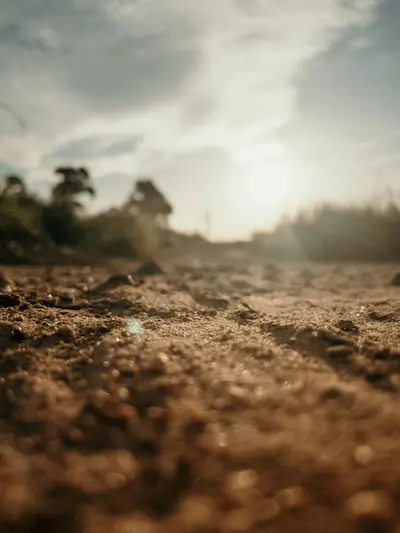
Desert restoration before and after comparison

Before and after restoration

Biological soil crust close-up

Biological soil crusts: the foundation

Native dryland vegetation

Native species adapted to arid conditions
📊

Hug Analytics: Data-Driven Desert Monitoring

At I Hug Trees, we don't just talk about desert greening. We track it from space. Hug Analytics is our data platform that combines satellite imagery, NDVI analysis, climate data, and machine learning to monitor dryland restoration projects in real time.

We track vegetation changes at 10-meter resolution, predict project success rates with 82% accuracy, and detect early warning signs of failure months before they become visible on the ground. Our platform turns desert greening from guesswork into data-driven science.

Whether you're planning a restoration project, monitoring existing efforts, or researching dryland ecosystems, Hug Analytics provides the precision tools you need to succeed.

Explore Hug Analytics →

Why Desert Greening Matters in the Age of Climate Change

Drylands are on the frontlines of climate change. As temperatures rise and precipitation patterns shift, 1.5 billion people living in dryland regions face existential threats to food security, water access, and livelihood stability.

Carbon Sequestration Potential of Drylands

Contrary to popular belief, drylands are not carbon-neutral wastelands. Research shows that dryland soils store approximately 30% of global soil organic carbon. Restoring degraded drylands could sequester an additional 0.9 to 1.85 gigatons of CO₂ annually. That is equivalent to removing 200 to 400 million cars from roads.

Desert greening enhances carbon storage through:

  • Soil organic matter: Decomposed plant material and microbial biomass
  • Root systems: Deep-rooted dryland plants sequester carbon below-ground
  • Biological soil crusts: Photosynthetic organisms fixing atmospheric CO₂

Cooling the Land Surface: Albedo and Microclimate Effects

Bare desert sand reflects 25 to 45% of incoming solar radiation (high albedo), but it also becomes scorching hot. Vegetation lowers albedo slightly but dramatically reduces surface temperatures through evapotranspiration. This is a process that requires water but creates local cooling.

Studies in the Negev desert show that restored areas can be 5 to 10°C cooler than adjacent degraded land during summer months, creating microclimates that support biodiversity and human comfort.

Dust Storm Reduction

Degraded drylands are the source of 2 to 3 billion tons of dust annually, affecting air quality across continents. The Gobi and Taklamakan deserts send dust storms to Beijing. Saharan dust crosses the Atlantic to the Caribbean and Americas.

Vegetation and biological soil crusts stabilize soil surfaces, dramatically reducing dust emissions. The Great Green Wall project aims to reduce dust storms affecting the Sahel and North Africa.

Food and Water Security

Drylands produce 44% of global food cultivation, but yields are declining as degradation accelerates. Desert greening can:

  • Restore grazing lands for livestock
  • Enable sustainable agriculture through agroforestry
  • Recharge aquifers by increasing infiltration
  • Reduce dependency on fossil water extraction

Real-World Impact: In Niger's Maradi region, farmer-managed natural regeneration has restored 5 million hectares since the 1980s, increasing food production and lifting 2.5 million people out of poverty.

Climate Migration and Geopolitical Stability

Desertification displaces 50 million people annually. As drylands become uninhabitable, climate refugees migrate to cities or across borders, creating humanitarian crises and geopolitical tension.

Successful desert greening offers an alternative: regenerate lands so people can stay. It's not just an environmental issue. It's a matter of global security.

By The Numbers

41% Of Earth's land is dryland
1.5B People live in drylands
30% Global soil carbon in drylands
50M Displaced by desertification per year

Climate Benefits

  • Carbon sequestration: 0.9 to 1.85 Gt CO₂ per year
  • Surface cooling: 5 to 10°C reduction
  • Dust reduction: billions of tons annually
  • Aquifer recharge through infiltration
Microclimate effects of vegetation

Vegetation creates cooling microclimates

💧 Water Technologies

  • Rainwater Harvesting: Capture & store seasonal rain
  • Fog Nets: Harvest atmospheric moisture
  • Subsurface Irrigation: 90% efficiency vs 40% surface
  • Hydrogels: Retain water in root zones
  • Treated Wastewater: Safe reuse for vegetation

Case: Chile Fog Nets

Atacama Desert fog nets harvest 15 to 20 liters per m² per day, providing water for 300+ families and enabling small-scale agriculture in one of Earth's driest places.

Fog harvesting nets in Atacama

Fog nets in Chile's Atacama Desert

Water: The First Limiting Factor - Innovations That Make Greening Possible

Water scarcity is the defining challenge of desert greening. Traditional irrigation is unsustainable in drylands. Groundwater tables are already depleted, and surface water is nonexistent. Innovation, not abundance, solves the water equation.

Rainwater Harvesting in Arid Regions

Even deserts receive occasional rainfall. The key is capturing and storing every drop. Ancient civilizations like the Nabataeans built sophisticated water harvesting systems 2,000 years ago in Jordan's desert. Systems we're now rediscovering.

Modern rainwater harvesting includes:

  • Contour trenches (vallerani): Semi-circular bunds that catch runoff and concentrate water around planted seedlings
  • Check dams: Small structures that slow water flow, increase infiltration, and prevent erosion
  • Rooftop collection: In villages, captured rainwater supports household gardens and tree nurseries

In Rajasthan, India, traditional johads (rainwater ponds) have recharged aquifers and greened thousands of hectares, proving that water management matters more than water abundance.

Fog Nets and Dew Harvesting

Coastal deserts like the Atacama and Namib experience dense fog but almost no rain. Fog nets (fine mesh panels that capture water droplets from fog) can harvest 200 to 750 liters per net per day during fog season.

Dew harvesting uses radiative cooling surfaces that condense atmospheric moisture overnight. While yields are lower (1 to 3 liters per m² per night), these systems require zero energy and work in inland deserts where fog doesn't reach.

Treated Wastewater Reuse

Cities in desert regions produce millions of liters of wastewater daily. Advanced treatment makes this water safe for irrigation, turning a waste stream into a resource. Israel treats 90% of its wastewater for agricultural reuse. This is the highest rate globally, enabling farming in the Negev.

Treated wastewater contains nitrogen and phosphorus, reducing fertilizer needs. When combined with drip irrigation, it supports high-value crops and forests in arid environments.

Subsurface Irrigation & Hydrogel Technologies

Traditional surface irrigation loses 50 to 60% of water to evaporation. Subsurface drip irrigation places water directly in root zones, achieving 85 to 90% efficiency.

Hydrogels (superabsorbent polymers mixed into soil) can hold 200 to 400 times their weight in water. They release moisture slowly as soil dries, extending the effective lifespan of each irrigation event. While expensive, hydrogels are revolutionary for establishing young trees in harsh conditions.

Watershed-Scale Planning

Individual techniques fail without integrated water management. Successful desert greening requires watershed-scale planning:

  • Mapping water flow patterns across landscapes
  • Positioning interventions to maximize infiltration
  • Coordinating upstream and downstream activities
  • Monitoring groundwater recharge rates

The Great Green Wall initiative spans 11 countries precisely because desertification and water systems don't respect borders. Effective greening demands regional cooperation.

Lesson Learned: Water scarcity is often a distribution problem, not an absolute shortage. Smart harvesting, storage, and delivery systems make the impossible possible.

Soil Before Trees: Regenerating the Invisible Ecosystem

Healthy soil is the foundation of any greening effort. Without biological activity, water retention, and nutrient cycling, trees will fail no matter how much you water them.

Desert greening often fixates on trees: the visible outcome. But experienced practitioners know this: focus on soil first, trees second. Soil is not just dirt. It's a living ecosystem of bacteria, fungi, archaea, and invertebrates that make plant life possible.

Biological Soil Crusts: The Foundation

Biological soil crusts (biocrusts) are communities of cyanobacteria, algae, lichens, and mosses that form thin layers on desert surfaces. They're critical for:

Biocrusts develop naturally over 50 to 150 years. But footprints, vehicle tracks, and livestock trampling destroy them in seconds. Desert restoration must actively protect and accelerate biocrust recovery through inoculation with native crust species cultivated in labs.

Microbial Restoration

Degraded desert soils are microbially dead. Restoring them requires reintroducing beneficial microbes:

Microbial inoculation is delivered via compost, manure, or liquid biofertilizers sprayed onto planting sites. Early results from Jordan and Australia show that inoculated sites have 40 to 60% higher plant survival rates than non-inoculated controls.

Mycorrhizal Networks in Drylands

Mycorrhizal fungi form symbiotic relationships with 90% of dryland plants, extending root systems through fungal networks that:

Native dryland mycorrhizae are adapted to low-water, high-salinity conditions. Introducing them during planting dramatically improves establishment success. Commercial mycorrhizal inoculants are now available for large-scale projects.

Innovation: Scientists in Israel have developed "mycorrhizal pills" (capsules of fungi spores placed next to seedling roots) that increase survival rates from 20% to 70% in hyper-arid conditions.

Biochar and Organic Matter in Sand

Sandy desert soils have almost zero water retention. Biochar (charcoal produced from plant waste) acts like a sponge, holding water and nutrients in its porous structure. Adding 2 to 5% biochar by volume can increase water retention by 15 to 30%.

Organic matter (compost, manure, mulch) decomposes into humus, binding sand particles into aggregates that resist erosion and retain moisture. Combining biochar with organic matter creates a synergy: biochar provides structure, organics provide nutrients.

Combating Salinity and Desert Hardpan

Many degraded drylands suffer from salinity: salt accumulation that poisons plants. Salinity arises from poor irrigation practices (salt deposits as water evaporates) or naturally from arid conditions.

Remediation strategies include:

Desert hardpan (a cement-like subsurface layer formed by mineral precipitation) blocks root penetration and water infiltration. Breaking hardpan requires deep ripping (mechanical fracturing) or plant roots (deep-rooted species like mesquite) that can slowly penetrate and break up the layer over years.

50 to 150 Years for natural biocrust recovery
40 to 60% Higher survival with microbes
15 to 30% Better water retention with biochar

Bottom line: Trees are the outcome, not the input. Invest in soil biology, and vegetation will follow.

Satellite Monitoring, NDVI & AI: Measuring Desert Transformation from Space

This is where I Hug Trees stands apart. While most organizations plant trees and hope for the best, we track every pixel of change from space. We turn desert greening from faith-based to data-driven.

How Remote Sensing Tracks Greening

Satellites capture electromagnetic radiation reflected from Earth's surface. Plants absorb red light (for photosynthesis) and reflect near-infrared light (to avoid overheating). This spectral signature allows us to detect vegetation even in sparse dryland environments.

Key satellite platforms for desert monitoring:

  • Sentinel-2: 10m resolution, 5-day revisit, free access. Ideal for project-scale monitoring
  • Landsat 8/9: 30m resolution, 40+ year archive. Unmatched for historical analysis
  • MODIS: 250m resolution, daily coverage. Tracks continental-scale greening
  • PlanetScope: 3m resolution, daily coverage. Commercial but powerful for detailed assessment

NDVI in Sparse Vegetation Zones

The Normalized Difference Vegetation Index (NDVI) ranges from negative 1 to positive 1:

  • Negative 1 to 0: Water, bare soil, rock
  • 0 to 0.2: Sparse vegetation (typical desert baseline)
  • 0.2 to 0.4: Shrublands, recovering drylands
  • 0.4 to 0.8: Grasslands, forests, agriculture

In deserts, a shift from 0.1 to 0.25 represents massive ecological change. It is equivalent to moving from bare sand to functioning shrubland. Traditional NDVI thresholds designed for forests miss these subtle but critical transitions.

We use dryland-optimized NDVI analysis that accounts for:

  • Soil background reflectance (bright desert sand inflates NDVI)
  • Sparse canopy corrections (sub-pixel vegetation detection)
  • Seasonal phenology (timing matters in moisture-limited systems)

Temporal Change Detection

Single images show current state. Time-series analysis reveals trends, reversals, and acceleration. We process Landsat archives from 1984 to present to answer:

  • Is greening accelerating or plateauing?
  • Are planted areas surviving or dying back?
  • What weather patterns correlate with success or failure?
  • Can we predict next year's vegetation response?

Example: In the Sahel's Great Green Wall zone, temporal NDVI shows that farmer-managed natural regeneration outperforms top-down tree planting by 3 to 5 times in 10-year survival and carbon sequestration.

I Hug Trees Advantage: Our machine learning models integrate NDVI, rainfall data, soil maps, and temperature records to predict project success with 82% accuracy before a single tree is planted.

Early Warning for Project Failure

Most desert greening projects report success based on initial planting numbers. Satellite monitoring reveals the uncomfortable truth: 50 to 90% of planted trees die within 5 years in poorly planned projects.

We detect failure early by tracking:

  • NDVI decline: Vegetation stress appears 2 to 6 months before visual symptoms
  • Phenology shifts: Delayed green-up or early senescence signals water stress
  • Spatial patterns: Patchy survival reveals soil, water, or planting quality issues

Early detection enables adaptive management. You can adjust irrigation, add mulch, or replant while there's still time to salvage the project.

Predictive Analytics for Site Selection

Not all desert sites are equal. Machine learning analyzes thousands of historical greening attempts to identify success factors:

  • Topography: Gentle slopes with water accumulation zones
  • Soil depth: Greater than 50cm deep soils dramatically improve survival
  • Rainfall reliability: Low variance matters more than high average
  • Distance to groundwater: Deep-rooted species need less than 20m depth

Our predictive models score potential sites from 0 to 100, guiding investment toward high-probability successes and avoiding doomed efforts.

82% Prediction accuracy
10m Sentinel-2 resolution
40+ Years of Landsat archive

This is the future: Desert greening guided by AI, validated by satellites, and adaptive in real-time. No more guesswork. No more hidden failures. Just transparent, data-driven restoration.

🛰️ Our Tech Stack

  • Sentinel-2: 10m resolution monitoring
  • Landsat: 40-year historical analysis
  • MODIS: Daily continental tracking
  • Google Earth Engine: Petabyte-scale processing
  • ML Models: Success prediction algorithms

Real Detection Capability

Our NDVI-based early warning detected vegetation stress in a UAE restoration project 4 months before ground teams noticed, enabling intervention that saved 60% of plantings.

Global Case Studies: What Has Worked, What Failed, and Why

Desert greening has a mixed track record. By studying successes and failures, we can avoid repeating costly mistakes and replicate proven strategies.

Great Green Wall

Sahel Region, Africa

Goal: 8,000km "wall" of trees across 11 countries from Senegal to Djibouti to combat desertification.

Reality: Only 4% of target area planted by 2020. However, farmer-managed natural regeneration (FMNR) in Niger achieved spectacular success outside the official program. Five million hectares restored, 200 million trees.

Key Lesson: Top-down mega-projects struggle. Bottom-up, farmer-led regeneration works because it's adaptive, low-cost, and community-owned.

5M Hectares restored (Niger)
200M Trees (FMNR)
Read full case study →

Three-North Shelterbelt

Northern China

Goal: 4,500km forest belt to stop Gobi Desert expansion and reduce dust storms reaching Beijing.

Mixed Results: 66 billion trees planted since 1978, but survival rates are 15 to 30% due to water scarcity, poor species selection (water-hungry poplars), and monoculture disease.

Key Lesson: Quantity does not equal success. Native species, water availability, and biodiversity matter more than planting numbers.

66B Trees planted
15 to 30% Survival rate

Negev Desert Restoration

Southern Israel

Approach: Science-driven restoration using native Acacia species, drip irrigation, treated wastewater, and mycorrhizal inoculation.

Outcome: 240,000 hectares greened with 85% survival rates. Forests now sequester carbon, support wildlife, and provide recreation.

Key Lesson: Invest in science, infrastructure, and long-term maintenance. Expensive upfront, but durable results.

240K Hectares greened
85% Survival rate

Gulf Region Pilots

UAE & Saudi Arabia

Approach: High-tech solutions including desalination, hydrogels, drone planting, and solar-powered drip systems in hyper-arid conditions (annual rainfall less than 100mm).

Status: Promising small-scale results but economically unsustainable at scale. Water costs are $3 to $5 per cubic meter via desalination.

Key Lesson: Technology enables miracles, but economics determine scalability. Best suited for high-value applications (urban forests, carbon offset projects).

$3 to $5 Water cost per m³
Less than 100mm Annual rainfall

Rajasthan Revival

Rajasthan, India

Approach: Traditional water harvesting (johads, check dams) combined with community forest management and grazing restrictions.

Outcome: Rivers flow year-round after decades dry. Aquifers recharged. 1,000+ villages report increased agricultural productivity and forest cover.

Key Lesson: Ancient wisdom plus modern science plus community ownership equals lasting change. Low-cost, high-impact, replicable.

1000+ Villages impacted
Year-round River flow restored

Universal Lessons:

  • Community involvement beats top-down mandates
  • Native species outperform exotic imports
  • Water management is more critical than planting density
  • Long-term monitoring separates hype from reality
  • Adaptive management saves failing projects

🌳 Related: Desert Greening Weekly digest - Transforming Arid Lands

A concise weekly snapshot of efforts turning dry, lifeless landscapes into thriving green ecosystems through innovation, data, and persistence. It highlights progress, insights, and real-world stories driving the transformation of arid lands into sustainable, living environments.

🌳 Related: Tree Conservation Guide

Explore our comprehensive guide to tree conservation, including urban survival strategies and satellite monitoring techniques.