What Is Urban Forestry & Urban Greening? Defining the Science of City Trees
Urban forestry is far more than planting trees along pavements. It is the integrated science of managing tree populations, green infrastructure, and ecological systems within and around cities to deliver sustained environmental, social, and economic benefits to urban communities.
Key Distinction: Urban greening is the broader practice. Urban forestry is the discipline that sits at its heart, treating city trees not as street decoration but as critical infrastructure as important as roads, pipes, and power lines.
Defining Urban Forestry: Scope and Scale
Urban forestry encompasses all trees and woody vegetation within the urban and peri-urban environment:
- Street trees and boulevard plantings along roads and footpaths
- Park forests and urban woodlands within municipal greenspaces
- Private garden trees on residential and commercial properties
- Riparian corridors along urban waterways and stormwater channels
- Green roofs, living walls, and vertical gardens on built structures
- Peri-urban forests in the transitional zone between city and countryside
Together, these elements form the urban tree canopy: the total area of city land shaded by tree foliage when viewed from above. Canopy cover percentage is the primary metric by which urban forests are measured and managed.
Urban Greening: A Systems-Level Approach
Urban greening is the policy and planning framework that drives urban forestry decisions. It integrates trees into urban master plans, zoning regulations, building codes, and climate adaptation strategies. Leading cities now embed urban greening targets into legally binding climate policies, recognising that canopy coverage is as measurable and accountable as carbon emissions reductions.
The concept of Green Infrastructure (GI) sits at the core of modern urban greening: a strategically planned network of natural and semi-natural areas that delivers a wide range of ecosystem services. Green infrastructure includes not just trees but also wetlands, green roofs, bioswales, and permeable surfaces, all working as a connected system.
Tree Canopy Coverage: The Critical Metric
Urban forestry science uses canopy coverage as its headline metric because it is measurable, comparable across cities, and directly correlates with ecosystem service delivery. Research establishes the following thresholds:
- Below 10% canopy cover: Minimal ecosystem service provision; high urban heat island risk
- 10 to 20% canopy cover: Moderate benefits, common in dense Asian and developing-world cities
- 20 to 30% canopy cover: The internationally recommended minimum ("The 30% rule")
- Above 30% canopy cover: High-performing urban forests; optimal climate, health, and biodiversity outcomes
Many of the world's most liveable cities — consistently topping global indices — maintain canopy coverage above 25%, validating the direct relationship between urban greening and quality of life.
The History and Evolution of Urban Forestry as a Discipline
Urban forestry emerged as a formal academic discipline in the 1960s and 1970s, initially focused on arboriculture: the care of individual trees. The field evolved dramatically when researchers began quantifying the collective ecosystem services of urban tree populations using tools like USDA Forest Service's i-Tree software, developed in the 1990s.
Today, urban forestry is a data-driven, satellite-supported science that integrates ecology, hydrology, public health, urban planning, climate science, and social equity. The urban forest is no longer managed tree by tree but as a dynamic, data-monitored ecosystem.
Green Infrastructure vs Grey Infrastructure
Traditional urban development prioritises grey infrastructure: concrete, asphalt, pipes, and channels. These systems perform specific functions efficiently but generate heat, repel water, and offer no ecological value. Urban greening science now makes the economic case for replacing or supplementing grey infrastructure with green alternatives:
- A street tree provides stormwater interception at a fraction of the cost of engineered drainage
- A green roof reduces building cooling loads more cost-effectively than additional air conditioning
- An urban forest corridor cuts air conditioning demand across entire neighbourhoods
Critical Challenge: Urban tree mortality rates are high. Studies show that 20 to 50% of newly planted urban trees fail within 10 years due to compacted soils, inadequate watering, pollution stress, and poor species selection. Planting alone is insufficient without science-based establishment and aftercare programmes.
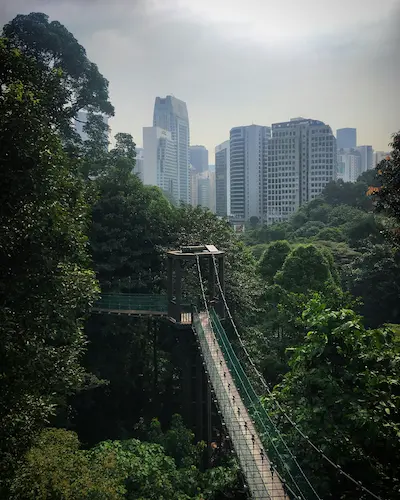
Canopy coverage: the primary metric of urban forest health
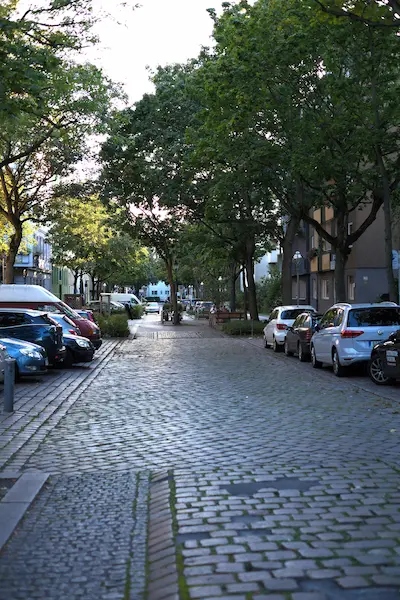
Street trees: urban forestry's most visible layer
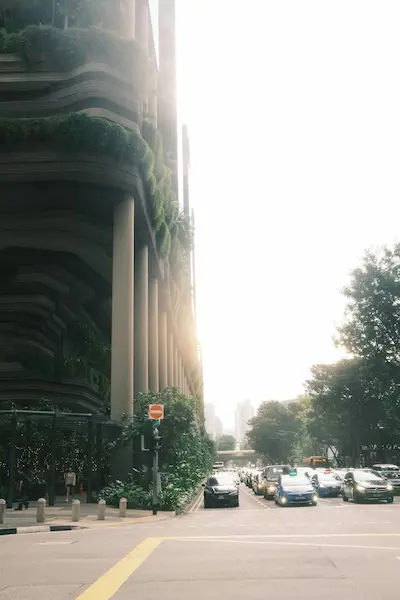
Green roofs and walls extend urban greening vertically